Get Full Government Meeting Transcripts, Videos, & Alerts Forever!
Get email alerts on the Organized Retail Theft topic
No spam. Unsubscribe anytime.
Delaware task force launches to address rising retail theft; focus on evidence sharing, DOJ staffing and diversion
Summary
Legislators, law enforcement, retailers and prosecutors met in Dover to begin a statewide task force on retail theft. Participants urged better evidence-sharing technology, more Department of Justice capacity for discovery and prosecution, and expanded diversion and public-health responses for lower-level offenders.
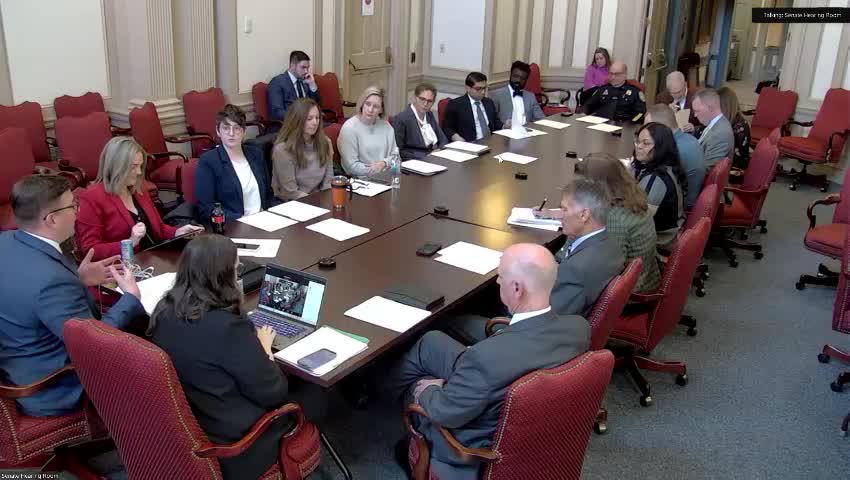
At an inaugural meeting in Dover (date not specified), members of the newly formed Delaware Retail Prevention Task Force — co-chaired by Representative Brian Townsend and Representative Cindy Romer — convened retailers, prosecutors, judges and law-enforcement officials to map near-term changes aimed at reducing retail theft and improving prosecution outcomes.
The task force opened with lawmakers and retail representatives describing a steady rise in both repeat and organized retail theft, particularly in New Castle County. Julie (representing food, fuel and pharmacy) said, “the problem is getting worse and not better,” and urged the group to expand evidence-collection and prosecutor capacity. Members emphasized three priorities: 1) an efficient cloud-based system to transfer store surveillance to police and prosecutors, 2) more consistent prosecution capacity at the Department of Justice to turn cases into charges or meaningful diversions, and 3) targeted diversion or treatment options for offenders whose thefts are driven by substance use or mental-health needs.
Why it matters: Retailers say theft has driven some decisions not to expand into parts of the state, reduced employee willingness to work frontline shifts and created safety concerns for staff and customers. Law-enforcement and court officials said many misdemeanor theft cases are dismissed or delayed when surveillance and other discovery are not available to defense counsel in time, which undercuts prosecutions.
Major evidence and technology points
Retailers and state police described existing tools and gaps. The Delaware Information and Analysis Center (DIACC) has an upload system used by about 60 participating retail sites, and Axon body-camera and cloud platforms were discussed as available mechanisms to transfer video to prosecutors. State Police representatives urged wider retail use of a cloud-based evidence pipeline and flagged a need for more DIACC analysts to process material.
Prosecution, discovery and court process
Abby Rogers, a state prosecutor at the Department of Justice, described recent internal changes to coordinate repeat-offender cases and said the office is trying to avoid routine early plea offers for multi-offender shoplifting matters: “My mandate has been that you will not plea out a multi-offender at the prelim calendar for shoplifting or theft unless jail is involved.” However, prosecutors and judges said discovery production — collecting surveillance, preparing it in usable formats and delivering it to defense counsel — has become far more resource-intensive since body and store cameras became common. Judge Carl Danberg, Chief Judge of the Court of Common Pleas, said the court sees many dismissals tied to missing discovery or absent store witnesses and warned that the sheer volume of cases limits how far the court can reserve dedicated calendar time for retail matters.
Retailer experiences and enforcement patterns
Large national chains and small independents both reported losses, but participants said small businesses are disproportionately affected because they lack in-house loss-prevention staff and legal resources. Multiple law-enforcement speakers described a pattern of organized groups or repeat offenders traveling from other states and reselling stolen goods through secondary markets. State police stressed that some high-volume offenders are known to law enforcement and can be aggregated for felony charging when states and counties cooperate.
Alternatives and diversion
Several police chiefs and nonprofit partners urged a tiered approach: rapid diversion and treatment for low-level offenders with substance-use or mental-health needs, civil remedies and stronger civil penalties for repeat low-dollar offenders, and felony aggregation for career thieves and organized fences. Barbie Fisher of the Delaware Center for Justice and other diversion providers offered to work with police on pre- and post-arrest diversion options.
Next steps and task force directions
The task force agreed to meet roughly every four to six weeks and asked members to submit a “wish list” of priorities and data requests. Staff were asked to compile existing state, police and retail data and to scope cloud-based evidence solutions, costs and staffing needs for DIACC and the Department of Justice. Membership gaps were noted (additional county retail representatives and a school-administrators’ designee were still pending). Representative Townsend asked members to email suggested topics and data requests within one week to shape the next meeting.
Ending
Members said the group will balance quick operational fixes, such as expanding cloud uploads and better retailer–police communication, with longer-term statutory or budget solutions to fund prosecutors, analysts and diversion programs. No formal votes or legislative actions were taken at this meeting; the task force will return with data, vendor options and possible statutory or budget proposals for future meetings.