Get Full Government Meeting Transcripts, Videos, & Alerts Forever!
Get email alerts on the Tiny Homes Rvs Accessory Units topic
No spam. Unsubscribe anytime.
Resident complaint pushes Terrebonne planners to review tiny-home, RV and accessory-dwelling rules
Summary
A Houma resident urged enforcement and clearer rules for tiny homes and RV-style dwellings; planning staff and commissioners agreed to study definitions, permit gaps and possible ordinance updates and to refer the topic to a subdivision/regulation review committee.
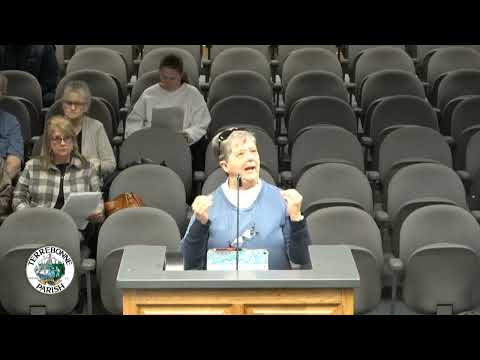
Mary Kubala, a Houma resident, told the Houma‑Terrebonne Zoning and Land Use Commission on Feb. 20 that two prefabricated, wheeled structures put on a neighbor’s lot are harming property values and may lack required permits. “These are 12 feet high and they’re mobile ... they start to deteriorate,” Kubala said, and she pressed officials to investigate whether the units had the required permits and flood‑elevation protections.
The complaint prompted an extended exchange during the meeting’s public‑comment and administration segments about how the parish regulates so‑called tiny homes, park‑model units and RVs. Staff said the parish has seen structures that do not fit existing categories—neither travel trailer (no VIN), mobile home (no HUD plate) nor modular home (not built to the modular code)—and described an ongoing enforcement effort by the permit and legal offices.
Why it matters: commissioners and staff said the issue is likely to reoccur as residents seek lower‑cost housing options and as new sales channels promote tiny homes. The commissions signaled they may pursue clearer definitions, permitting pathways and enforcement tools to prevent ad‑hoc conversions that could create safety, floodplain and neighborhood‑character problems.
Administration told the commission that one of the structures on the property in question was permitted as an accessory storage shed but must be elevated and anchored to meet base‑flood elevation requirements; the other unit has inconsistent paperwork and may not qualify as an RV under an emergency executive order that expired Feb. 28. Staff said one unit’s permit requires elevation, vents and louvers, and that the floodplain administrator has scheduled inspections. "If they fail to fulfill their requirements, then they gotta get it out," a planning official said.
Commissioners asked staff to review several questions raised by Kubala: whether the parish needs a distinct definition for tiny homes or park models; how accessory dwelling rules apply when owners live offsite; and which code paths apply outside formally zoned areas. Planning staff noted that existing accessory‑dwelling rules require the property owner to live on the parcel if a second dwelling unit is created, and that coverage and impervious‑area limits still apply.
Parish staff recommended residents who have questions contact the parish permit office; staff gave a contact name and phone number for regulatory follow‑up. The commission also discussed a parallel enforcement path: fines and penalties for failing to pull required permits and for violating elevation or anchoring conditions.
Referrals and next steps: Commissioners agreed the commission’s subdivision/regulation review committee should examine definitions, accessory dwelling rules, and how park‑model units and RV parks should be regulated. Planning staff said they will review current rules (including draft RV‑park regulations prepared previously) and report back; a commission member said staff would coordinate any proposed ordinance changes with the parish council and public input processes.
The discussion also noted related county/state authorities: Department of Health rules govern service‑building requirements for campgrounds and RV parks; the permit office enforces building and floodplain requirements; and council staff are involved in enforcement correspondence on the case Kubala raised.
Ending: Commissioners thanked Kubala for raising the issue and asked staff to return with recommendations and, if needed, draft ordinance language or administrative steps to close the gaps identified.