Get Full Government Meeting Transcripts, Videos, & Alerts Forever!
Get email alerts on the Immigration 287g topic
No spam. Unsubscribe anytime.
Residents urge caution on 287(g) agreements; speakers cite costs and community trust concerns
Summary
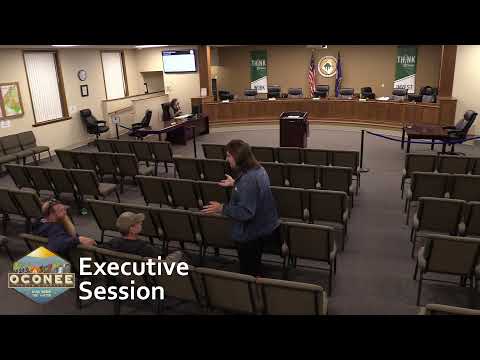
Multiple residents at the Feb. 18 Oconee County Council meeting urged the council to reconsider local participation in section 287(g) immigration enforcement agreements, citing national studies of costs, racial-profiling findings and effects on community trust and public safety.
Several residents addressed the council about section 287(g) of the Immigration and Nationality Act during public comment on Feb. 18, raising concerns about fiscal cost, civil-rights impacts and public-safety tradeoffs if local law enforcement participates in immigration enforcement under a 287(g) memorandum of agreement.
Why it matters: speakers said participation in 287(g) agreements can be costly for counties and can damage trust between immigrant communities and police, which may reduce cooperation in criminal investigations. Several commenters cited academic and government studies, historic examples and local financial impacts in other jurisdictions.
What speakers said: Sarah Stipe, a retired teacher from Mountain Rest, asked about the roles local law-enforcement officers would perform under 287(g) and whether the jail would be used to hold individuals while federal review proceeds; she urged the council to consider effects on families and services if detentions occur. (Sarah Stipe, public commenter.)
Other commenters cited research and local examples: one speaker recounted that the University of North Carolina at Chapel Hill and Migration Policy Institute studies found a substantial share of individuals affected by 287(g)-style enforcement had minor or no criminal histories and that the program’s first-year costs in some jurisdictions reached millions of dollars. Another speaker referenced the Department of Justice’s 2011 findings in Maricopa County, Arizona, describing systemic constitutional violations and racial profiling under Sheriff Joe Arpaio’s implementation of a 287(g)-style program. (Sources cited in public comment as stated in transcript.)
Multiple speakers linked 287(g)-type local participation to declines in trust and willingness of immigrant community members to report crimes or cooperate with investigations; several said that undermining trust would reduce public safety. A number of residents also connected the county’s earlier action — referenced by commenters as a memorandum of agreement to assist federal immigration actions — with local fear that led some families to avoid public life and services.
County response and context: During the meeting a speaker thanked Sheriff Crenshaw for researching the specific roles law enforcement would have under 287(g). The transcript indicates public concern about whether federal reimbursement programs fully cover local costs for detention, salaries and related operational expenses; commenters cited examples where localities absorbed significant costs despite partial federal reimbursement.
Outcome: The transcript records these items as public comment and background information. The meeting record in this excerpt does not show the council taking immediate formal action on 287(g) implementation at this session.