Get Full Government Meeting Transcripts, Videos, & Alerts Forever!
Get email alerts on the Agriculture Rural Policy topic
No spam. Unsubscribe anytime.
Local rancher urges county to oppose mandatory RFID cattle tags; commissioners decline immediate action
Summary
A resident urged the board to pass a resolution opposing USDA rules phasing in mandatory electronic identification (EID) for cattle; commissioners heard the comment, received technical clarifications from a commissioner, and took no action.
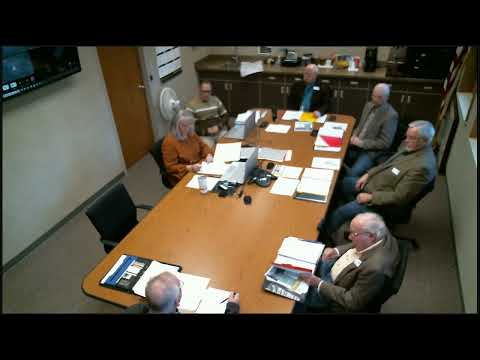
A seat of ranchers and sale-yard operators addressing a new federal livestock-traceability rule prompted public comment at the Lawrence County commissioners meeting, but the board did not add the request to its agenda.
Sean Fox, a local rancher, asked commissioners to consider a county resolution opposing the mandatory component of a new U.S. Department of Agriculture rule that phases in electronic identification (EID) tags for cattle crossing state lines. Fox said the rule will be burdensome for small producers and cited a Kansas State University study estimating large program costs, plus concerns about tag supply and equipment upgrades.
"The mandate on that is something that I think is gonna become a burden to the small producers," Fox told the board during the public comment period.
Commissioner Jennings responded with technical context and cautioned against passing the resolution. Jennings said the federal program is intended to support national animal-traceability for catastrophic animal-disease events and described how the system is used when animals move across state lines. "This is is not about EIDs. This is about our national traceability program," Jennings said. He explained that electronic tags can be read from short range and reduce data-entry errors during interstate movement, and that South Dakota producers have experienced allocation shortfalls in 2024 when demand for tags rose.
The commission's chair noted that no formal action would be taken at the meeting because the request came during public comment, and that the board could schedule a future agenda item if the commission chooses to consider it. Fox said he had a model resolution available and would follow up.
No motion or vote was taken; commissioners agreed that if the matter is to receive formal consideration it should be placed on a future meeting agenda where elected members can debate and decide. Commissioner Jennings said county staff would watch neighboring counties' responses; he also advised that state law cannot override federal requirements for animals crossing state lines.
The public comment closed with the board taking no immediate action.