Get Full Government Meeting Transcripts, Videos, & Alerts Forever!
Get email alerts on the Infrastructure Funding topic
No spam. Unsubscribe anytime.
Council renews discussion on capital projects ("penny") sales tax as infrastructure funding gap widens
Summary
Council members discussed forming a committee and restarting outreach on a capital projects sales tax (the 'penny') after reviewing county road and stormwater funding shortfalls; staff estimated large unmet needs and warned that continued delay will worsen road conditions.
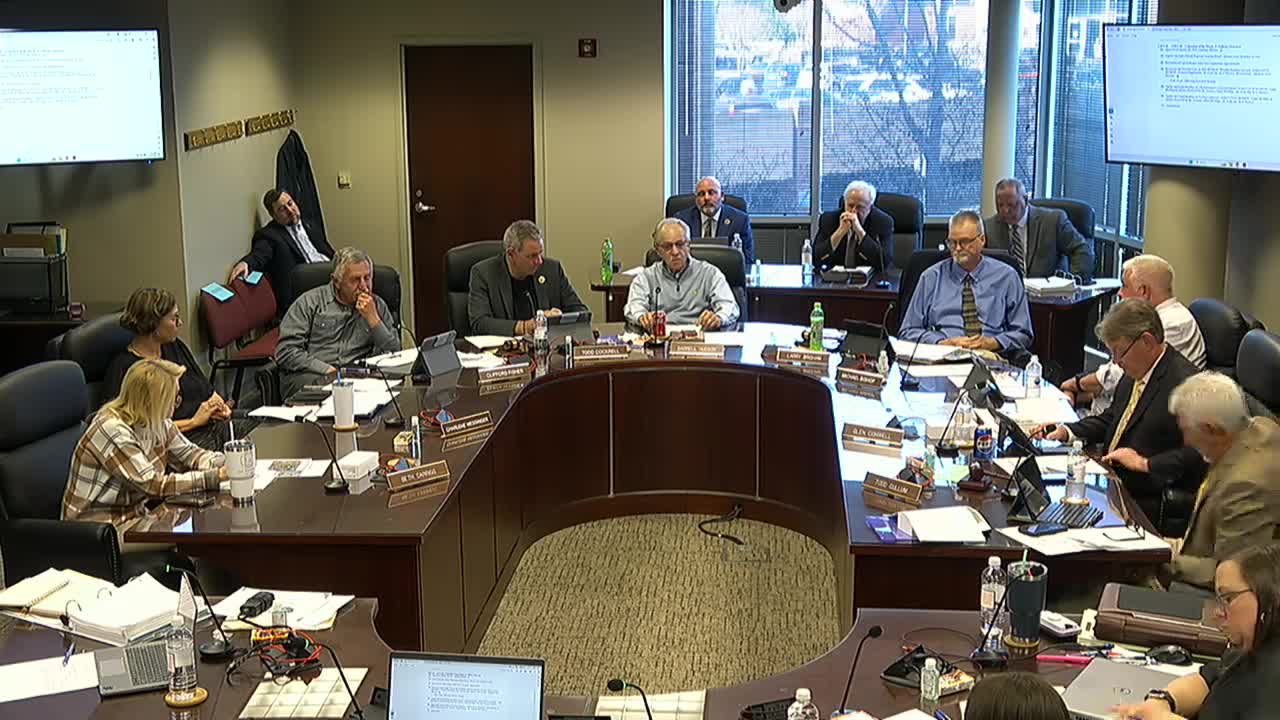
Lexington County council held an extended discussion about restarting efforts around a capital project sales tax (commonly referred to as the “penny”) to address roads, stormwater and other capital needs.
Multiple council members and staff outlined why the penny is being considered again: county road and stormwater needs that exceed available maintenance funding; the duration and scale of growth in the Lake Murray and other growth corridors; and a belief among members that prior public confusion about which penny proceeds were used for hampered earlier campaigns. Council members said public education and a clear project list would be necessary for renewed support.
Public Works staff described the county’s maintenance funding gap: county budgeting uses roughly $3 million annually from C‑funds for asphalt maintenance and resurfacing, while staff said about $18 million annually would be needed to maintain a normal pavement lifecycle. Staff also said they have identified close to $100 million in stormwater needs alone. Council members warned that, if current levels of spending continue, the number of roads rated “poor or failed” could exceed several hundred within the next decade; one staff speaker described the pavement maintenance cycle as “about a hundred years behind” ideal funding levels.
Council discussion also covered lessons from prior votes: some members said the public conflates state‑level penny decisions with county control, and others said the delegation’s support is required for some options. Members discussed alternatives that were previously studied (stormwater fees, impact fees, road user fees) and said none would generate revenue comparable to a county capital projects sales tax. Several council members urged a renewed public outreach program, targeted local advocacy through business and community groups, and clearer project lists showing near‑term results.
No formal vote to place the penny on a ballot was taken in committee. Members discussed assembling a committee of residents, municipal representatives and county appointees to draft a possible project list and to undertake public education. Staff said legal limits require the funding mechanism to be a capital projects sales tax for the county’s stated transportation focus; meetings with delegation members were planned to review statutory options.
Speakers credited in the meeting included multiple councilmembers (identified in the transcript by last names or first names: Cullum, Bridal, Hudson, Bishop, Michael) and Public Works staff (Brent).