Get Full Government Meeting Transcripts, Videos, & Alerts Forever!
Get email alerts on the Utilities Finance topic
No spam. Unsubscribe anytime.
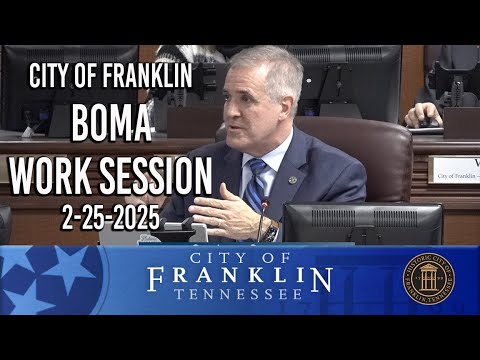
Franklin Aldermen weigh options to raise sewer impact fees, trim rate increases — preference forms around phased approach with check‑in
Summary
Consultants presented four financing scenarios for a planned 6 MGD treatment plant expansion; aldermen broadly favored a middle path that phases a higher impact fee to $9,000–$12,000 with a return/check‑in in three years.
City consultants and staff presented refined options for a water and sanitary sewer cost‑of‑service study and rate plan tied to a planned South plant expansion, outlining how to balance debt, rates and impact‑fee revenue to fund a roughly $325 million project that would increase treatment capacity to 6 million gallons per day.
Hazen consultant Fernando, who led the study presentation, said the utility needs near‑term revenue increases to meet debt‑service coverage targets and to build toward the South plant. "We presented the financial plan and the need for about 6% every year," Fernando said, describing multiple scenarios that use a mix of service‑charge increases, volumetric adjustments and higher impact fees.
Why it matters: The city projects the plant will accommodate about 17,000 single‑family residential unit equivalents (SFRUs) by 2041. How much of the plant cost is borne by incoming development (via impact fees) versus existing customers (via rates and debt) will determine average customer bills and the city’s borrowing needs.
Options presented and fiscal impact: - Scenario 1: Minimal impact‑fee change; staff modeled continued growth in rates and larger debt issuance (higher long‑term interest cost). - Scenario 2: Phase impact fee to $9,000 over three years and then index to construction inflation (E&R); reduces debt and shifts more cost to growth. - Scenario 3: Phase to $12,000 over five years; a middle ground between Scenarios 1 and 2. - Scenario 4: Phase to the full $18,000 (maximum defensible number from earlier work) over six years; this places much more cost on growth and less on existing customers.
Fernando said the 6 MGD expansion is modeled to cost about $325 million and that each scenario changes how much existing customers pay over a 30‑year debt horizon (for the 17,000 SFRUs the expansion is sized to serve). He showed projected typical residential sewer bills at an average 6,000 gallons per month rising to $81–$89 by 2033 under the scenarios presented (the current sewer bill cited was about $59 per month).
Board reaction and direction: Aldermen discussed tradeoffs between ratepayer impacts and relying on future growth to fund the plant. Several aldermen — including Baggett, Barnhill, Brown and others — said they favored the middle options. The mayor and the city administrator urged a phased approach with a scheduled review in the near term.
Multiple aldermen signaled support for either the three‑year phase to $9,000 (Option 2) or the five‑year phase to $12,000 (Option 3), with a recommendation to re‑evaluate in three years and adjust the impact fee upward later if growth supports it. One council member urged conservatism on impact‑fee increases to avoid pricing development out of the market; another argued existing residents should not bear the bulk of costs for future growth.
Staff next steps: City staff asked for direction to narrow choices. The city administrator recommended the council focus on the middle two options and come back with a refined recommendation. Fernando and staff said they would return with more detailed modeling and implementation steps if the board wants to proceed toward an ordinance or rate schedule.
No formal vote was recorded during the meeting; the discussion produced a clear majority leaning toward a phased impact‑fee increase (Option 2 or 3) and a plan to revisit the assumptions in three years.