Get Full Government Meeting Transcripts, Videos, & Alerts Forever!
Get email alerts on the Housing Weatherization topic
No spam. Unsubscribe anytime.
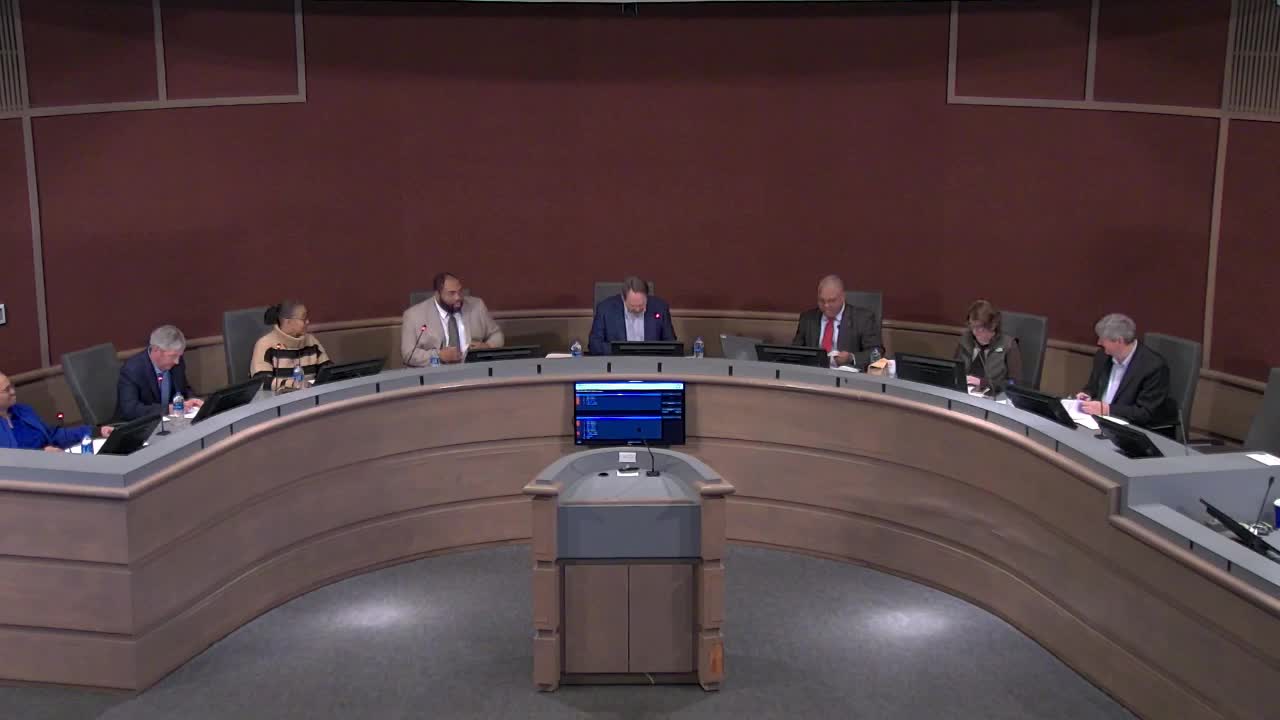
Albany utility board approves deferred loan-style grant option for weatherization repairs
Summary
The Albany Utility Board voted 4-1 to accept a substitute approach that keeps home repair funds as a grant but places them in a deferred/forgivable structure rather than converting them to an ordinary loan.
The Albany Utility Board on Feb. 27 approved a substitute measure that preserves weatherization repair funds as a grant with a deferred repayment schedule rather than converting the funds into a standard low‑interest loan.
Board member Vivette Fields offered the substitute motion, saying, "I'm not in favor of a loan. However, I could go with a deferred loan, but it's actually still a grant." The motion passed on a roll call vote: Burley, Collier, Fields and Woodall voted yes; the mayor voted no.
The action follows staff briefings that described two parallel home‑repair programs: a utility‑housed weatherization repair program and a separate Community Development emergency/minor repair program. A staff presenter said the community development program is "a grant program, up to $15,000," and noted that the U.S. Department of Housing and Urban Development (HUD) gives the director discretion "on a case by case basis" to adjust award amounts when construction costs are higher.
Why it matters: the city originally budgeted roughly $1 million for weatherization-related work after a cycle of applications, but staff told the board the practicalities of weatherization mean some homes first require repairs before insulation or other efficiency measures can be installed. Board members and staff discussed guardrails to prevent recipients from selling a property immediately after repair work (a common concern about converting grant dollars into improvements that raise property value).
What the board decided: rather than a conventional loan that would require monthly repayments, the approved substitute preserves the federal funds as a grant with a deferred repayment structure that reduces the balance over time (the approach described by staff was a deferred loan that declines by a fixed percentage annually until it is forgiven). Staff said existing applicants already in the pipeline under the prior program will remain under the terms they received when approved.
Key details staff provided during the discussion: - The city manages multiple federal funding lines for housing and repair, including Community Development Block Grant (CDBG) monies and other HUD‑administered funds. Staff said annual allocations fluctuate and that the city recently had roughly $170,000 in carryover for minor repairs after de‑obligating earlier funds tied to another program. - Staff said they typically allocate between $50,000 and $60,000 annually to repair programs, but that leftover funds accumulated during the COVID years have increased available balances. - Staff described a "deferred loan" variant frequently used to discourage quick resale: the award is reduced (for example, by 20% per year) until it is fully forgiven after the term.
The board asked staff to return with concrete restructuring options and policy language to implement the deferred‑grant approach, including guardrails to limit flipping of improved properties and methods to recover funds at resale if the policy requires it. The substitute motion was moved by Vivette Fields; a second was recorded but not attributed by name in the meeting record.
Ending: Staff and board members said they will bring back specific program documents and legal language for formal adoption and implementation at a future meeting.