Get Full Government Meeting Transcripts, Videos, & Alerts Forever!
Get email alerts on the Internal Procedure topic
No spam. Unsubscribe anytime.
Gorge commissioners agree to trial 'parking‑lot' approach for motions to preserve open discussion
Summary
The Columbia River Gorge Commission agreed to try a flexible 'parking‑lot' method for handling motions so commissioners can propose motions without immediately requiring a second and still allow full, roundtable discussion before a formal vote.
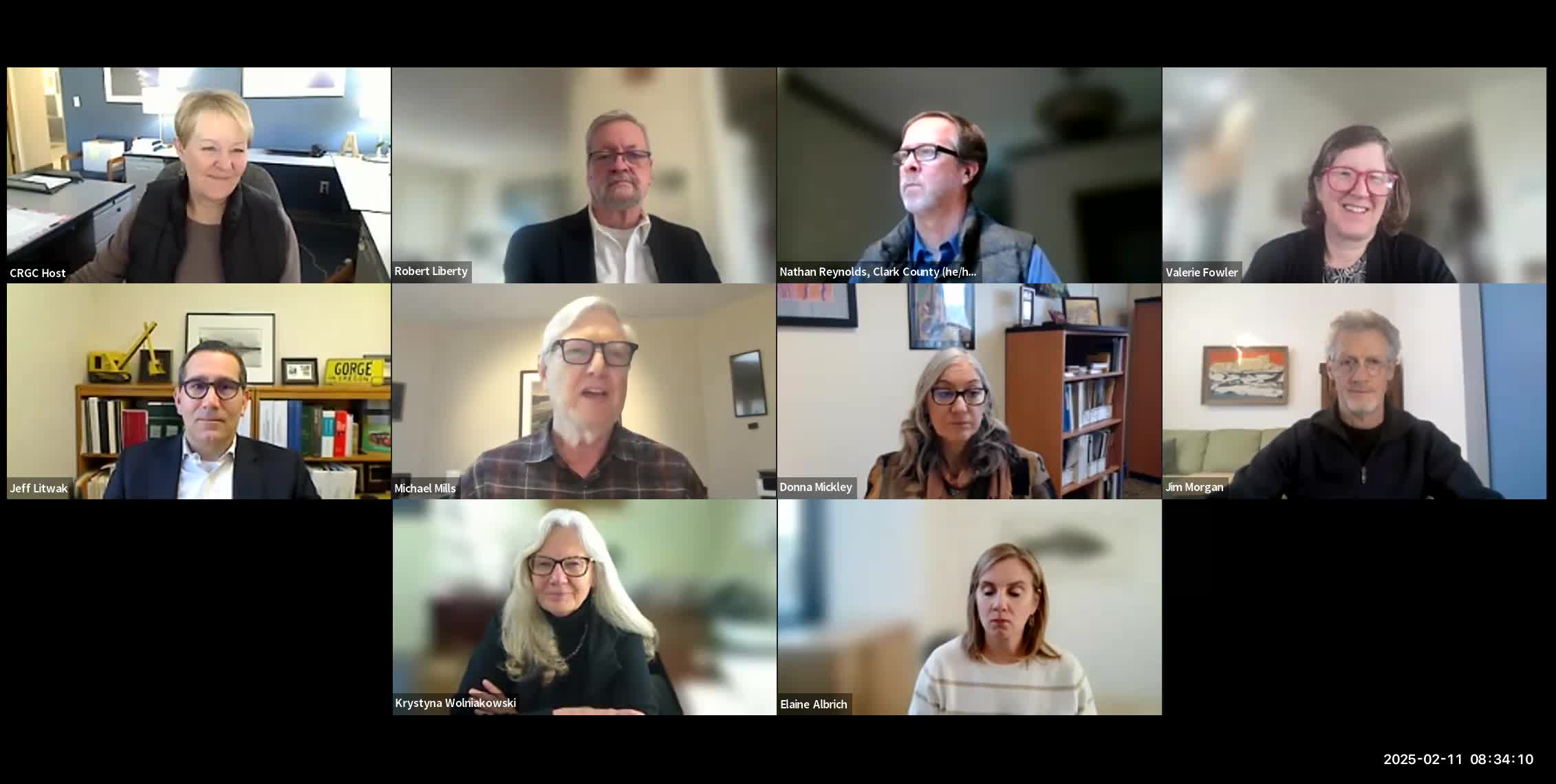
The Columbia River Gorge Commission agreed Wednesday to try a flexible approach to handling motions that commissioners said could preserve open discussion while still allowing motions to be recorded for later action. Chair Michael Mills and several commissioners described the change as a trial to be reassessed after one or two meetings.
Commissioners said the change grew from repeated concerns that putting a formal motion on the floor too early limits the scope of discussion. “I think it makes for much more robust and inclusive discussion to have a discussion without a motion on the table,” Commissioner Elaine Aldrich said.
Why it matters: Commissioners split between two preferences — some argued motions focus and direct deliberations, while others said a motion raised too early can curtail perspectives from commissioners who prefer to listen before weighing in. The adopted approach aims to balance both views by allowing motions to be proffered and noted (a so‑called “parking lot”) without immediately asking for a second or cutting off further conversation.
Commissioner Amy Weisfeld described the compromise: “Allow those motions to be made whenever somebody wants to make them, but we don't have a second. We don't ask for a second... we can use those to continue to focus the discussion, but we don't restrict the discussion to just that motion.” Chair Mills said staff (Connie) would help track any motions placed in the parking lot and that the chair would ask for a formal second only when the commission was ready to move to a vote.
The commission did not take a formal roll‑call vote on the procedure; Mills characterized the result as a work in progress after counting informal thumbs‑up and thumbs‑down reactions. He said the commission will try the process at upcoming meetings and adjust if it proves unmanageable.
Context and next steps: Commissioners noted the approach requires active management by the chair and staff to keep multiple proposed motions from creating confusion. If the trial does not work, Mills said the commission will revisit the process and adopt a different practice.
Ending: The commission moved on to a continued hearing after adopting the trial method; the chair and staff will report back to the commission after the trial period to determine whether to formalize the change.