Get Full Government Meeting Transcripts, Videos, & Alerts Forever!
Get email alerts on the Violence Prevention topic
No spam. Unsubscribe anytime.
Albany Violence Prevention Task Force narrows coordinator search, plans outreach and data push before summer
Summary
At its Feb. 18 meeting the Albany City Violence Prevention Task Force said it entered a second-round of interviews to hire a coordinator, agreed to update bylaws to reflect a 13-member panel, and discussed outreach, data collection and youth programming ahead of a June/early‑July report.
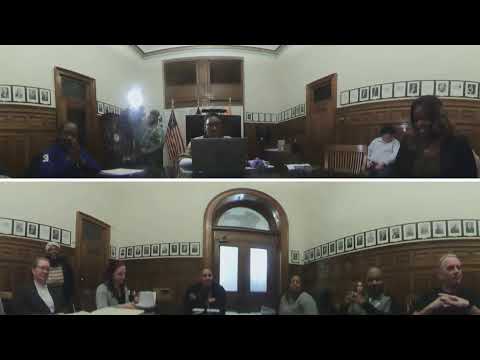
The Albany City Violence Prevention Task Force met Feb. 18 and moved toward hiring a new coordinator, updating its bylaws to reflect a 13‑member panel and stepping up data collection and community outreach ahead of a planned report before the summer.
City Clerk Shaniqua Jackson, speaking for staff, told the task force it had advanced two candidates to a second round of interviews and that the goal was to reach a hiring decision before the group’s March 18 meeting. "We are actively looking for a coordinator... we are heading into the second phase of interviews with 2 candidates," Jackson said.
The update came as members discussed two procedural items staff said are needed to resume full operations: a bylaws amendment to record the council‑approved membership cap of 13 and selection of leadership roles (chair, co‑chair, secretary) for the revived task force. Jackson said once the bylaws language is revised the document can be distributed and finalized.
Task force members emphasized a twin focus on improving data and deepening community outreach. Members said they will pursue recent data from the Albany Police Department and the school district, and seek community surveys and qualitative information from local partners including Trinity Alliance and grassroots groups. "The equity agenda does point out we have to have a member from the school district," a member noted during the meeting.
Community contributors at the meeting urged more street‑level outreach and partnerships with trusted neighborhood institutions. John Wafer, identified at the meeting as the owner of Trimidges Barber Shop and leader of a barbering program at Albany High School, described barbershops as places that can reach youth and families and asked the task force to build direct links to those networks. "How can we stop that?" Wafer asked about the spread of guns among local youth, urging concrete, accountable outreach rather than "lip service."
Library and community partners described a set of programs and trainings that could be scaled: summer youth programming at city libraries, grief and trauma training for frontline responders and volunteers, and practical engagement such as resume assistance and job‑readiness at community events. A library speaker noted free digital resources and summer programming as tools to reach teens and families, including the Libby app for digital lending.
Members also mentioned the Crime Analysis Center's social‑media monitoring and a review of prior recommendations from an earlier gun‑violence task force (noted by a returning chief) as sources to inform current strategies. Several participants urged a mix of data‑driven analysis and outreach grounded in lived experience: combining statistical analysis with community surveys and input from people with lived experience was repeatedly recommended.
The task force reported it previously had a coordinator who began in June and left in December; the group is restarting operations and has divided work into smaller working groups (outreach, data, and related subcommittees) to move items forward between monthly full meetings. Staff said it will send members a current list of task force participants and descriptions of chair responsibilities to help identify leadership volunteers.
No formal votes were recorded on the hiring or bylaws changes at the Feb. 18 meeting; the actions discussed were procedural steps and directions to staff and members. The task force set its next regular meeting for March 18 at 5:45 p.m. in council chambers, and staff said it aims to have a draft report or recommendations prepared by June or early July, ahead of the summer period the group described as a time of heightened violence risk.
Members and community speakers highlighted concern about gun access among teenagers, the need to expand positive programming and safe spaces across neighborhoods, and the importance of connecting outreach to measurable goals and accountability. Staff said it will circulate meeting notes and the list of members within several days and follow up on the items discussed.