Get Full Government Meeting Transcripts, Videos, & Alerts Forever!
Get email alerts on the Community Power topic
No spam. Unsubscribe anytime.
Merrimack County briefed on 9.7¢ Granite Basic rate after failed power purchase; coalition outlines opt-out, legal review and pending legislation
Summary
Merrimack County commissioners were briefed on a Community Power Coalition decision to raise the Granite Basic supply rate to 9.7¢ amid a failed supplier agreement that left the coalition exposed to volatile short‑term market pricing.
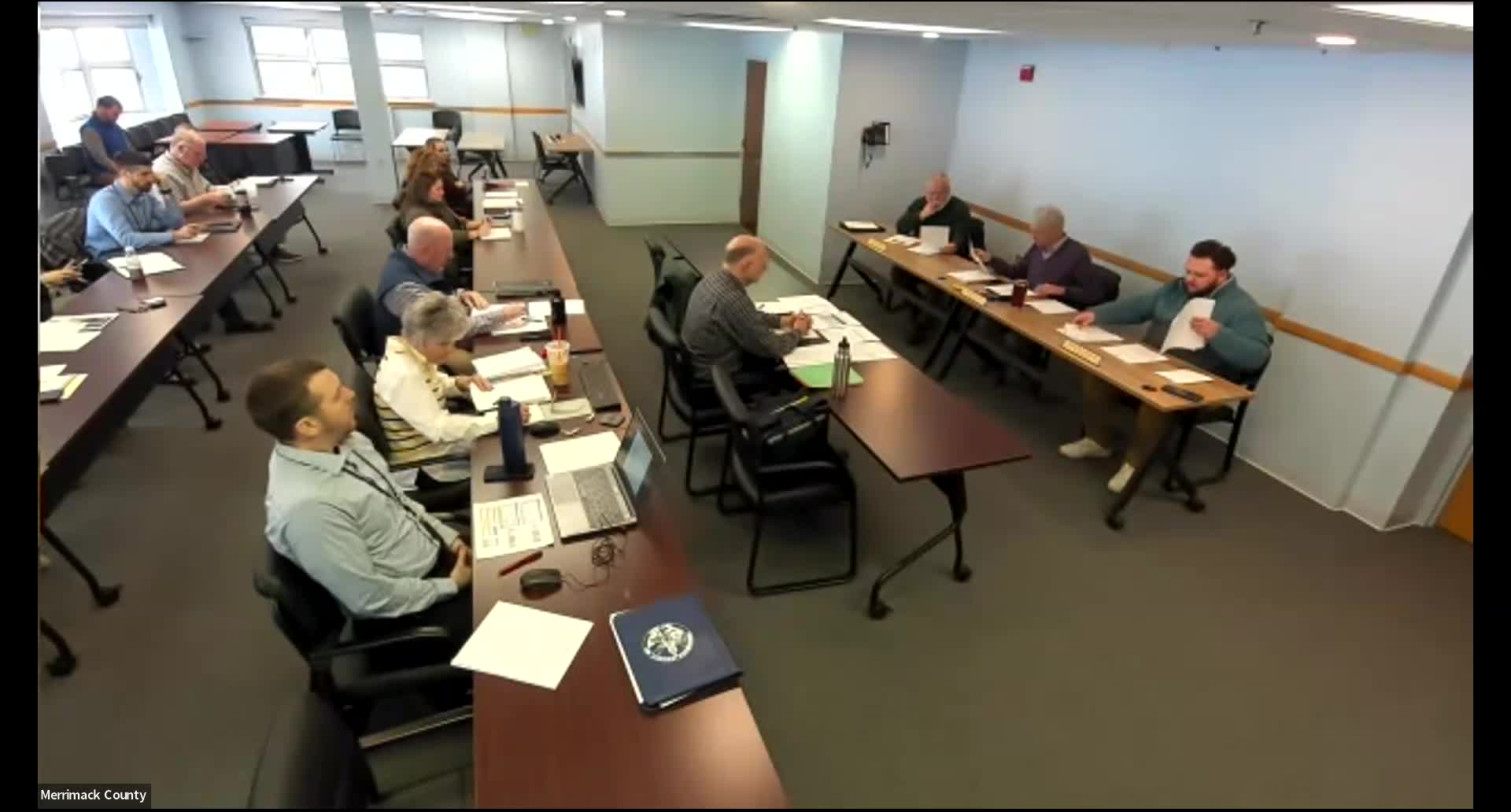
Merrimack County commissioners were briefed on a January board decision by the Community Power Coalition that raised the coalition’s Granite Basic supply rate to 9.7¢ per kilowatt-hour, a change that coalition staff said will take effect when customers’ meters are read in March.
The coalition’s presenter, Andrew (Community Power Coalition representative), told commissioners the board set the 9.7¢ rate after a New Hampshire generator with which the coalition had negotiated to cover roughly 30% of load failed to complete a power purchase agreement at the eleventh hour. "A decision had to be taken," Andrew said, explaining the board closed hedges to limit exposure to a rapidly rising short‑term market and maintain the coalition’s reserves and creditworthiness.
The rate increase follows a Jan. 31 board meeting and a subsequent nonpublic session. Coalition staff described their current work as twofold: (1) responding to member questions and explaining the immediate market and contract decisions and (2) conducting a legal and policy review to determine whether changes to governance, contracting or procedures are needed.
Why it matters: the coalition said the failed deal and higher short‑term market pricing left it exposed to winter pricing spikes. The presenter told the board that the move to 9.7¢ was taken to cover obligations and preserve the coalition’s financial position. For the average household the coalition used in its materials — 650 kWh per month — the change could amount to roughly $6.50 per month on the supply portion of a bill and as much as about $10 per month for some customers during the five‑month rate period that runs to July 31, the coalition said.
Key details and member options
- The coalition said the 9.7¢ rate applies to the Granite Basic default product in communities served by the aggregation and will start when customers’ meters are read during March. The coalition compared the new rate to local utilities and other suppliers and said the change moved the coalition from being a fraction of a cent cheaper to as much as 1.6¢ higher than some providers for the current period.
- The coalition reported targeted member outreach: an advisory postcard was mailed on Jan. 21 to 1,368 New Hampshire Electric Co‑op customers, and staff said they are in direct contact with municipal contacts in enrolled communities. Commission staff were told that roughly 70% of affected customers in towns that defaulted residents into the county program were enrolled automatically but retain the option to opt out at any time by phone, online portal or email.
- On termination and unwinding: Andrew said that termination requests trigger contract‑by‑contract analyses and that the coalition’s approach is to avoid having one community’s exit financially burden others. He said the coalition has established policies and an exit strategy but that an unwinding could in the worst case affect obligations for up to 36 months depending on contract terms and market conditions. "We just need to figure out so that other communities will not be burdened by the exit," he said.
Local context and reaction
- Several commissioners pressed coalition staff on notice to residents and what the county or towns could do in response. Commissioner Loveland asked about towns that automatically enrolled residents, and Andrew explained the difference between opt‑in and opt‑out enrollment and the steps customers must take to leave the program.
- The coalition said staff and counsel are conducting a review of policies and agreements and are preparing follow‑up meetings with member communities; Andrew said further updates should be available in the coming weeks.
Legislation and market rules
- Coalition materials provided a briefing on pending legislation the presenter referred to as HB 760, which the coalition said is intended to address what it described as anti‑competitive utility procurement practices that increasingly move load into volatile day‑ahead markets. The coalition said the bill is scheduled for a Science & Technology Committee hearing on Feb. 19 and urged communities to register to provide testimony where appropriate.
What remains unresolved
- The coalition is investigating why the local biomass generator’s ownership or ability to perform changed at the time contracts were to be executed; Andrew said those internal and contractual questions are under review by senior management and counsel and that the coalition would respond to written questions from commissioners.
- The financial impact on individual customers and communities will depend on meter read timing, individual usage and the outcome of the coalition’s legal and contractual reviews. The coalition reiterated that customers may opt out and that additional communications and rate cards will be provided to member communities.
The county asked the coalition to return with an update; coalition representatives said they expect to meet with county officials again within weeks to provide additional information and answers.