Get Full Government Meeting Transcripts, Videos, & Alerts Forever!
Get email alerts on the Sin Tax topic
No spam. Unsubscribe anytime.
Lawmakers debate replacing bifurcated vape tax with wholesale percent; retailers warn 40% rate would push sales out of state
Summary
Senator Jana Hughes proposed replacing Nebraska’s bifurcated vaping tax with a uniform wholesale percentage and included a 40% wholesale rate; retailers and industry groups warned the proposed rate would be disproportionately high, push consumers to other markets and could harm small businesses.
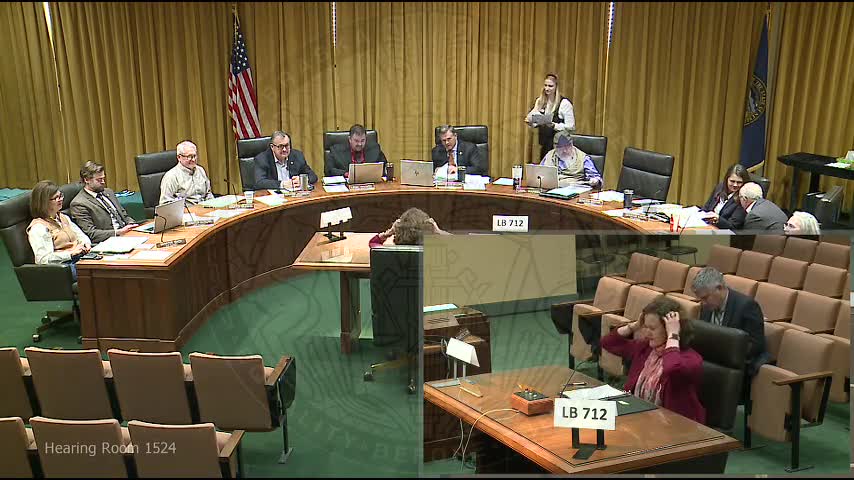
Senator Jana Hughes introduced LB 712 to the Revenue Committee and proposed eliminating Nebraska’s bifurcated electronic nicotine delivery systems (ENDS) tax in favor of a single wholesale percentage. Her draft calls for a 40% wholesale tax on vape products as an alternative to the current mix of a per‑milliliter rate for small‑volume products and a 10% wholesale tax on larger products.
Hughes said a single wholesale percentage better tracks product price and inflation, addresses inequities in the current bifurcated system and aligns ENDS taxation with other nicotine excise taxes. “When you do a flat 5¢ per milliliter, 20 years from now, what does that 5¢ mean?” Hughes asked, arguing that wholesale percentage taxes scale with market prices and avoid repeated statutory revisions.
Opponents representing vape retailers, convenience stores and business associations told the committee that a 40% wholesale tax would be disproportionately high and risk pushing consumers to unregulated or out‑of‑state sources. Chris Peterson, representing a multi‑state vape retailer, and local store owners said the current bifurcated approach was negotiated recently and that a quadrupling of the tax on many products would jeopardize small businesses, encourage cross‑border purchases and could reverse harm‑reduction gains if adult smokers return to combustible cigarettes.
Health and policy context Supporters and several senators framed the bill as a public‑health intervention to reduce youth vaping by raising price, noting evidence that price increases reduce youth consumption. Hughes cited a public‑health estimate that a 10% price increase reduces e‑cigarette use among youth by about 7%.
Industry witnesses pushed for a lower wholesale percentage (for example, 20%) or maintenance of the current bifurcated structure while supporting regulation to reduce illicit and flavored products. Several vendors described voluntary store practices — restricting entry to customers 21 and older, scanning IDs at entry and sale, and using child‑resistant packaging and exit bags — to prevent youth access.
Administration and revenue Committee members asked whether a wholesale tax or a retail tax would be easier to administer. Hughes and witnesses said excise taxes are typically collected at wholesale for enforcement efficiency and that a wholesale percentage would avoid repeated statutory updates caused by changes in package sizes or product lines.
No committee vote was recorded during the hearing. Supporters and opponents signaled a willingness to negotiate on tax rate and implementation details; the sponsor said she was open to amendments and phasing approaches.