Get Full Government Meeting Transcripts, Videos, & Alerts Forever!
Get email alerts on the Tax Relief topic
No spam. Unsubscribe anytime.
Sen. Spivey proposes income‑based circuit breaker for property-tax and rent relief
Summary
LB 439 would create a refundable tax credit that reimburses a portion of property tax or rent for households whose housing costs exceed a defined share of their income; proponents said the design targets the most burdened households, while critics and fiscal analysts urged caution on fiscal impact and administration.
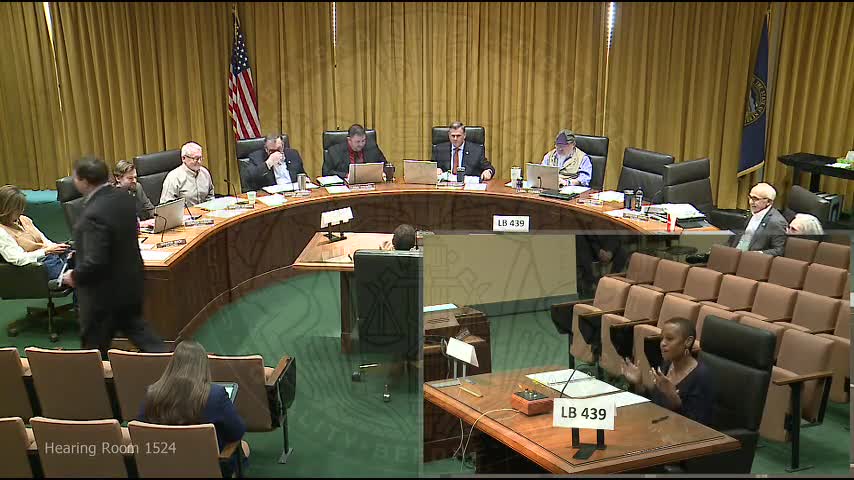
Senator Ashley Spivey told the Revenue Committee she introduced LB 439 to target property‑tax and rent relief to Nebraskans most burdened by housing costs. The bill would create a refundable income‑tax credit that reimburses 50% of the tax or rent exceeding 5% of a taxpayer’s federal adjusted gross income, with annual caps of $4,000 for most claimants and $5,000 for taxpayers age 65 or older.
Design and intent LB 439 would allow qualifying taxpayers to claim the credit for primary residences and places where renters pay rent; homeowners would be limited to property taxes paid on the taxable value of a primary residence up to 200% of the county average assessed value for single‑family residential property. Spivey said the goal is not broad, universal property‑tax cuts but targeted relief for low‑ and middle‑income homeowners and renters whose housing costs are high relative to income.
Supporters included OpenSky Policy Institute and Habitat for Humanity of Omaha, which offered examples of homeowners whose mortgage payments and taxes rose sharply as assessed values increased. OpenSky said circuit‑breaker programs are used in 17 states and can be calibrated to fit state fiscal constraints; Habitat for Humanity submitted client examples and described families facing doubled mortgage payments due to valuation increases.
Concerns and administration John Cannon of NACO provided neutral testimony noting possible administrative burdens: the program would require information exchange between county treasurers/assessors and the Department of Revenue, and the bill’s treatment of renters (applying the full rent as an equivalent of property tax) raised questions about proportionality and the best proxy for tax burden. Committee members asked about overlap with existing homestead programs and whether claimants would be able to double‑dip; NACO asked the committee to clarify interactions with the homestead exemption and suggested limiting overlap.
Fiscal considerations Witnesses and committee members discussed the bill’s fiscal note, which committee staff estimated at hundreds of millions annually in some scenarios. Proponents said the circuit‑breaker design can be adjusted with eligibility levers and caps to fit fiscal constraints and that targeting funds to those most burdened is more equitable than broad cuts. OpenSky urged the committee to consider LB 439 as a tool to direct any future additional property‑tax funding to the most income‑constrained households.
Conclusion The hearing drew proponent testimony from policy and housing advocates and neutral technical input from county officials. The committee closed the LB 439 hearing without taking final action; the sponsor said she would follow up with technical information and consider adjustments to align the bill with fiscal constraints and administrative capabilities.