Get Full Government Meeting Transcripts, Videos, & Alerts Forever!
Get email alerts on the State Budget Attorney General topic
No spam. Unsubscribe anytime.
Senate subcommittee hears Attorney General budget; boilerplate and one-time items flagged for change
Summary
The Appropriations Subcommittee received a Senate Fiscal Agency briefing on the Attorney Generalbudget recommendation for FY 2025-26, highlighting one-time spending in prior years, proposed boilerplate deletions tied to drinking-water litigation proceeds and settlement notifications, and requests for modest program increases.
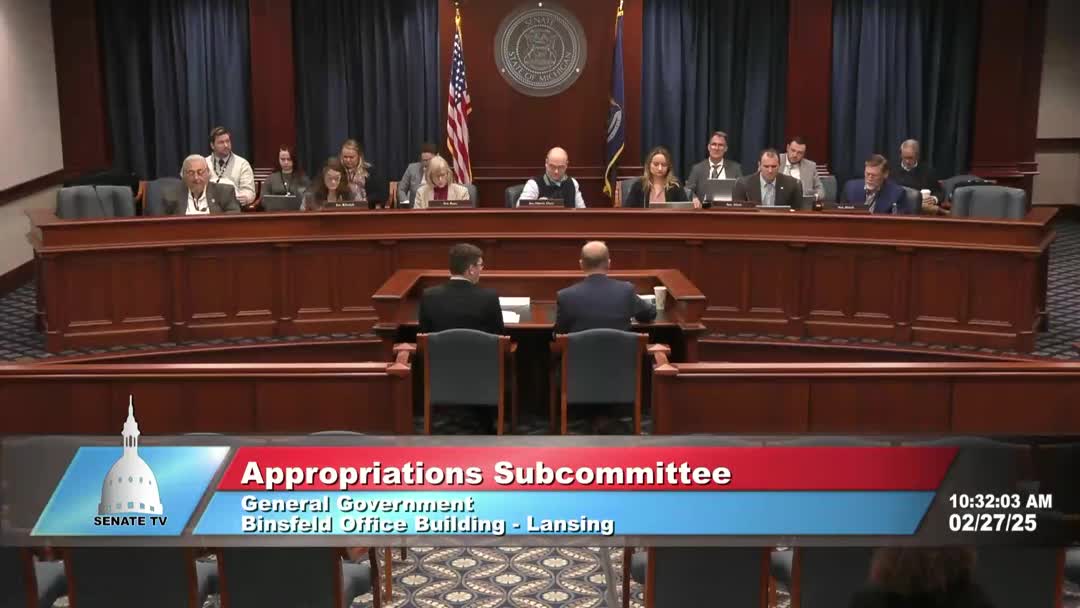
The Appropriations Subcommittee on General Government heard a presentation from the Senate Fiscal Agency on the Attorney Generalbudget recommendation for fiscal year 2025-26, including proposed boilerplate changes and modest program increases.
Senate Fiscal Agency analyst Michael Sarkees summarized the recommendation and historical context, noting that recent one-time spending created a visible spike in the Attorney Generalgeneral fund: "you'll see a spike in general fund. If any of you have questions about that, it's related to, 21,400,000.0 in one-time spending for the 23-24 fiscal year." Those one-time items included funding for gun-case backlog support and a Next Gen data integration project, each about $10 million.
The nut graf: the agency flagged two boilerplate changes that alter reporting and notification practices tied to litigation proceeds and settlements. The subcommittee was told those changes merit closer review by members and, if needed, testimony from the Attorney General's office.
Details: the fiscal analyst noted section 314 had been recommended for change to remove a reporting requirement tied to proceeds from drinking-water contamination actions. "The reason for the change I can only surmise but my guess would be is because we're gonna have less proceeds in terms of drinking water contamination litigation," Sarkees said. The recommendation would change how about $2.7 million traditionally handled for litigation-investigation costs is treated.
The presentation also flagged removal of part of section 320 that previously required the Attorney General to notify the Senate Fiscal Agency when the state paid more than $200,000 in a settlement. Sarkees said that the notification requirement in that section "has been removed. So take note of that as well."
On line items, the agency called out an authorization to spend up to $950,000 in private funds tied to unadjudicated property seizures related to organized retail fraud, and two requested general-fund program increases: roughly $900,000 for creation of a price-gouging team (described as supporting five FTEs) and about $600,000 to continue legal services for tribal members. Sarkees said the tribal legal-services funding was not new services but an increase in the funding level for continuing services.
Senators questioned the boilerplate changes and the scope of the authority those changes would create. Senator Albert pressed for clarification about the drinking-water litigation proceeds language and whether the proposed change would allow broader access to the spending authority, calling the arrangement "Fox in the hen house" as he tried to understand how the authority would be structured. Sarkees said his reading suggested access might include both offices and individuals "in their official capacities" and recommended inviting the Attorney General to testify for clarification.
Ending: the subcommittee did not take formal action on the Attorney General recommendation during the meeting; members asked staff to review the specific boilerplate language and to obtain further detail or testimony as needed.