Get Full Government Meeting Transcripts, Videos, & Alerts Forever!
Get email alerts on the State Investments Divestment topic
No spam. Unsubscribe anytime.
Bill would direct divestment from risky Chinese entities; investment officials warn of large portfolio costs
Summary
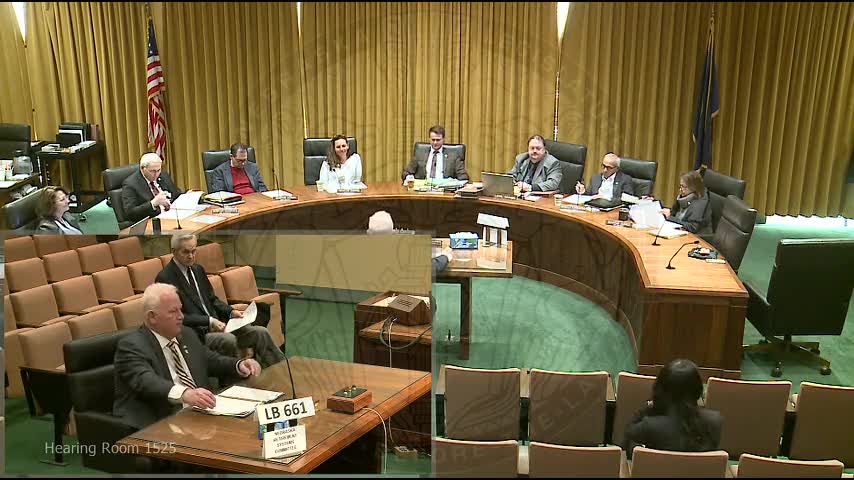
Sen. Bob Anderson introduced LB661 to direct the Nebraska Investment Council to divest state pension and retirement plans from Chinese entities that U.S. authorities have deemed high risk.
Sen. Bob Anderson introduced LB661 to require the Nebraska Investment Council (NIC) to divest state pension and retirement investments from Chinese entities the U.S. government has designated as high risk. Anderson said the measure would prevent losses similar to those some states suffered with investments tied to Russia and argued the bill is a "targeted and pragmatic financial policy aligned with federal designations."
Proponents framed the bill as a fiduciary risk-management measure tied to national security. Auditor Mike Foley said the bill's framework is reasonable because the legislature would define off-limit entities and NIC would implement the policy; Foley said his office could audit compliance. Mary Bagalgalis of State Shield described federal lists and other authorities that, in her view, identify high-risk companies and said the bill would help protect Nebraska's teachers, first responders and other public employees from geopolitically driven losses.
NIC officials and investment staff opposed a legislative mandate to divest without detailed qualification. Ellen Hung, speaking for the Nebraska Investment Council, said NIC already follows executive orders that restrict investments in Chinese military-industrial entities and that an immediate mandate would have material costs and operational consequences. Hung cited NIC estimates, provided as a handout, that a forced divestment could produce an immediate reduction in revenue of about $575 million and increase expenses by $22 million; she said moving to ex-China mandates would likely prevent NIC from retaining top-quartile outside managers and private-market funds, reducing returns and increasing transaction costs.
NIC staff explained the mechanics and the portfolio effects. The council said China direct exposure represents a small share of the portfolio (about 2.5%), but divestment mandates would affect many strategies and about half of total assets under management because China holdings are embedded across global funds. NIC staff said selling private-market holdings quickly could require steep discounts (they cited market experience suggesting 10% discounts for buyout funds and up to 38% for venture funds) and that manager replacement and transaction costs would be material.
Committee members asked about timing, fiduciary duties, exemptions and whether state law should supersede NIC discretion. Some senators noted other states have adopted partial divestment or targeted approaches (Texas and Florida were cited for state-owned enterprise restrictions); others pressed whether the NIC had been responsive to information requests; Anderson said he had requested details about which restricted entities the state holds and had not yet received a full response.
No committee vote was taken. NIC staff said they were preparing a fiscal note and additional detail and that they have been reviewing ways to reduce China exposure methodically. Supporters urged a legislative framework to set statutory guardrails; NIC urged a measured, investment-driven process to avoid unintended losses and manager attrition.