Get Full Government Meeting Transcripts, Videos, & Alerts Forever!
Get email alerts on the Pensions Colas topic
No spam. Unsubscribe anytime.
Neb. senator proposes COLA for OPPD retirees; utility warns of $45 million annual cost
Summary
Sen. John Kavanaugh introduced LB571 to require Omaha Public Power District to give Social Security–style cost-of-living adjustments to retirees ineligible for Social Security. Union and retiree advocates supported the bill; OPPD opposed it, saying it would require about $45 million annually and cut the plan's funded ratio.
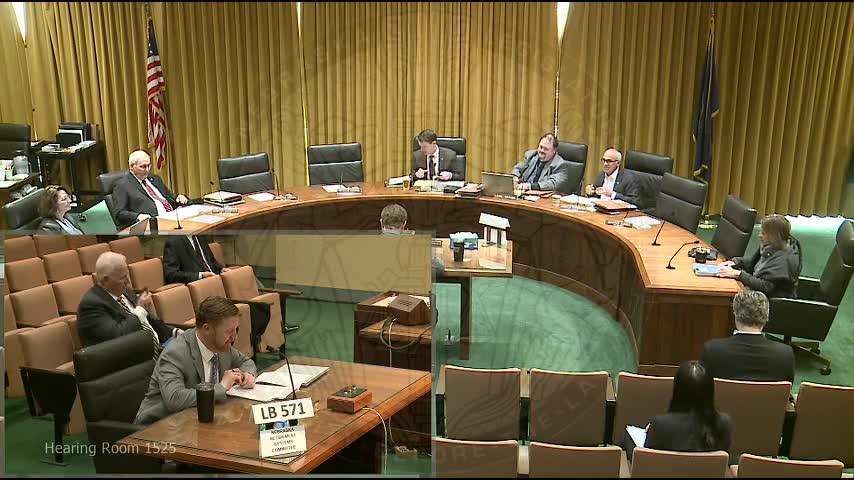
Sen. John Kavanaugh, D-Omaha, introduced LB571 to the Nebraska Retirement Systems Committee, proposing that public power districts that operate defined-benefit plans provide an annual cost-of-living adjustment (COLA) equal to the Social Security Administration's COLA to retirees who are ineligible for Social Security benefits.
The bill targets retirees from the Omaha Public Power District (OPPD) who, officials and union representatives said, do not receive Social Security but currently lack an automatic COLA on their defined-benefit pensions. "Retirees in OPPD cannot receive Social Security benefits but do not receive a cost of living adjustment on the retirement benefits that they have earned," Kavanaugh said in his opening statement.
The bill drew support from union leaders and a long-time OPPD employee. Mark Salerno, president and business manager of International Brotherhood of Electrical Workers Local 1483 and a 37-year OPPD employee, told the committee the lack of COLA leaves retirees exposed to inflation. "A fixed income in the face of inflation can be devastating for retirees," Salerno said, citing recent Social Security COLAs of 8.7% in 2022 and smaller adjustments in later years.
OPPD officials opposed the mandated COLA. John Thurber, OPPD's director of Treasury and Financial Operations, told the committee LB571 would require a roughly 3% annual rate increase and raise OPPD's annual required contribution by about $45 million. "Requiring OPPD to have retirement fund COLAs would require a 3% COLA to all traditional plan participants ... and would increase OPPD's annual contribution by approximately $45,000,000 each year," Thurber said. He added that making COLAs mandatory in state law would require OPPD to treat the adjustments as "substantially automatic," increasing the plan's liability by an estimated $420 million and reducing the funded ratio from about 74% to about 60%.
Committee members questioned funding options and timing. Several senators asked whether the COLA had been part of past collective bargaining, whether new hires are affected, and whether the timing was appropriate given funding pressure on pension plans statewide. Salerno said OPPD historically provided COLAs from 1992 through 2009 but that they were not part of the collective bargaining agreement during that period. Kavanaugh noted that 58% of current employees are covered by a newer cash-balance plan and would not benefit under LB571, and he said the pool of traditional defined-benefit participants is shrinking as new employees join the cash-balance plan.
No formal action or vote was taken at the hearing. Senator Kavanaugh closed by saying he is open to amendments and further discussions to make the bill feasible for stakeholders. The committee recorded two written proponents and no written opponents or neutrals on the bill at the time of adjournment.