Get Full Government Meeting Transcripts, Videos, & Alerts Forever!
Get email alerts on the Workforce Health topic
No spam. Unsubscribe anytime.
Lawmakers hear bill to add dietitian‑nutritionists to Nebraska loan‑repayment incentive program
Summary
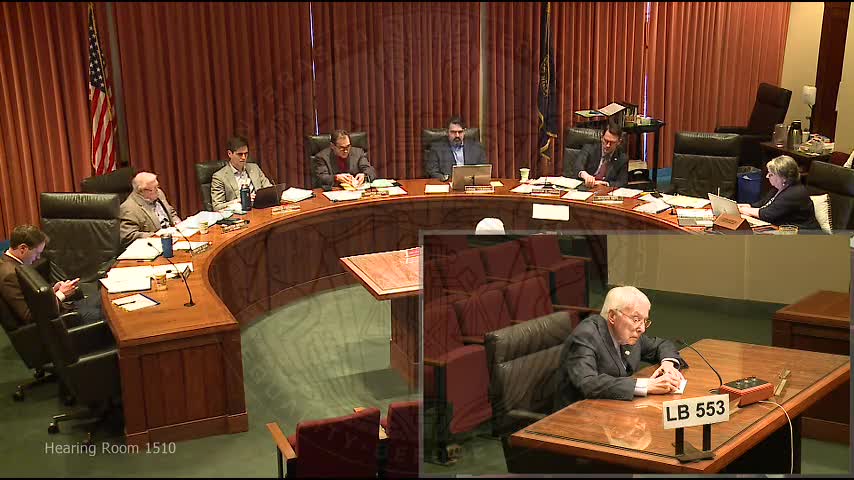
Sen. Merv Riepke introduced LB553 to add licensed dietitian‑nutritionists to Nebraska's loan‑repayment incentives for health professionals who agree to practice in underserved or rural areas.
Senator Merv Riepke introduced LB553 to expand the state’s health workforce incentives to include licensed dietitian‑nutritionists (registered dietitians) under the statute that supports loan repayment and recruitment for health professionals who practice in underserved areas.
Riepke said dietitians play an important preventive and clinical role — particularly in rural communities and in managing chronic diseases such as diabetes and obesity — and argued that including dietitians in the loan‑repayment statute would help recruit and retain professionals in underserved areas. He noted that while GLP‑1 medications (weight‑loss drugs) have a role, they are not a substitute for nutrition care and long‑term lifestyle changes that dietitians provide.
Representatives of the Nebraska Academy of Nutrition and Dietetics and the University of Nebraska Medical Center's medical nutrition programs described statewide shortages of dietitians, especially outside the Omaha‑Lincoln metro area. UNMC students and practicing dietitians explained that completing an accredited program and supervised practice culminates in a registered dietitian credential (now commonly a graduate‑level pathway) and that rural hospitals, skilled‑nursing facilities and outpatient clinics often lack local dietitians. Several witnesses said patients travel long distances to access specialty nutrition care (for feeding disorders, complex metabolic conditions, or malnutrition management) and that telehealth can help but does not replace the value of in‑person clinical assessment for many pediatric and complex cases.
Witnesses supplied a statewide map showing that many Nebraska counties have few or no licensed dietitians. They argued that medical nutrition therapy is cost‑effective in treating and preventing chronic disease — citing research on per‑patient savings and improved outcomes — and that including dietitians in the Rural Health Systems and Professional Incentives Act (the statute named in testimony) would align workforce incentives with patient need. Students testified they would be more likely to practice in Central and Western Nebraska if loan‑repayment opportunities were available.
Committee members asked questions about education pathways (current requirements include a graduate degree and supervised practice), where dietitians practice (hospitals, nursing homes, outpatient clinics) and whether telehealth is an alternative (witnesses said telehealth helps but in‑person care is often required for complex pediatric feeding and malnutrition cases). There was no opposition testimony at the hearing; supporters urged the committee to advance LB553 so Nebraska can strengthen preventive nutrition services in underserved communities.