Get Full Government Meeting Transcripts, Videos, & Alerts Forever!
Get email alerts on the Energy Policy topic
No spam. Unsubscribe anytime.
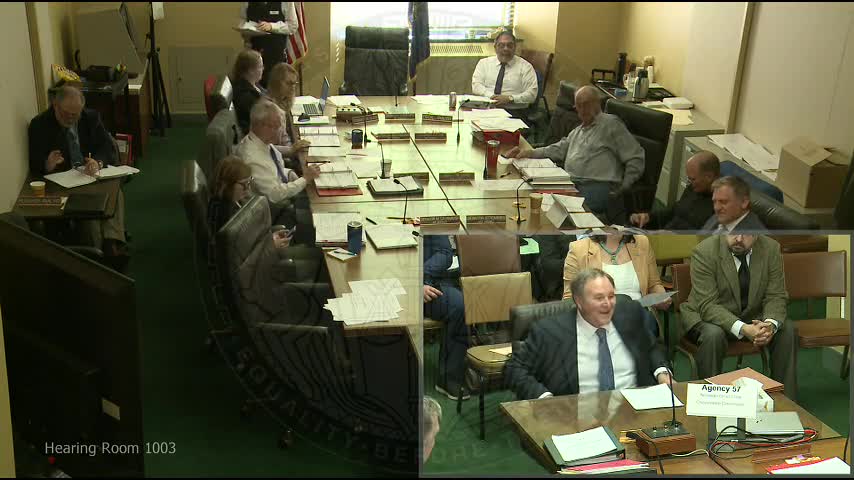
Oil and gas regulator, ethanol industry warn against repeal of Nebraska CO2 geologic storage statute in budget bill
Summary
The director of the Nebraska Oil and Gas Conservation Commission and renewable fuels stakeholders told the Appropriations Committee that language in LB 264 would repeal the state’s 2021 geologic CO2 storage statute and remove a $75,000 appropriation, undermining work already paid for by industry and landowners.
Stan Belleiu, director of the Nebraska Oil and Gas Conservation Commission, told the Appropriations Committee that section 136 of LB 264 removes a $75,000 General Fund line for the agency’s geologic storage of carbon dioxide program and also repeals the underlying statutes enacted as LB650 in 2021.
Belleiu said the 2021 Geologic Storage of CO2 Act created a predictable regulatory framework and that industry has already invested millions of dollars in site characterization and test wells. He described landowner engagement in western Nebraska — where Belleiu said a landowner association had contracted with a company (Tallgrass Carbon Storage was referenced in other testimony) and had hundreds of thousands of acres under lease — and noted that many landowners have received signing bonuses and that some projects have drilled wells for additional data.
Renewable Fuels Nebraska, representing ethanol plants and related agribusiness groups, urged lawmakers to preserve the statute and said repealing it would be “devastating” to ethanol producers. Dawn Caldwell, executive director of Renewable Fuels Nebraska, told the committee that Bridgeport Ethanol expects to use a test well as a permanent injection well once it receives a Class VI permit and that Tallgrass has worked with more than 300 landowners to make over 400,000 acres of pore space available and had paid nearly $10 million in lease payments, according to written comments cited in testimony.
Belleiu framed the statute as part of a predictable regulatory environment that encourages private investment and warned that repealing it after multi‑year investment would be “reactive” and undermine that predictability. He also said the agency believes the biennial appropriation level included in the budget language is otherwise appropriate for its operations but objected specifically to striking the statute and removing the $75,000 line in the funds bill as drafted.
Committee members asked staff and witnesses clarifying questions about the scope of the statute and tax credits referenced by industry witnesses; witnesses replied that federal and state tax incentives (including 45Q credits at the federal level) underpin project economics and that detailed permitting and primacy work is ongoing.
No formal committee vote was recorded in the hearing transcript. Multiple witnesses asked the Legislature to keep the statute in place and to work with the governor’s office to remove the repeal language from the funds bill while allowing the regular budgeting process to continue.