Get Full Government Meeting Transcripts, Videos, & Alerts Forever!
Get email alerts on the Substance Use topic
No spam. Unsubscribe anytime.
Bill would use opioid‑settlement fund to expand medication‑assisted treatment for problem‑solving courts
Summary
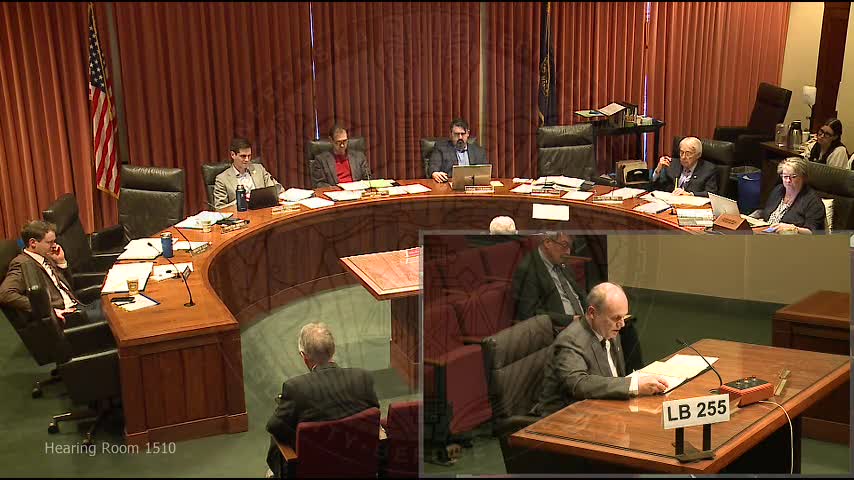
Sen. Dan Quick introduced LB255 to appropriate opioid settlement infrastructure funds to help problem‑solving courts provide medication‑assisted treatment (MAT) to qualifying participants who lack immediate access to Medicaid‑covered care.
Senator Dan Quick introduced LB255, which would appropriate funds from the Nebraska opioid treatment infrastructure cash fund to support medication‑assisted treatment (MAT) for qualifying participants in problem‑solving courts, including adult drug courts and other specialty courts.
Quick described MAT as the evidence‑based combination of FDA‑approved medications with counseling and behavioral therapies that reduces opioid overdose deaths, illicit opioid use and criminal activity and improves treatment retention. He said the bill would make $1,000,000 (as introduced) available to problem‑solving courts to finance MAT for justice‑involved individuals who may not immediately be eligible for Medicaid services following release.
Proponents — including Lancaster County Community Corrections, the Administrative Office of Courts and Probation, the Nebraska Association of Behavioral Health Organizations and advocacy groups — argued courts need additional funding to pay for MAT medications and associated services because some participants are ineligible for Medicaid at the time of release or are otherwise unable to access medications. They told the committee MAT is associated with substantially lower overdose risk and better completion and recidivism outcomes in drug court populations. Advocates also said investment in MAT and problem‑solving courts produces taxpayer savings by reducing incarceration costs and lowering recidivism.
The Administrative Office of the Courts and Probation said it currently provides limited financial assistance for evaluations and medication management but lacks funds to cover prescribed MAT medications for participants; the requested appropriation would permit that support. Lancaster County Community Corrections described drug‑court populations and national data on opioid‑related mortality and argued enhanced MAT access could improve program success rates.
The Division of Behavioral Health at DHHS testified in opposition. Director Dr. Thomas Janousek said the opioid treatment infrastructure cash fund was intended for capital and infrastructure projects (construction, renovation and stand‑up of treatment sites) and that the department is prioritizing capital investment for crisis stabilization and withdrawal centers across the state. Janousek said Nebraska already has existing service funding sources that can support MAT (the behavioral health services fund, the state opioid response grant, and Medicaid), and recommended using those sources rather than diverting infrastructure money to pay for medications and services.
Committee members discussed how problem‑solving courts operate, the timing gap when justice‑involved people may lack immediate Medicaid coverage after release, and the larger question of how opioid settlement funds should be allocated between infrastructure and service delivery. No formal vote occurred during the hearing; proponents urged the committee to find an appropriate funding path to expand access to MAT for justice‑involved Nebraskans.