Get Full Government Meeting Transcripts, Videos, & Alerts Forever!
Get email alerts on the Judicial Privacy topic
No spam. Unsubscribe anytime.
Bill would remove judges’ home addresses and phone numbers from public retention filings
Summary
Sen. Jana Hughes introduced Legislative Bill 334 to require the Nebraska Secretary of State to withhold sitting judges’ home addresses and phone numbers from public retention-filing records to protect judges and their families.
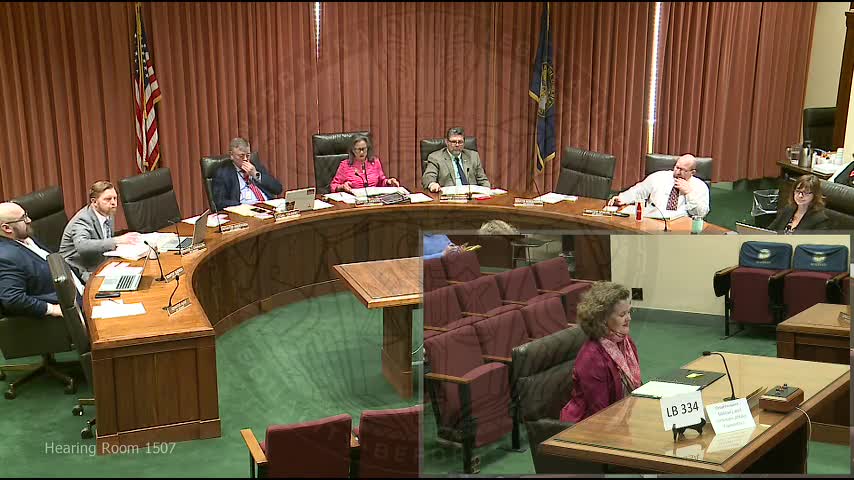
Bill: Sen. Jana Hughes, who represents District 24, introduced Legislative Bill 334 to the Government, Military and Veterans Affairs Committee and said the measure would require the Nebraska Secretary of State to withhold sitting judges’ residential addresses and phone numbers from public retention-filing records to protect judges and their families.
Why it matters: Hughes and judicial-branch witnesses told the committee that judges have been targeted after controversial rulings and that public access to home addresses and phone numbers can create safety risks. Supporters described the bill as complementary to recent county-level confidentiality measures and said it would not change retention voting.
Details and testimony: "Judges have been frequently targeted by individuals convicted of crimes or family members of those convicted," said Corey Steele, Nebraska State Court Administrator. Steele told the committee the judicial branch has already worked with counties to keep addresses confidential on some county websites and that LB334 and a white-copy amendment labeled AM142 were drafted with input from the Secretary of State’s office and Supreme Court staff to extend confidentiality for retention filings.
Hughes said the bill does not prevent voters from deciding retention contests: "I wanna clarify that LB334 does not restrict the public from voting on whether or not to retain judges. This simply restricts the access to personal information included on their application to be retained on the ballot." Committee discussion clarified that retention materials would continue to list a judge’s home court and the counties they serve, not their private street address.
Supporters: Tim Haruza, appearing on behalf of the Nebraska State Bar Association, said the bill is a reasonable privacy measure for judges who do not run in partisan contests but face periodic retention votes. He described Nebraska’s retention system as distinct from candidate elections and said the added privacy is appropriate for appointed judges facing retention.
Opposition and press concerns: Korby Gilbertson, representing Media of Nebraska Inc., opposed the bill on open-records grounds, saying criminals generally do not use the Secretary of State’s website to locate people. "Criminals generally aren't looking at the Secretary of State's website or the assessor's website to get addresses. They look at Google," Gilbertson said, and argued that removing records from public state databases reduces transparency.
Clarifications from witnesses: Committee members asked whether withholding would be automatic and whether retention ballots would still show a judge’s judicial district. Steele said the withholding would be automatic under the bill and that ballots or retention materials would still identify the judge’s court and the counties they serve, but not the judge’s residential address or phone number.
Next steps: The bill was introduced and heard; an amendment developed with the Secretary of State and Supreme Court staff (AM142) was distributed. No committee vote was recorded in the hearing transcript.
Ending: Proponents urged the committee to advance the bill citing judicial safety; media and open-government interests urged caution about narrowing public records access. The hearing record includes in-person and written testimony and the committee did not take final action during the session recorded in the transcript.