Get Full Government Meeting Transcripts, Videos, & Alerts Forever!
Get email alerts on the State Budget And Federal Relations topic
No spam. Unsubscribe anytime.
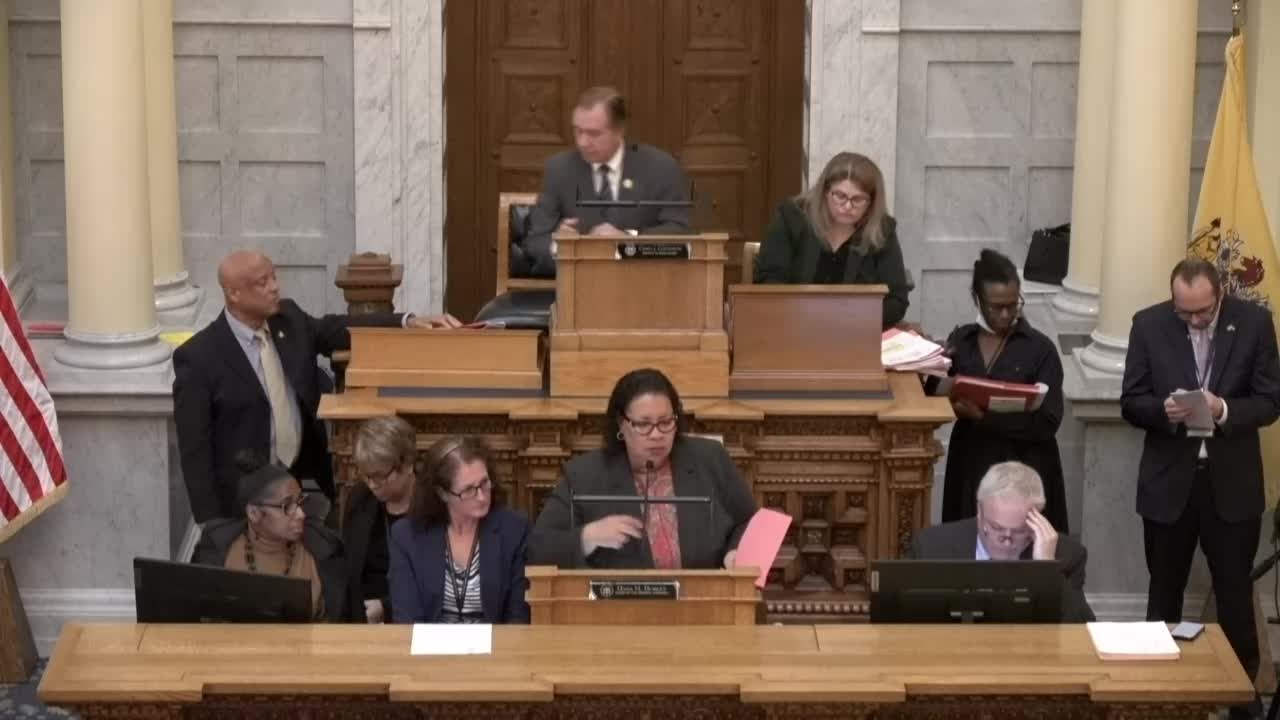
Assembly approves resolution opposing U.S. House budget cuts after extended floor debate
Summary
The New Jersey General Assembly passed Assembly Resolution 178, condemning a U.S. House budget resolution that would cut about $1.5 trillion from the federal budget. Lawmakers split along ideological lines during a lengthy debate on the resolution’s language and potential local impacts, particularly to Medicaid and health services.
The New Jersey General Assembly voted to approve Assembly Resolution 178, which condemns the U.S. House of Representatives for passage of a budget resolution that would cut roughly $1,500,000,000,000 from the federal budget and urges the U.S. Senate to reject that measure. Majority Leader Greenwald moved the resolution; the final vote was 44 in favor, 10 opposed and 8 abstentions.
Supporters said the resolution warns that deep, rapid federal cuts could harm state programs and the health-care providers that serve New Jersey residents. "We receive $27,000,000,000 from the federal government, on average, to help support our budget," Majority Leader Greenwald said on the floor, urging caution and a careful review of any federal proposals. He framed the resolution as a statement of concern for programs that provide medical care and support services to households across the state.
Opponents described the resolution as politically driven and argued the House measure is an aspirational, nonbinding document. "The congressional budget resolution ... is an aspirational document. It's not binding," Assemblyman Weber said, calling the resolution a misplaced lecture and urging members to focus on the state budget and their own fiscal choices. Other members from both parties criticized the timing and the resolution’s single-issue focus.
Several lawmakers pressed the Assembly to prioritize the state’s budget process instead of issuing a public rebuke of Congress. Assemblywoman Munoz and others said they opposed condemning congressional action when the legislature itself must make difficult spending choices at the state level. Proponents countered that state officials and congressional delegations receive constituent feedback and that a formal state-level statement could influence federal lawmakers in competitive districts.
The resolution advanced despite several procedural motions and a failed amendment to replace it with a proposal to establish a state delegation on government efficiency. The clerk announced the final tally as 44-10-8; the Speaker declared the resolution passed and that it would take the usual course of past resolutions.
Although largely symbolic — the Assembly cannot bind Congress — backers said the action was intended to alert federal lawmakers to potential downstream effects on Medicaid, hospitals and other services New Jersey residents use.
The Assembly moved on to other calendar items after the vote.