Get Full Government Meeting Transcripts, Videos, & Alerts Forever!
Get email alerts on the Behavioral Health topic
No spam. Unsubscribe anytime.
Committee considers bill to let behavioral health regions expand services and broaden housing aid eligibility
Summary
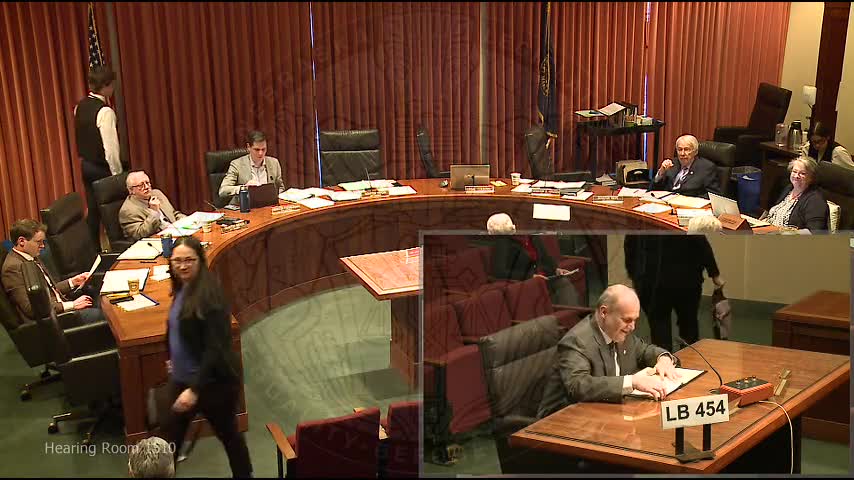
Sen. Dan Quick told the HHS Committee LB454 would let regional behavioral health authorities expand services within their existing provider networks without going through a time‑consuming public RFP process and would clarify that regions may use housing assistance funds to serve people with substance use disorders.
Senator Dan Quick, sponsor of LB454, told the Health and Human Services Committee the bill is intended to increase access to behavioral health services by giving regional behavioral health authorities (RBHAs) more procedural flexibility when contracting with providers and by clarifying that the regions’ housing assistance funds may be used for people with primary substance use disorder diagnoses as well as for people with serious mental illness.
Under current law, Quick said, regions must run a public competitive bidding process to enroll or expand providers; the bill would allow regions to contract directly with existing providers in their networks to add services and to run one‑year pilot projects approved by HHS without the full RFP process. Supporters said the RFP requirement often slows efforts to start time‑sensitive pilot projects and disincentivizes small providers from applying.
Department of Health and Human Services Division of Behavioral Health director Dr. Thomas Janousek testified in support but asked the committee to remove the bill’s explicit pilot‑project language, arguing regions can already run pilot projects if they contract directly; the requested technical change would strike restrictive pilot definitions that limit extension and potentially create unnecessary statutory constraints.
Regional administrators and community providers described how the flexibility would let them react faster to local needs. Region 3 (central Nebraska) and Mid Plains Center (Grand Island) gave examples: a new emergency family support pilot launched quickly because region staff could partner with local providers and use available ARPA funds; without faster contracting the service could have been delayed months by an RFP. Supporters argued being able to contract quickly is especially important where workforce shortages or local crises require immediate service launches.
The bill also clarifies the definition of eligible recipients for the regional housing assistance (supported housing) program. Region 5 and other regional witnesses said the housing vouchers funded by the state’s documentary stamp tax currently focus on people with serious mental illness; LB454 would explicitly allow regions to serve people with substance use disorders who need housing supports. Region 5 said the regions had housed about 734 people so far in the fiscal year and had about 64 people on a wait list for housing assistance; proponents said expanding eligibility to people with substance use disorders aligns with federal priorities and the regions’ community care role.
Members asked about oversight and safeguards: DHHS said regions would continue to contract with oversight and the Department could require outcomes and programmatic reporting. DHHS also noted the need to prioritize capital projects funded from the opioid treatment infrastructure cash fund and recommended a narrow technical change to remove prescriptive pilot language that could prevent necessary adjustments to pilot timelines.
Proponents — regional administrators, Mid Plains Center and NAVHO (Nebraska Association of Behavioral Health Organizations) — urged the committee to advance LB454 to general file to reduce administrative barriers and speed community responses to behavioral health needs. No formal committee vote occurred at the hearing.