Get Full Government Meeting Transcripts, Videos, & Alerts Forever!
Get email alerts on the Health Workforce topic
No spam. Unsubscribe anytime.
Committee holds bill creating pathway for internationally trained physicians pending further work with Medical Composite Board
Summary
Sen. Kim Jackson's bill would create provisional and limited licenses for internationally trained medical graduates to work under supervision in underserved settings; the committee withheld action after Medical Composite Board representatives raised concerns about residency comparability, supervision settings and time-out-of-practice windows.
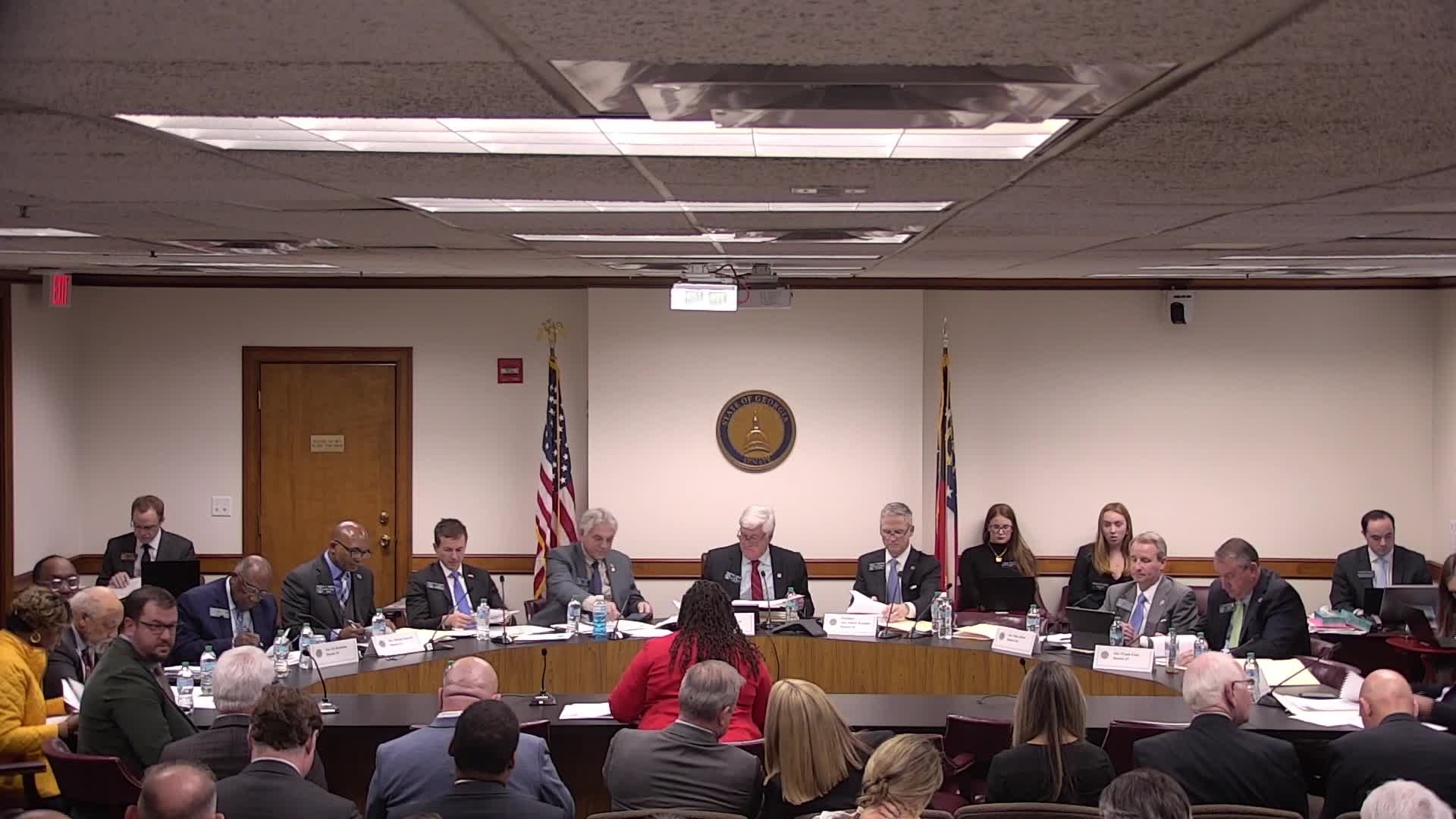
Sen. Kim Jackson laid out a committee substitute for Senate Bill 142 to create a defined licensure pathway for international medical graduates (IMGs) who trained outside the United States. The substitute would allow qualified IMGs to obtain a provisional license to practice under supervision for two years at qualifying institutions, then a limited license, and ultimately full licensure after passing U.S. licensing exams (Step 1, Step 2, Step 3) and meeting other board criteria.
Jackson emphasized safeguards: provisional and limited licenses would only be available at facilities with the capacity and personnel to educate and assess IMGs, malpractice coverage would be required, and the Georgia Composite Medical Board would be granted latitude to adopt additional criteria. "We have given the board significant latitude multiple times along the way in order to put in whatever safety checks they feel like are necessary," Jackson said.
Representatives of the Georgia Composite Medical Board told the committee they continued to have concerns. Kimberly (last name not specified), a board representative, said boards lack a consistent, nationally recognized process to assess whether foreign postgraduate training is substantially comparable to U.S. residencies and recommended accredited-residency language and that the first two years occur in teaching institutions. The board also recommended a shorter recent-practice window (3 of the last 5 years) to align with limits applied to U.S.-trained physicians.
Committee members asked whether requiring Step 3 earlier would address board concerns; board staff said the three-step examination sequence could be required pre-placement but noted practical timing and training implications. Several senators urged continued work with the Composite Medical Board; the bill sponsor and the board agreed to keep negotiating. Chairman Kousser said the committee would withhold action and encouraged further meetings between the sponsor and the board before returning the bill.