Get Full Government Meeting Transcripts, Videos, & Alerts Forever!
Get email alerts on the Financial Crime Skimming topic
No spam. Unsubscribe anytime.
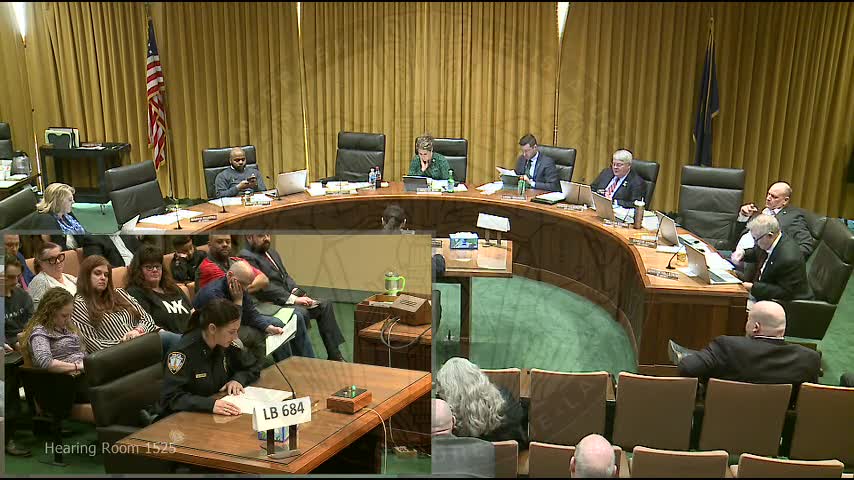
Lawmakers hear bill to target skimmer schemes, link financial fraud to trafficking and creation of restitution fund
Summary
Sen. Carolyn Boson proposed LB559 to criminalize the unauthorized use of skimmer devices, create higher penalties for leaders of organized financial‑crime enterprises and build a restitution fund for victims.
Senator Carolyn Boson introduced LB559, a package to address growing financial crimes (skimming, card‑washing and organized fraud), add higher penalties tied to the size of an enterprise and create a Financial Fraud Victims Restitution Fund.
Boson described a surge in skimming and other payment‑card fraud: industry witnesses cited sharp increases in compromised cards and urged a statutory toolset to help prosecutors go after organizers rather than only the low‑level participants. ‘‘Mastercard reported skimmers infected thousands of sites in 2022 and 2023, and compromised cards rose sharply,’’ the sponsor told the Judiciary Committee.
Law enforcement and financial industry witnesses described how organized groups—sometimes foreign—use skimmers at ATMs and pumps, wash card data onto blank or gift cards and move cash through fraud‑friendly merchants. Douglas County investigator Michael DeChellis and bank fraud investigators said schemes can cost banks, businesses and consumers large sums and often use low‑paid couriers or recruited account holders, creating a layered, hard‑to‑trace structure.
Supporters said a kingpin‑style statute would let state prosecutors pursue organizers of multi‑jurisdictional fraud rings when federal charges are not appropriate or available. Several witnesses urged adding a fund to compensate victims of financial transaction offenses; Boson’s AM465 supplement would create a Financial Fraud Victims Restitution Fund and permit victims to apply for reimbursements.
Opposition testimony from the Nebraska Criminal Defense Attorneys Association raised concerns about overlap with existing conspiracy law, double‑counting or charge‑stacking, and proof standards for ‘‘kingpin’’ leadership claims. Testifiers urged careful drafting to avoid unintended prosecutorial overreach. Witnesses said the amendment addresses some civil‑forfeiture concerns; defenders still asked for clarity about how the kingpin elements will be proved and whether the statute would be focused only on financial crimes.
No committee action was taken; the sponsor and stakeholders said they would continue negotiations on drafting, thresholds for enterprise‑size penalties and victim restitution procedures before the bill reaches a committee vote.
The committee heard written positions in support from multiple banks and consumer protection offices and a single written opposition from the defense bar; several law‑enforcement, banking and advocacy witnesses testified in person.