Get Full Government Meeting Transcripts, Videos, & Alerts Forever!
Get email alerts on the Dual Enrollment Lb173 topic
No spam. Unsubscribe anytime.
Lawmakers hear broad support for LB173 to fund dual‑enrollment tuition; proponents say the program boosts graduation, college persistence and workforce skills
Summary
More than two dozen schools, businesses and education groups testified in favor of LB173, which would replace expiring ARPA support and add state funds to keep dual-enrollment tuition low or free; witnesses said dual enrollment increases high‑school graduation, college enrollment and on‑time credential attainment.
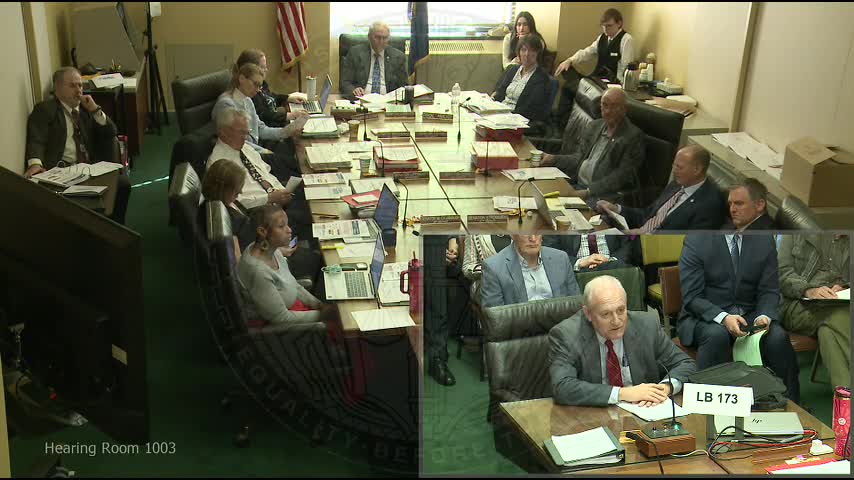
Senator Jason Prokop’s LB173 drew widespread testimony from community-college leaders, K‑12 superintendents, business representatives, students and workforce groups who urged the Appropriations Committee to provide $10 million in state funds in the first year and $11 million in the second year to replace expiring ARPA dual‑enrollment support and expand access statewide.
Prokop argued dual enrollment provides one of the highest returns on public investment by helping students earn college credits, industry credentials and better labor-market outcomes while still in high school. Supporters supplied data and local examples: Northeast Community College and Metro Community College described tuition reductions that allowed hundreds or thousands of high‑school students to earn credits free or at low cost; the Nebraska Department of Education and several independent analyses show duel-enrollment students graduate high school and enroll in college at higher rates than peers and are more likely to complete postsecondary awards within six years.
Business witnesses told the committee that dual-enrollment programs produce skilled workers for manufacturing, welding, healthcare and mechatronics and that employers often sponsor career academies. A student witness described earning a welding certificate and continuing to a degree at Southeast Community College at reduced cost; school superintendents gave examples of early‑college programs that produced associate degrees at the time of high‑school graduation.
Advocates said the ARPA-funded $5 million annual supplement (2022–2025) allowed some colleges to make dual enrollment free; the ARPA support ends after the 24–25 school year. LB173 would build on a $3 million existing state general‑fund allocation and provide the $10M/$11M additional funding intended to sustain access, reduce administrative barriers, and support partnerships among K‑12, community colleges and employers.
Testimony included detailed program stories from school districts (Millard, Fremont, Beatrice, Bancroft‑Rosalie, DC West) and endorsements from the Nebraska Chamber of Commerce and industry representatives who said the programs expand the workforce and prevent brain drain. No organized opposition appeared; the committee recorded 70 proponent written comments. Senator Prokop closed by urging members to consider dual enrollment’s long-term return for Nebraska’s students and economy.