Get Full Government Meeting Transcripts, Videos, & Alerts Forever!
Get email alerts on the Insurance Transfer On Death topic
No spam. Unsubscribe anytime.
Bill would extend short insurance window after property passes via transfer‑on‑death deed, sponsor says
Summary
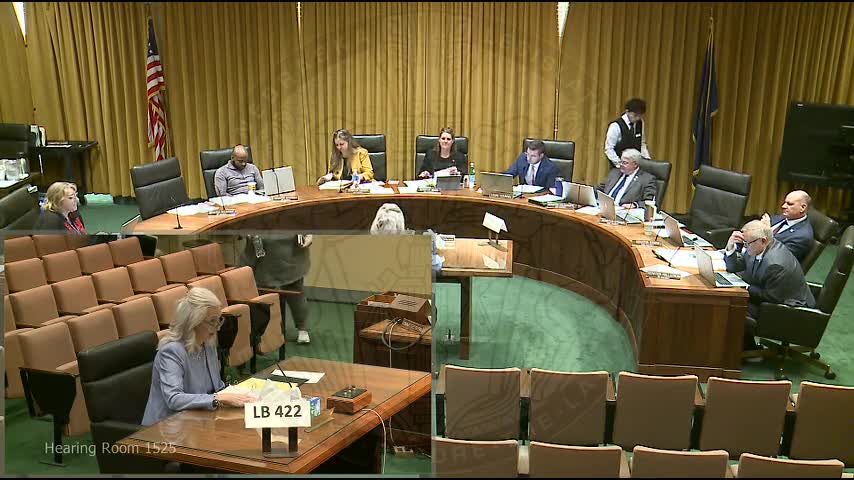
Sen. Tanya Storer introduced LB422 to require temporary insurance coverage for property that passes on death via transfer‑on‑death deeds; sponsors said a 30–60 day window prevents uninsured losses after a transferor’s death and negotiations with insurers were ongoing.
Senator Tanya Storer, representing Legislative District 43, introduced LB422 to create a temporary insurance protection window for beneficiaries of property that transfers by a transfer‑on‑death (TOD) deed. The proposed rule would preserve the deceased owner’s insurance coverage for a set window (the sponsor said 60 days in her opening comments) so a beneficiary has time to obtain a new policy and avoid uninsured losses.
Storer told the Judiciary Committee the bill responds to litigation and practical problems when property passes automatically at death and the new owner has not yet had an opportunity to secure insurance. She cited Robinson v. State Farm, an Eighth Circuit matter discussed in the hearing, where property that transferred by TOD was destroyed shortly after the transferor’s death and the beneficiary faced coverage questions. “The proposed coverage window in LB422 would allow a beneficiary a reasonable window of protection against loss in the wake of the death of the transferor,” Storer said.
Tim Heruza, appearing for the Nebraska State Bar Association, said the association supports the bill and that bar members and insurers have been negotiating language intended to limit the measure to property‑damage coverage and to avoid unintended liability exposure. Robert Bell of the Nebraska Insurance Federation said his members were neutral and that insurance trade organizations and the bill sponsor had been exchanging draft language for multiple years; he summarized the industry’s priorities as requiring a clear warning on TOD status, a limited short temporary coverage window, and termination rules tied to policy period or replacement coverage.
Committee members and witnesses said an amendment was forthcoming to reflect the industry‑sponsor agreement on the technical mechanics (for example, whether the window is 30 or 60 days, what notice is required, and whether coverage extends only to property damage). No committee vote was taken at the hearing and the sponsor said she expected a collaboratively drafted amendment would be ready for committee consideration.