Get Full Government Meeting Transcripts, Videos, & Alerts Forever!
Get email alerts on the Hoa Political Signs topic
No spam. Unsubscribe anytime.
Bill to let homeowners in HOAs display political signs draws ACLU support and HOA pushback
Summary
Sen. Danielle Conrad introduced LB360 to protect political yard signs in homeowners associations. Supporters framed the bill as a narrow protection for core political speech; opponents and HOA representatives warned it would override private covenant agreements and urged respect for HOA amendment procedures.
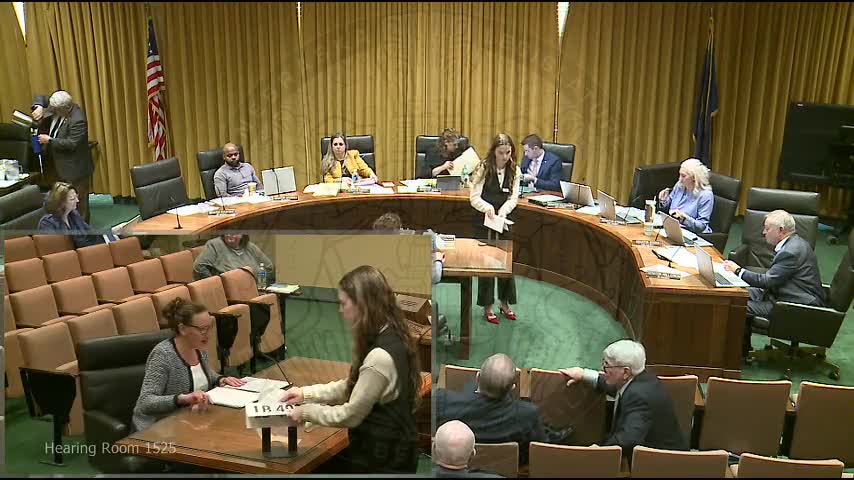
Senator Danielle Conrad introduced LB360 to the Judiciary Committee to permit political yard signs on private property within homeowners associations during defined election periods. She said the bill is intended as a narrow protection for political expression: “There are about six states that have said because political speech is so highly protected ... we are going to allow ... homeowners to put up political yard signs,” Conrad said.
Supporters focused on free‑speech and practical access for voters and volunteers. Dylan Severino, policy counsel for the ACLU of Nebraska, endorsed LB360 and said HOAs should not be able to ban residents from expressing political preferences on their own property. Theresa Cleborad, an HOA homeowner and current HOA president who spoke as a private citizen, described discovering a covenant restriction only after moving in and said she was surprised she could not put a political sign in her window or yard.
Opponents argued the bill intrudes on a private, contractual governance system. Corby Gilbertson, representing realtor and builder associations, told the committee that HOAs are contractual entities and buyers typically receive covenants at closing; he said the bill should not wipe out existing covenants and suggested limiting the proposal to future covenants or including clear, narrow time‑and‑manner rules. Senator Holcroft and others repeatedly emphasized that buyers joining an HOA agree to recorded covenants and that most HOAs provide a formal amendment process requiring substantial homeowner support.
Senator Conrad and proponent witnesses said they are open to narrow, objective time‑place‑manner limits (for example, limits on size, timing relative to election dates, and maintaining HOA control of common areas) designed to avoid viewpoint discrimination while still allowing political expression. The ACLU representative and other proponents emphasized the special constitutional status of political speech and compared HOA sign restrictions to satellite‑dish precedent in federal law (Congress previously limited HOA bans on satellite dishes).
The committee did not take a formal vote. Senators and witnesses agreed to continue stakeholder talks to craft objective definitions and consider an amendment that would balance homeowner expression with HOA property‑management interests.