Get Full Government Meeting Transcripts, Videos, & Alerts Forever!
Get email alerts on the Hoa Solar Pollinators topic
No spam. Unsubscribe anytime.
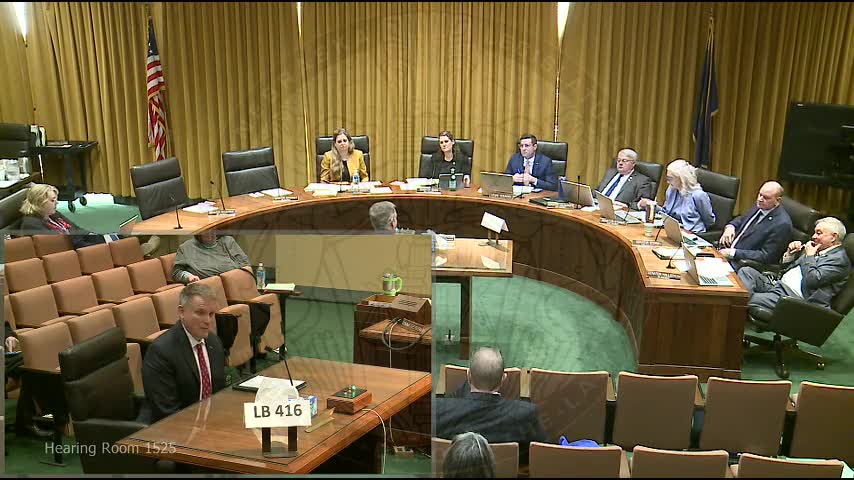
Senate committee considers ban on HOA rules that block rooftop solar and pollinator gardens
Summary
Sen. George Duncan told the Judiciary Committee LB137 would bar homeowners associations from prohibiting rooftop solar collectors and pollinator gardens; environmental groups supported the bill while builders and realtor groups warned it would override private covenant agreements.
Senator George Duncan, state senator for Legislative District 26, introduced LB137 to prevent homeowners associations (HOAs) from adopting or enforcing restrictive covenants that ban solar energy collectors or pollinator gardens on private residential property.
Duncan said the bill is intended to let “homeowners do what they want with their property, within reason,” and noted solar installations and managed pollinator gardens do not, in his view, harm neighboring properties. The measure would void existing HOA provisions that conflict with the new prohibition and provide a civil cause of action against an HOA that violates the section.
Al Davis, representing the Nebraska chapter of the Sierra Club, testified in support and highlighted climate and native‑habitat benefits. “Solar energy has become much more popular as the panels become more efficient, have more durability, and are much cheaper than they once were,” Davis said, adding that pollinator gardens reduce lawn chemical use and provide habitat for bees, butterflies and birds.
Faith‑based and environmental advocates echoed those points. Judy Mueller, of the Green Chalice Committee at Bethany Christian Church, said the church’s pollinator garden fulfills ecological requirements and community benefit. Lorie Benson, representing a climate action team at First Plymouth Congregational Church, said residential solar and pollinator gardens “provide safe, reliable, and inexpensive energy” and help pollinators on which agriculture depends.
Opponents included Corby Gilbertson, representing the Nebraska Realtors Association and builder groups, who said HOAs are contractual arrangements with covenants buyers accept at closing and that the bill would invalidate many existing covenants. Gilbertson said some neighborhood covenants limit plant height near streets and bar certain rooftop placements; he asked that the bill be limited to future covenants or otherwise preserve forward‑looking protections for HOAs.
Committee members questioned whether the bill would pre‑empt local ordinances or improperly remove choices previously agreed by homeowners. Senator Holcroft and others argued that when buyers purchase in an HOA community they accept recorded covenants and that most covenants include internal amendment procedures. Senator Duncan said LB137’s text contemplates existing local pollinator programs and would not override local laws; he also said he was open to compromise language that balanced HOA management and homeowner rights.
The hearing drew organized support through dozens of written proponent comments and a handful of oppositions from realty and builders’ associations. Committee takeaways included requests for clearer definitions (for example, precise standards for “pollinator garden”), time‑place‑manner language for solar installations (setback and aesthetic clauses), and explicit preservation of local height and nuisance rules. No formal committee vote was taken at the hearing.