Get Full Government Meeting Transcripts, Videos, & Alerts Forever!
Get email alerts on the Aging Care Management topic
No spam. Unsubscribe anytime.
Committee hears bill to restore voluntary sliding fee for area agencies on aging care management
Summary
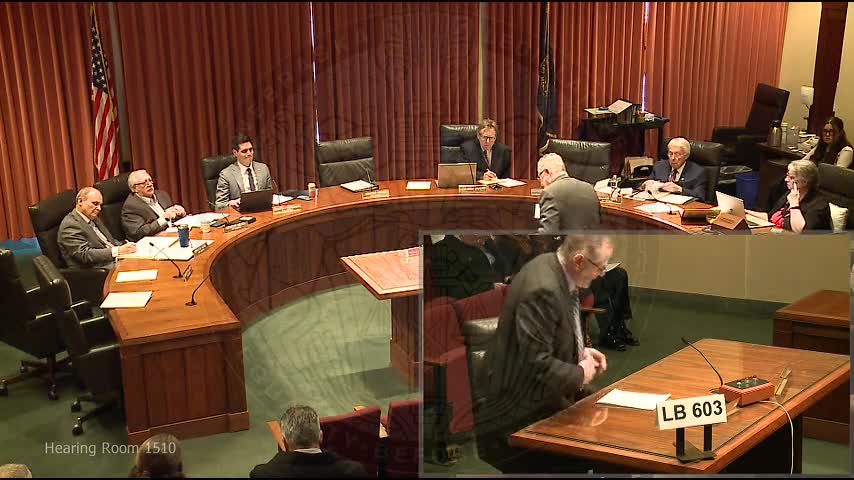
Senators and witnesses gathered at a Health and Human Services Committee hearing to consider LB603, a bill to restore a voluntary sliding fee for care-management services provided by Nebraska area agencies on aging and require the Department of Health and Human Services to pay unpaid client contributions.
Senators and witnesses gathered at a Health and Human Services Committee hearing to consider LB603, a bill to restore a voluntary sliding fee for care-management services provided by Nebraskaarea agencies on aging and require the Department of Health and Human Services to pay unpaid client contributions.
Supporters said the change would restore an interpretation in place for roughly three decades and remove a barrier that led some older Nebraskans to decline services.
LB603 would amend the statutory language governing care management by clarifying that older-adult clients may make voluntary contributions according to a family-income schedule tied to federal poverty guidelines and that DHHS would cover any unpaid amounts. Proponents argued this aligns care management with Older Americans Act-funded services and helps keep people in the community rather than in assisted living or nursing facilities.
Rod Horsley, director of the South Central Nebraska Area Agency on Aging, told the committee that the area agencies on aging provide assessments and coordinate services such as home-delivered meals and transportation. Horsley said the 2018 change in DHHSpolicy had required some clients to pay and that many who were informed they were required to pay then declined services. Horsley said LB603 restores the voluntary-contribution approach and will allow agencies to provide services to those who cannot or will not pay.
Kirstin Reed, CEO of LeadingAge Nebraska, said the policy shift in 2018 had unintended consequences and that restoring the voluntary contribution system is a modest and cost-effective way to protect access to community-based services. Reed cited the fiscal note showing roughly $50,000 in fees collected in recent years and said that figure likely understates the programvalue because some clients dropped services rather than pay.
Senator Beau Ballard, the billintroducer, said the intent is to conserve public resources and keep older Nebraskans in their homes longer. He noted the program operated under the voluntary model for about 30 years before 2018.
No committee vote was recorded during the hearing. The committee was told there were four online proponent comments and no opponents or neutral comments filed for the record during the hearing.
If advanced, the bill would change statutory language and direct DHHS to reimburse area agencies for unpaid voluntary contributions, restoring the earlier administrative practice proponents described.
The committee moved on to its next agenda item after testimony concluded.