Get Full Government Meeting Transcripts, Videos, & Alerts Forever!
Get email alerts on the Education Scholarships topic
No spam. Unsubscribe anytime.
Senate debates expanding Georgia Promise Scholarship to foster parents’ children; critics say foster children are excluded
Summary
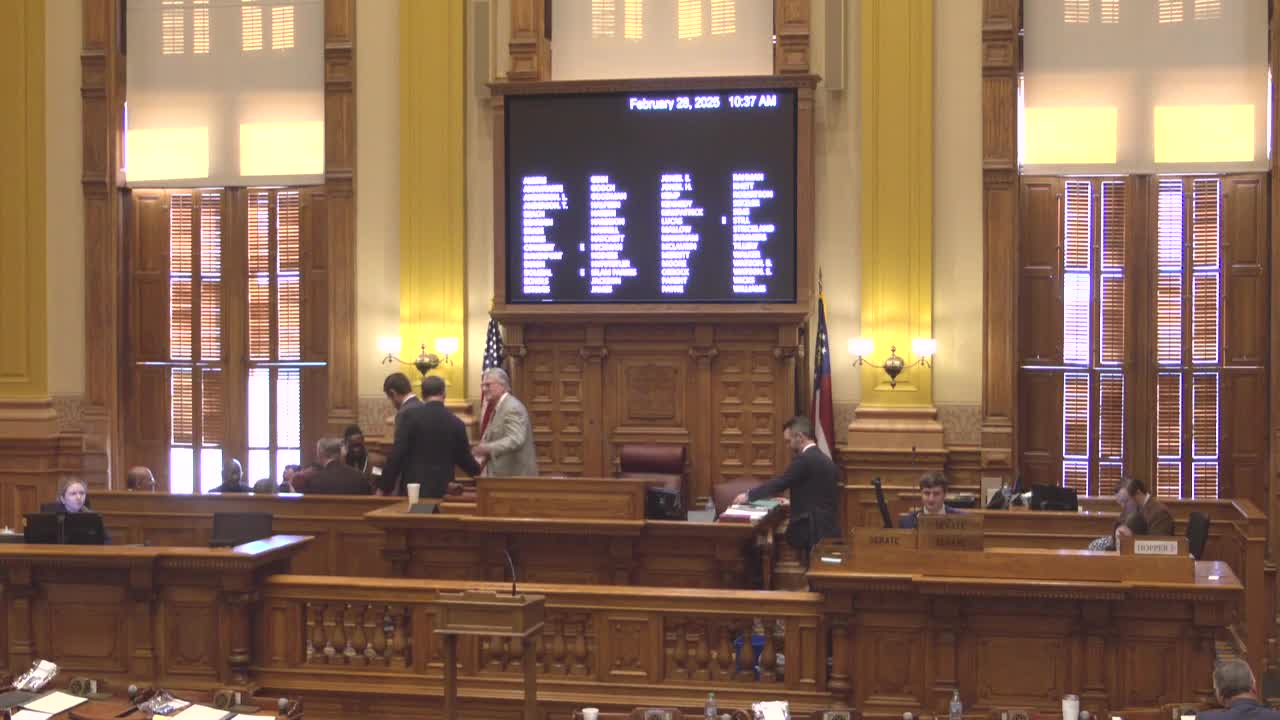
Senator Dolezal brought Senate Bill 152 before the Georgia State Senate on Feb. 28, proposing to amend the Georgia Promise Scholarship Act so that biological or adopted children of individuals who have fostered children would qualify for Promise Scholarship accounts.
Senator Dolezal brought Senate Bill 152 before the Georgia State Senate on Feb. 28, proposing to amend the Georgia Promise Scholarship Act so that biological or adopted children of individuals who have fostered children would qualify for Promise Scholarship accounts.
Dolezal opened discussion by thanking foster families and summarizing the bill: “Quite simply, what the bill does is allows the biological children and the adopted children of parents who have fostered children here in the state of Georgia to be eligible for the Georgia Promise scholarship,” he said. He told colleagues registration for the program opens the following day and said the program’s funds and administration are already in place.
Opponents mounted a lengthy dissent through the minority report, arguing the bill’s current wording rewards foster parents’ own children while excluding the foster children the parents care for. “This bill purports to reward foster care parents. But the sad reality is it forgets the one thing we’re rewarding them for, it forgets the kids,” the senator presenting the minority report said. The minority reporter also raised fairness concerns, saying many foster children attend public schools that would not benefit if the parents’ biological children used scholarships to attend private schools.
Debate touched on technical and policy points raised in committee. Senators asked whether the bill’s eligibility language would allow parents who fostered at any time during the preceding 10 years to qualify; the sponsor confirmed a 10‑year lookback is included in the current text. The sponsor and several supporters described state child‑welfare agency (DFCS) practices and said DFCS already approves some out‑of‑home placements in private schools. Dolezal and others said they would pursue changes in the off session to address inclusion of foster children themselves and other edge cases.
The session record shows the committee substitute for SB 152 was adopted and that a minority report was attached. The sponsor said staff and interested senators would continue work on options for including foster children in the program in future legislation or study committee work. The transcript records committee and floor procedure (adoption of the committee substitute, report agreed to, and the main question being ordered) but does not include a final vote tally for passage of the bill in the chamber.
Supporters characterized the bill as an incentive and a sign of appreciation for families who foster children, and said administrative details (approved expense lists and a third‑party administrator for payments) are already part of the Promise Scholarship framework. Dissenting senators said the bill, as written, risks creating family‑level inequality — where a foster parent’s biological or adopted child could use taxpayer‑funded scholarship dollars to attend a private school while a foster child in the same home would not qualify under the current language.
The sponsor closed by saying he would pursue technical fixes and broader inclusion for foster children in the off session and by thanking the chamber for its consideration.
Background: the Georgia Promise Scholarship (the program created under the education savings/account framework discussed in prior sessions) allows approved educational expenses for eligible students; registration for the program was said to open the day after this session. Lawmakers referenced DFCS procedures for placing students and noted further work will be required to align foster‑care placement rules, homeschool rules, and scholarship allowable expenses if foster children are to be included.
What’s next: Senators said they will continue drafting fixes and possibly return changes to this measure in follow‑up legislation or committee work; the transcript indicates additional study and amendment work was expected but does not document a final enacted outcome for SB 152 on Feb. 28.