Get Full Government Meeting Transcripts, Videos, & Alerts Forever!
Get email alerts on the Campus Conduct And Financial Aid topic
No spam. Unsubscribe anytime.
Bill would allow suspension of state aid for students found to engage in violent or materially disruptive campus conduct; ACLU warns of constitutional risk
Summary
HB 602 would suspend state scholarships, loans or grants for students convicted of or found by campus disciplinary bodies to have engaged in violent, harassing or materially disruptive conduct; sponsor said the bill targets violent and harassing behavior, while the ACLU argued the measure is vague and likely unconstitutional.
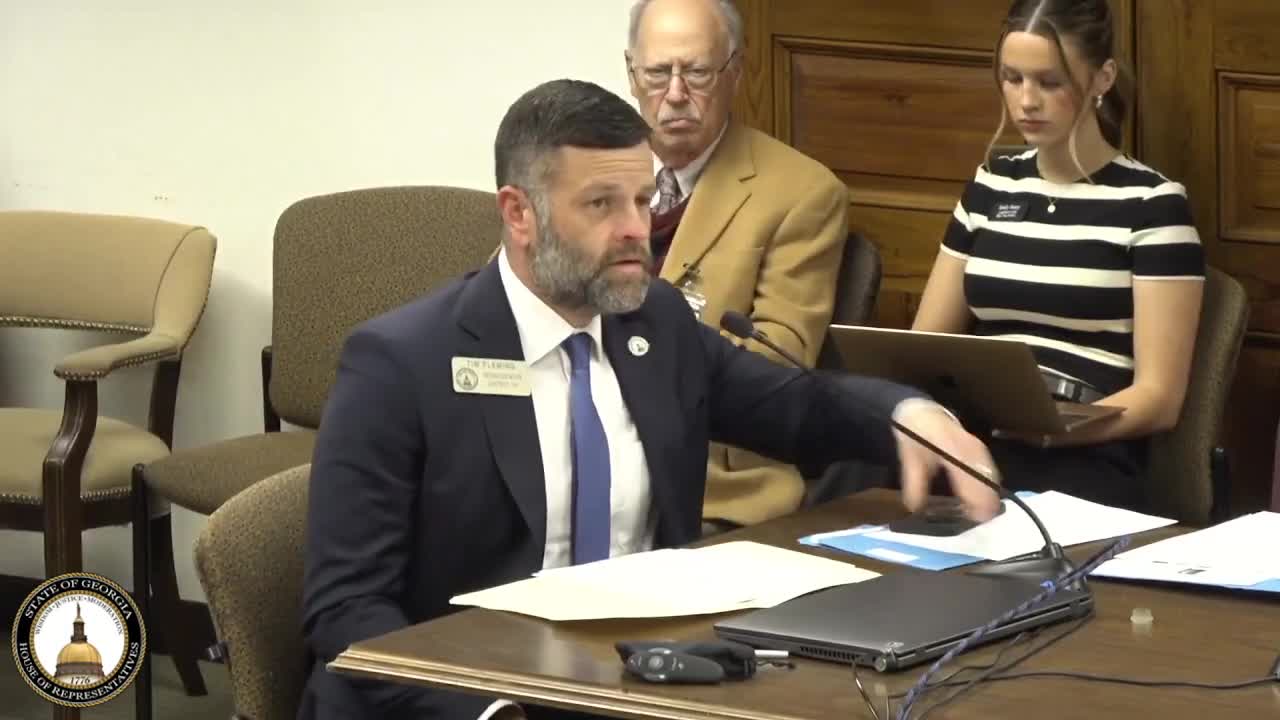
Representative Fleming introduced House Bill 602 to the Georgia House Higher Education Committee as a measure aimed at protecting students, faculty and staff from violent, harassing and materially disruptive conduct on postsecondary campuses. The sponsor said the bill does not target peaceful protest but would suspend state financial aid for students who are convicted of, or found by an institution’s disciplinary process to have engaged in, defined violent or harassing conduct.
"This bill does not limit or affect [the right to peacefully protest]," the sponsor said, adding that the measure is intended to ensure campuses are free from "violence, vandalism, force, and harassment as a means to impose their will on others." The sponsor noted the bill would apply to recipients of state scholarships, loans or grants, such as the HOPE scholarship, and described an enforcement pathway that includes institutional discipline and an appeals process administered by the Student Finance Commission, the University System of Georgia (USG) and the Technical College System of Georgia (TCSG).
The bill text, as introduced, defines materially disruptive conduct in several lines and states that a conviction or an adverse institutional disciplinary finding could result in suspension of state aid for two years. The sponsor said lines in the draft (lines 36–56 and 63–69) make clear the measure is limited to violent, forceful or harassing actions and excludes actions protected by the First Amendment.
The ACLU of Georgia offered early opposition. Chris Bruce, director of policy and advocacy at the ACLU of Georgia, said HB 602 uses vague language that invites content- and viewpoint-based enforcement and violates First Amendment protections described in Supreme Court precedents such as Tinker v. Des Moines and R.A.V. v. City of St. Paul. He also raised concerns about equal-protection and due-process implications and cited cases the ACLU uses in similar challenges.
Committee members asked detailed questions about how the measure would operate in practice, including whether existing campus disciplinary processes already address the conduct the bill cites, whether loss of aid would be mandatory or discretionary after conviction or disciplinary findings, what constitutes an "unrestricted outdoor area," and how students would know whether a space had been reserved for another event. Vice Chairman McKinney and Representative Clark pressed the sponsor on the line-by-line definitions and the appeal process. The sponsor acknowledged that campus reservation processes vary and said the committee would invite USG and TCSG staff to explain local procedures.
No formal vote occurred. The chair said the committee would return to the bill for a fuller review; sponsors and opponents will have additional opportunities to testify. Members emphasized they would take more time at the next hearing to parse terms of the bill and review the cited case law and administrative processes.
The hearing concluded with the committee scheduling follow-up review and requesting additional information about campus reservation procedures, institutional discipline practices and the appeal process described in the bill.