Get Full Government Meeting Transcripts, Videos, & Alerts Forever!
Get email alerts on the Pharmacy Benefit Managers topic
No spam. Unsubscribe anytime.
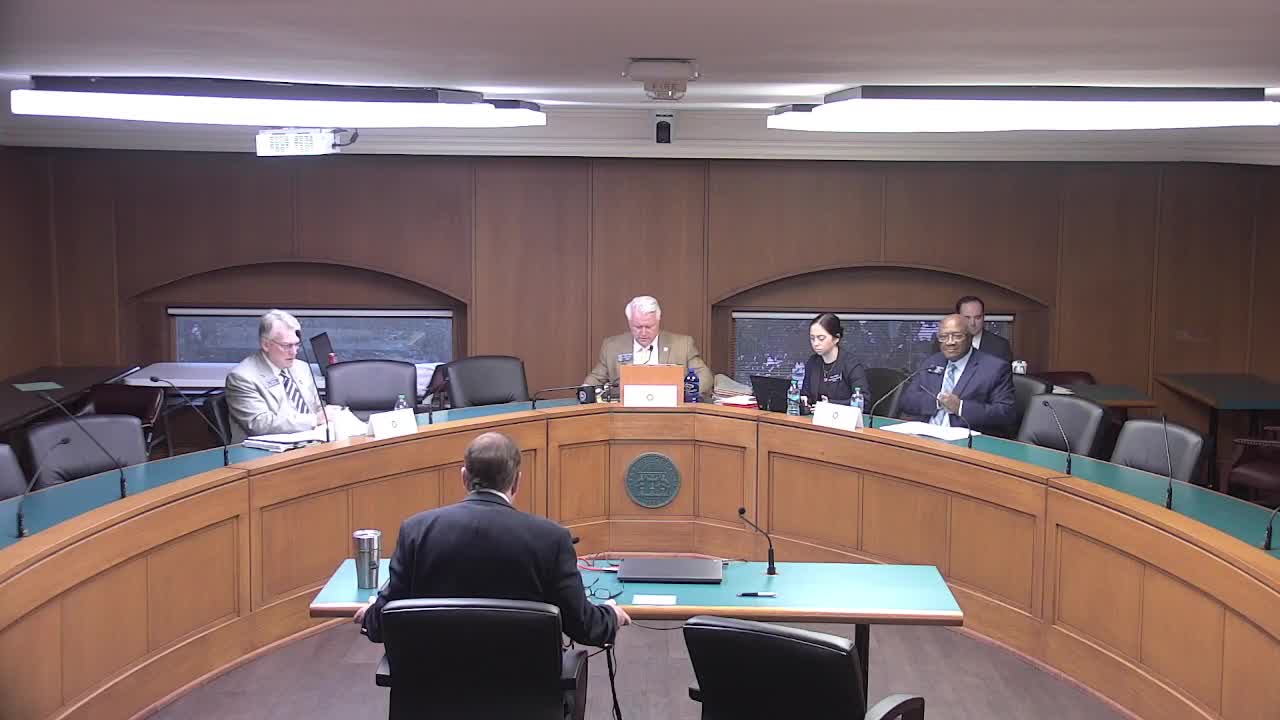
Georgia subcommittee reviews SB 60 to impose 'duty of care' on pharmacy benefit managers
Summary
Senators and stakeholders debated SB 60, a bill to impose a formal duty of care on pharmacy benefit managers, during a Georgia Senate Insurance and Labor subcommittee hearing focused on transparency, rebate passthrough and the legal scope of state regulation.
ATLANTA — Senators and industry witnesses debated Senate Bill 60 during a Georgia Senate Insurance and Labor subcommittee hearing, as the bill’s sponsor, Sen. Hufstedler, asked the panel to consider imposing a formal duty of care on pharmacy benefit managers, or PBMs.
Sen. Hufstedler framed the proposal as “a duty and obligation to perform pharmacy benefit management services with care, skill, prudence, diligence, fairness, transparency, and professionalism, and in the best interest of the insured, the health plan, and the provider,” language he read from the bill text. He told the subcommittee the bill would make the PBM’s obligation to patients primary when conflicts arise.
Supporters argued the change is needed because PBMs exercise broad influence over drug pricing, pharmacy networks and utilization controls. Sarah Balog, senior director of state policy for the Pharmaceutical Research and Manufacturers of America (PhRMA) in the Southeast, told senators the measure would “level the playing field” by extending to PBMs the same patient-focused duties she said apply elsewhere in the health-care ecosystem. Collier Williams, a volunteer with the National MS Society’s government relations group, said the bill would increase “transparency and accountability” and asked the subcommittee to advance SB 60 to full committee.
Industry witnesses representing PBMs and plan sponsors pushed back on the bill’s scope and drafting. Cash Revedi of Capital City Public Affairs, representing the Pharmaceutical Care Management Association (PCMA), and Michael Power of PCMA said PBMs already have contractual obligations to plan sponsors and administer benefits under existing law. Power noted there are roughly “70 full-service PBMs” in the country and said many plan sponsors have moved to fee-for-service contracts rather than spread pricing; he also said “98 to 99% of the rebates go back to the plan sponsor,” characterizing rebate passthrough as a current market practice for many large plans.
Witnesses and senators debated several specific concerns in the bill’s text: the breadth of the PBM definition, the bill’s treatment of rebates and spread pricing, and whether employer-sponsored plans governed by ERISA fall outside state authority. Michael Riley, vice president of the Georgia Association of Health Plans, said the statutory definition in SB 60 “is very broad” and warned that without an ERISA exemption the bill could affect self-funded employer plans. Senator Robertson and other members raised the point that state law cannot override federal ERISA preemption, as referenced during the hearing.
Senators pressed witnesses about real-world effects cited by patients and advocacy groups: stories of delayed or rationed medication, and the role of PBMs in steering prescriptions to pharmacies in which they have a financial interest. Sarah Balog described PBM-owned pharmacies and “steering” in which contracts require prescriptions be filled at pharmacies in a PBM’s vertically integrated network.
No formal vote or committee action occurred at the hearing. Committee members said the purpose of the subcommittee session was to gather information so the full committee chair can decide next steps. Senators asked for model-state comparisons and additional drafting work; Senator Hufstedler and other members noted similar proposals or related activity in other states, including passage or consideration in Alaska, Virginia, Nebraska and others.
The hearing produced several data points and requests for follow-up: PCMA said it files quarterly reports and an annual attestation with Georgia’s Department of Insurance and that an executive summary of state PBM data was being printed for the committee; witnesses offered to provide lists of other states’ bills and suggested potential redrafting to narrow PBM definitions and address ERISA-covered plans.
Senators closed the session with plans for additional review. Several members emphasized a focus on patient access while noting the complexity of rebate contracts, contracts between manufacturers and PBMs, and competitive market dynamics that affect pharmacies, manufacturers and insurers.