Get Full Government Meeting Transcripts, Videos, & Alerts Forever!
Get email alerts on the Dual Enrollment Residency topic
No spam. Unsubscribe anytime.
Committee hears bill to require Georgia residency for dual-enrollment eligibility
Summary
Sponsors introduced HB 18 to align dual-enrollment residency verification with out-of-state tuition standards; supporters cited cost and consistency, opponents warned it would bar vulnerable, largely first-generation students and urged the committee to preserve access.
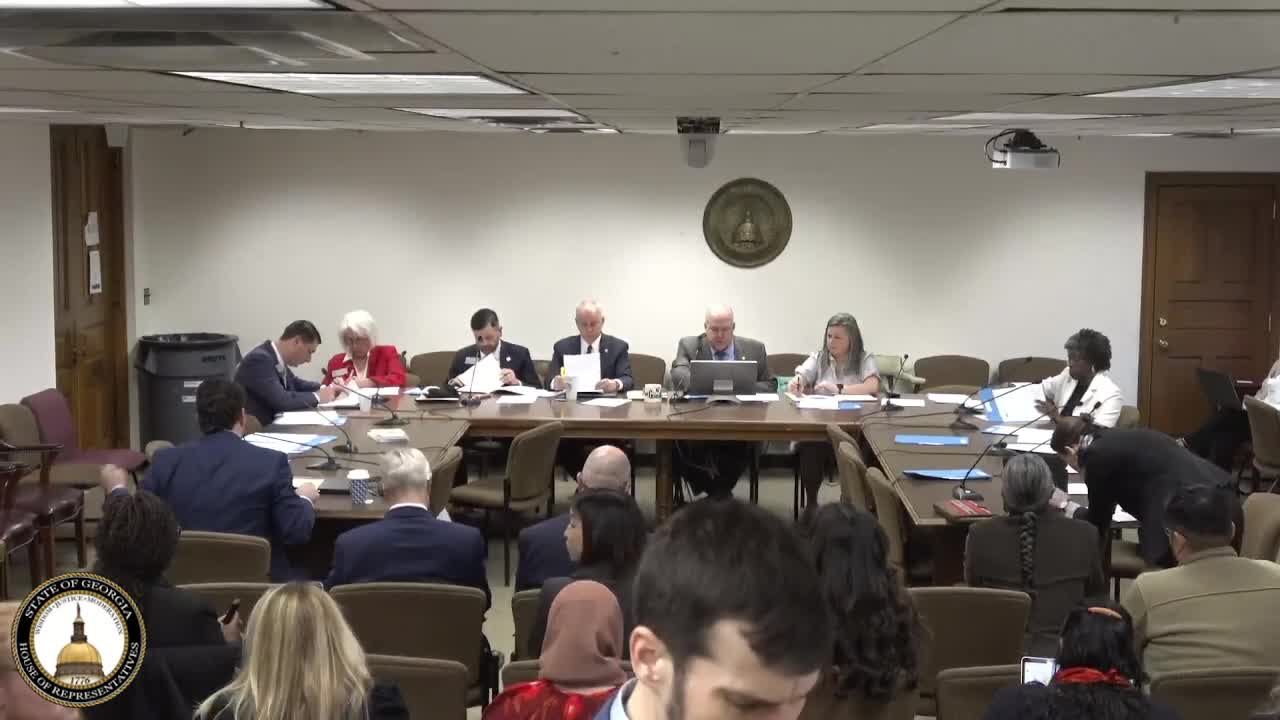
At a meeting of the Georgia House Higher Education Committee, sponsors introduced House Bill 18, a proposal to require verification of legal Georgia residency for students participating in the state's dual-enrollment program.
The bill’s sponsor said HB 18 is intended to resolve “constitutional ambiguity” in how residency is verified and to align dual-enrollment residency standards with those used to set out-of-state tuition. “This is not a conversation of who deserves something and who does not. It's a conversation of who is eligible for something and who is not,” the sponsor told the committee.
Supporters of the existing practice and educators told the committee the change would reduce access for groups the program currently serves. Dr. Tene Davis, former director of Georgia State University’s early college program, said she opposes HB 18 and described the program’s outcomes: high retention, strong college acceptance and a six-year graduation rate that exceeded national averages for some cohorts. “Do I believe the state should prevent any student from being able to access these vital life-changing, family-changing, community-changing opportunities? No,” Davis said.
The sponsor told the committee that the Board of Regents and technical colleges have used differing verification approaches and that, according to materials shared with the committee, roughly 428 of about 21,000 dual-enrollment participants — about 2 percent — are non-Georgia residents under whatever documentation the institutions currently accept. The sponsor also said, based on the information provided to the committee, dual-enrollment tuition costs the state roughly three times what the state would otherwise fund per credit hour compared with the high-school-funded amount.
Community advocates said the bill could harm students’ academic opportunity and mental health. Giovanni Serrano, a community organizer with the Georgia Latino Alliance for Human Rights, told the committee HB 18 would “bully vulnerable students” and discourage immigrant and Latino students from using dual-enrollment options. Serrano cited public-health research and anecdotal harms he said could follow from excluding students.
Committee members pressed the sponsor on practical and equity questions, including whether the change would affect minors who have no control over family residency, how the state would verify residency for students as young as 15 or 16, and whether the proposal would remove an option students currently use. Representative Clark asked whether the committee was discussing minors; the sponsor and other members said most dual-enrollment participants are juniors and seniors, with some programs allowing earlier participation.
No vote or formal committee action was taken. The chair said the committee would “socialize” the bill, take additional testimony at a future hearing, and attempt to make that hearing available for streamed or remote testimony. The sponsor and chair said they expect further information from the Board of Regents and the technical college system to clarify current verification practices.
The committee hearing included public testimony and questions but concluded without final action; HB 18 will be returned for additional review and testimony at a later date.