Get Full Government Meeting Transcripts, Videos, & Alerts Forever!
Get email alerts on the Property Tax Cap topic
No spam. Unsubscribe anytime.
Senate debate on Senate Bill 186 focuses on proposed 3% annual property assessment cap; roll-call fragments recorded
Summary
Senators debated Senate Bill 186, a proposal that would limit annual increases in property assessments to 3%, raising questions about impacts on development, county revenue and existing low-valued properties; the transcript records individual yea/nay votes but does not state the final disposition.
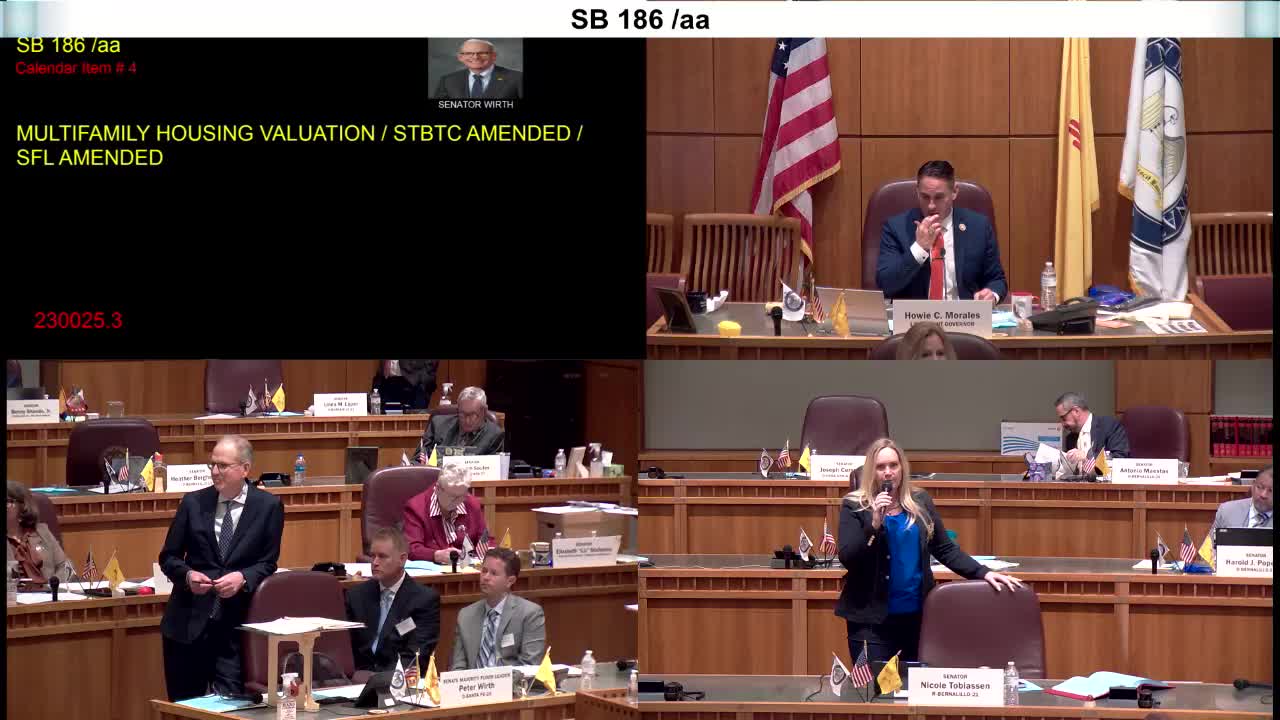
The New Mexico Senate debated Senate Bill 186, described in the transcript as "twice amended," a proposal tied to a 3% annual cap on property assessment increases and broader concerns about property-tax incentives, during a floor session that included objections about county revenue impacts and fragmented roll-call votes. The transcript records multiple senators asking technical questions about assessment math, development incentives and fiscal impacts on Bernalillo County and the state.
Supporters said the measure would encourage development and stabilize valuations on newer housing stock. "Just in Bernalillo County, we owe it to the citizens, the renters of Bernalillo County, to somehow put forward this legislation or something similar so that we get industry working here," one senator said, arguing the cap would attract development and produce new assessments as projects are built. Another supporter urged colleagues to "please take a pause and think about the repercussions, both immediate and long term of this bill," and said they supported the sponsor for bringing it forward.
Opponents and questioners urged caution about unintended consequences. Several senators warned the cap could shift burdens among property owners and reduce revenue the state relies on: "This tax policy affects the counties ... this policy would offset what other property owners pay," one senator said, adding that changes to property taxation could have long-term effects that are difficult to reverse. Senators also raised the interaction between the cap and gross receipts tax (GRT) revenues, with one remark noting past tax breaks had helped some on the margin but also reduced resources for state services.
Senators pressed for technical clarifications about how assessments would change under the bill. One exchange in the transcript clarified that a property currently assessed at 28% would not be immediately revalued to 40% under the bill; instead, the transcript records that such properties would remain subject to the proposed 3% annual increase. Senators asked whether newly built properties (one example: an apartment built two years earlier for $3,000,000 and currently on the rolls at $1,000,000 in the example given on the floor) would see different treatment; responses from senators' experts in the transcript characterized the example as "in the ballpark" for the assessment math under discussion.
The transcript contains a fragmentary roll call with individual yea and nay calls. Recorded votes (as read into the record in the provided transcript excerpt) include: Senator Bergman — yes; Senator Block — no; Senator Ezell — no; Senator Figueroa — no; Senator Centueroa — no; Senator Gallicos — no; Senator Pinto — no; Senator Pope — no; Senator Tobias — yes; Senator Townsend — no; Senator Trujillo — yes. The transcript also records mixed or unclear readings for some entries (for example, a line that alternately reads "Senator Ramos votes no. Yes"), and the final disposition of the bill is not specified in the provided transcript excerpt.
The discussion distinguishes between policy effects and who benefits: some senators said the policy outcome should be judged by results for the state's children and constituents rather than by which property owners or investors gain short-term benefit. Several senators urged that zoning and other long-term policy reforms also be considered alongside tax incentives.
The transcript shows repeated requests for clarification from the chair and references to sponsors and amendments (the bill was called "twice amended" on the floor). The excerpt ends with a reminder from the presiding officer that courtesy to the sponsor precludes additional debate after the vote was called; the record in the excerpt does not include a clear statement of final passage or defeat of the bill.