Get Full Government Meeting Transcripts, Videos, & Alerts Forever!
Get email alerts on the Childcare Zoning topic
No spam. Unsubscribe anytime.
Bill would allow childcare centers in residential areas when co‑located with community uses, sponsors say
Summary
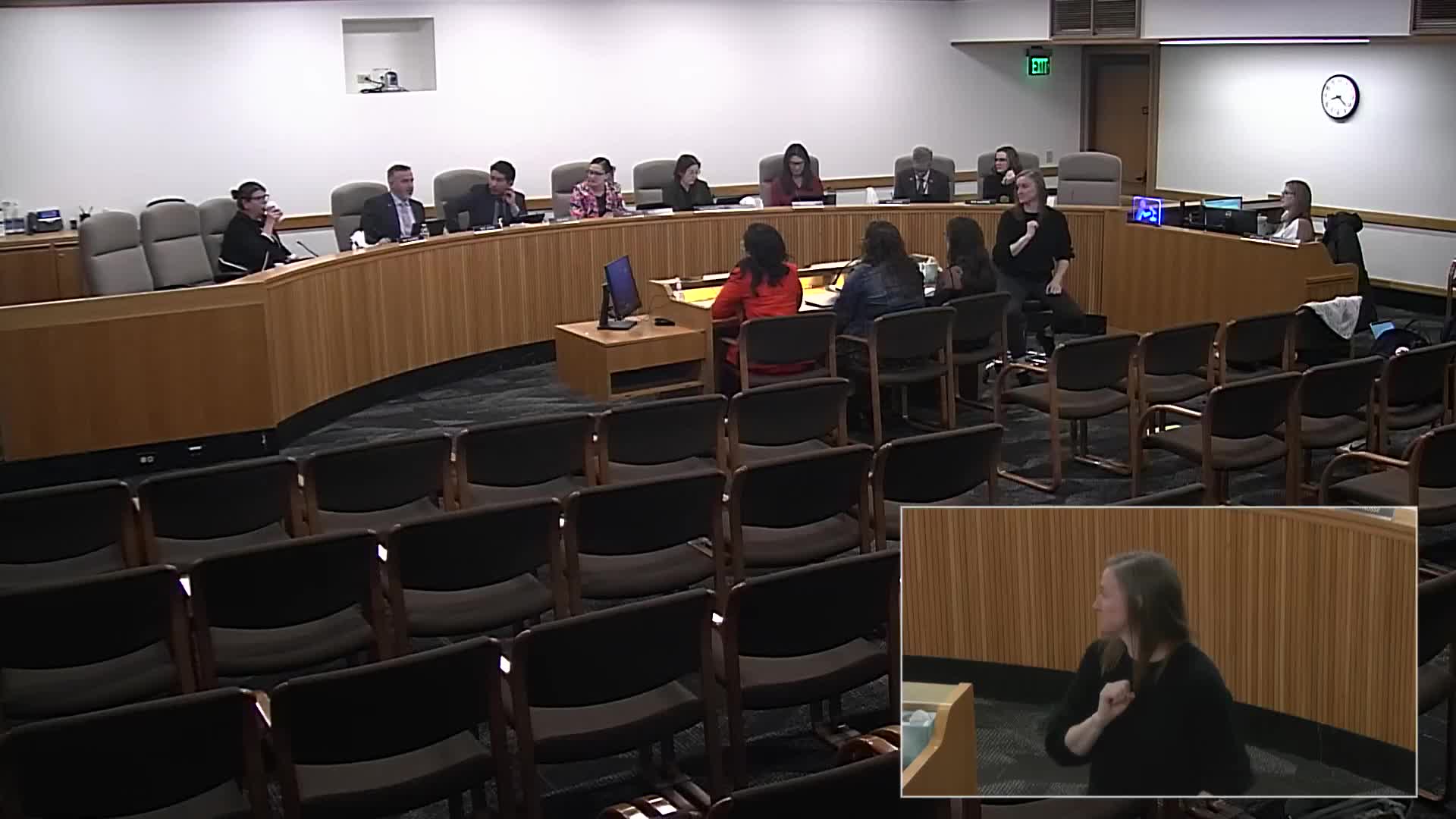
The House Committee on Early Childhood and Human Services heard Feb. 27 that House Bill 3,560 would permit child‑care centers in specified residential zones when co‑located with community institutions or high‑density housing and move the rule into land‑use law to reduce permitting delays.
The House Committee on Early Childhood and Human Services held a Feb. 27 public hearing on House Bill 3,560, sponsored by Rep. Pam Marsh, which would permit child‑care centers in specified residential zones when they are co‑located with community institutions or high‑density housing and move the related language into Oregon’s land‑use statutes.
“Child care centers should be part of the fabric of every neighborhood where families live and where they work,” Marsh told the committee. She said zoning barriers prevent providers from locating near families and employers and that the bill builds on prior statutory changes that recognized child care as an important use in commercial and light industrial zones.
Why it matters: Witnesses said the lack of viable physical sites and the land‑use process are major barriers to expanding child‑care capacity. Dana Hepper of the Children’s Institute told the committee that suitability is a “first test” for a potential site and that conditional‑use processes often take “six months or more” and can cost “$20,000 or more,” a burden many small or nonprofit providers cannot absorb. Hepper said the bill aligns with recommendations from the House Bill 2727 work group, which urged permitting child care by right in residential zones under certain conditions.
Witness testimony: Daniel Hauser, representing himself and speaking as a parent connected to a volunteer cooperative preschool, described a local case where his preschool faced conditional‑use challenges that cost “hundreds of hours, tens of thousands of dollars” to pursue and an ongoing appeal to the Statewide Land Use Board of Appeals that an attorney estimated could cost another $30,000. “Our little preschool attempting to operate within an existing building…has incurred all this cost and time and frustration,” Hauser said, urging passage once the bill is amended to include recorded programs.
Community and business groups also supported the bill. Katie Brooks, CEO of the Bend Chamber of Commerce, said developers and churches were discouraged by extra permitting costs and process uncertainty. Delina Binyam of FamilyForward and the Child Care for Oregon Coalition said the bill would remove a significant administrative barrier and expand access to childcare in “childcare deserts.”
Amendments and technical points: Testimony described a forthcoming “‑dash 2” amendment that would clarify the bill’s language for zoning officials and add recorded preschool programs and school‑day recorded programs to the protections, so short‑day programs are covered alongside licensed centers. Witnesses and DLCD staff said the bill would not eliminate safety reviews: local jurisdictions can still perform transportation and safety analyses to address pickup/drop‑off and other safety concerns.
Agency and zoning clarifications: Kelly Reed of the Department of Land Conservation and Development (DLCD) said mixed‑use zones are usually treated as commercial and that the bill’s expansion targets higher‑density residential zones (for example, areas that allow multi‑unit housing). DLCD analyst Alyssa Benigni said a proposed amendment would tie the language to areas inside an urban growth boundary to cover dense unincorporated areas that function as urban neighborhoods.
What the bill does: HB 3,560 would (1) permit child‑care centers in certain residential zones when co‑located with an eligible community institution or higher‑density housing, (2) relocate the allowance into land‑use statute to improve implementation by planning departments, and (3) the dash‑2 amendment would add recorded preschool and school‑day programs and clarify safety review authority.
Next steps: Committee members and witnesses said the bill seeks a balance between community livability and expanding child care. The public hearing was closed for committee consideration.