Get Full Government Meeting Transcripts, Videos, & Alerts Forever!
Get email alerts on the E Procurement topic
No spam. Unsubscribe anytime.
DAS briefs subcommittee on Oregon Buys rollout, costs and reporting features
Summary
The Department of Administrative Services told the General Government Subcommittee that Oregon Buys — the state's e‑procurement system — is live statewide, has logged more than 31,000 supplier accounts and can produce enterprisewide spend reports; members pressed officials on final costs, vendor fees and ongoing governance.
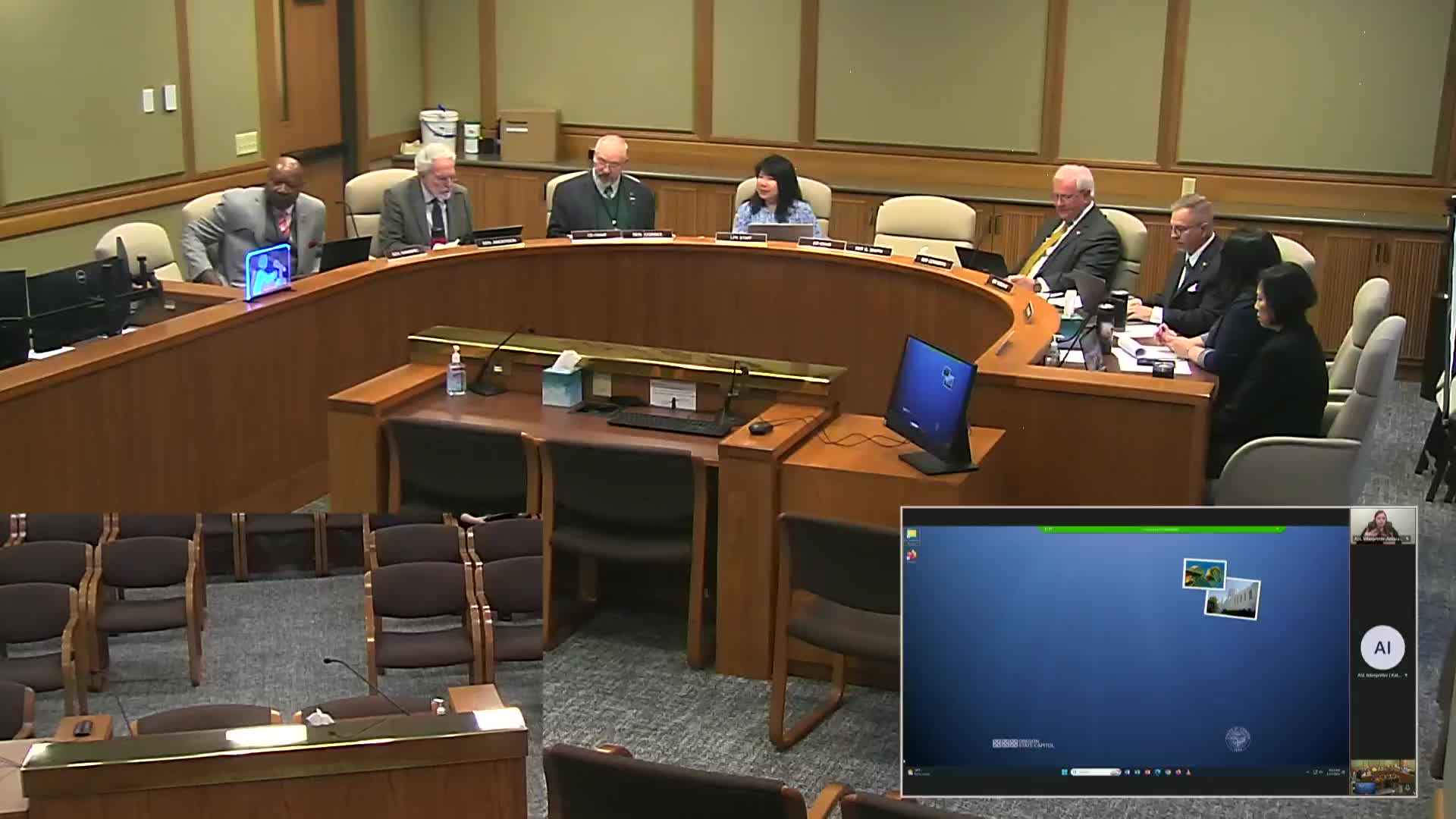
PORTLAND, Ore. — On Feb. 27, 2025, the General Government Subcommittee heard an informational briefing from the Department of Administrative Services on Oregon Buys, the state’s e‑procurement system, including its rollout, funding and reporting capabilities.
Oregon Buys is the state’s e‑procurement system, Debbie Dennis, Chief Administrative Officer and Deputy Director at the Department of Administrative Services, told the committee. The system is the state’s system of record for procurement activity, she said, from posting solicitations through purchase orders and payment.
The briefing explained why the system was built and how it now works. Nicole Bridal, eProcurement Program Manager for DAS State Procurement Services, said the project replaced the prior procurement site and moved agencies and ORCAT local‑government partners into a single platform. “We moved Orpen into a read only environment and, started using Oregon Buys all on 1 day,” Bridal said, referring to the transition for sourcing functions in July 2021. Bridal described a second phase that added procure‑to‑pay functions in three waves (wave 1: Aug. 1, 2022; wave 2: May 2023; wave 3: Sept. 2023).
Why it matters: committee members flagged transparency and oversight as key benefits. DAS officials demonstrated reporting that can show enterprise and agency‑level spend, supplier locations and certification status, and detailed records for solicitations and awards. DAS said those public records can be accessed without a login and that the system has reduced the volume of paper records and associated storage and retrieval costs.
Key facts and numbers
- Suppliers and partners: DAS reported “over 31,000 suppliers in the system, and we have close to 900 local agency partners” and 85 state agencies currently using Oregon Buys, Steve Nelson, DAS chief procurement officer, told the committee.
- Costs and funding: DAS said the initial Oregon instance backbone cost about $1.3 million (with roughly $200,000 of contributed staff time). The enterprise implementation was budgeted at $17.4 million and DAS reported final project spending of $19.1 million. DAS also identified ongoing contractor fees that were renegotiated; committee materials referenced Periscope implementation fees in the range of roughly $15.165 million during the project implementation phase.
- Fee model: DAS funds much of the e‑procurement work through a vendor‑collected administrative fee (VCAF). That fee was increased from 1% to 2% to finance the enterprise rollout. DAS staff told legislators vendors may incorporate that administrative fee into their pricing and that agencies’ purchases ultimately bear that cost in their supplier payments.
- Usage and functionality: Electronic bid responses increased dramatically after implementation (DAS estimated an ~800× rise compared with the older system). Oregon Buys includes a Marketplace for statewide price agreements and supports requisitions, purchase orders, receiving and invoice transmission via interfaces to financial systems (RSTARS and Teams). The system also has a nightly interface to bring vendor certification data (for example, an emerging small business certification) into supplier accounts.
Questions from the committee
Lawmakers pressed DAS on cost overruns, vendor fees and governance. Members asked whether inflation or pandemic workload lengthened the project timeline; DAS officials said pandemic constraints and longer project timelines required additional vendor resources and contributed to higher costs. Chair Gorsek and members asked whether implementation and maintenance fees will fall now that the build is complete; DAS responded that annual maintenance and licensing costs will be substantially lower than the multi‑year implementation totals, and that Periscope contract renegotiation was underway.
Several legislators asked how the VCAF affects final pricing and whether local governments or small businesses are disadvantaged. DAS acknowledged vendors could embed the administrative fee in their prices but said the state’s aggregated purchasing power generally yields more favorable pricing, even with the fee. DAS also said local governments remain free to opt into or out of ORCAT agreements and purchases.
Governance and next steps
DAS described project governance: a steering committee that steered implementation is standing down now that the project has moved into operations; an Oregon Buys Advisory Council will remain to advise on releases, new functionality and system processes. DAS also reported operational improvements such as single sign‑on for users and ongoing supplier support and surveys.
DAS told the committee it will provide the committee’s requested budget materials next week and that staff can return a list of participating local agencies on request.
Ending
Committee members praised the system’s transparency and reporting while reserving further questions about final contract terms and whether savings would offset implementation costs. No formal action was taken; members closed the informational hearing and said they would review DAS budget materials when they arrive.