Get Full Government Meeting Transcripts, Videos, & Alerts Forever!
Get email alerts on the Education.teacher Licensing topic
No spam. Unsubscribe anytime.
Committee Hears Support for TSPC Budget; Witnesses Urge IT upgrade and Literacy Positions in House Bill 5037
Summary
At a Feb. 27 public hearing, witnesses and the Teacher Standards and Practices Commission chair backed funding in House Bill 5037 for a new educator licensing and investigations data system and positions to implement literacy standards; lawmakers flagged fee-reserve and investigation-definition concerns.
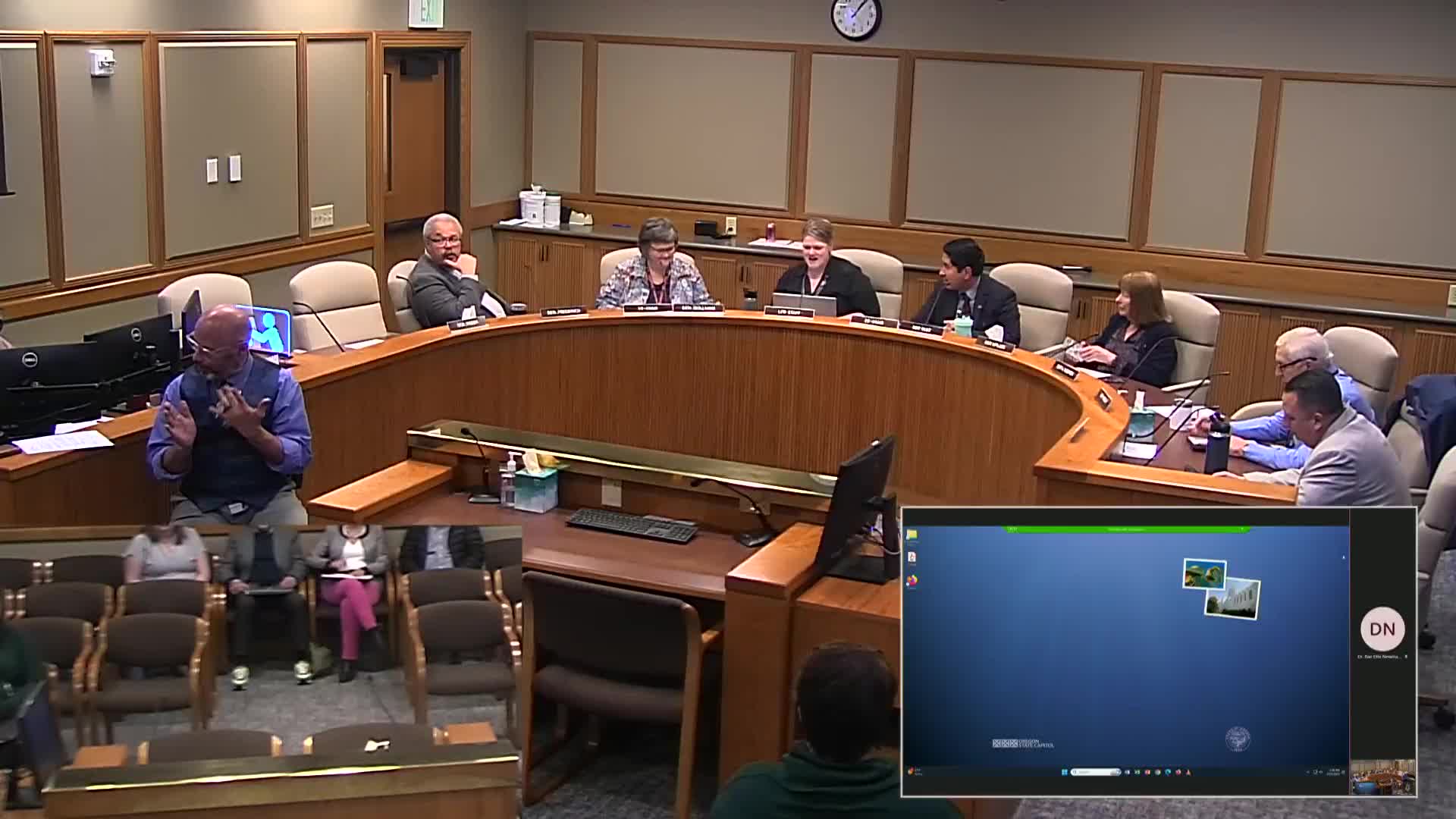
The Joint Committee on Ways and Means Subcommittee on Education held a public hearing Feb. 27 on House Bill 5037, the budget request for the Teacher Standards and Practices Commission (TSPC). Witnesses urged the Legislature to fund a new educator licensing and investigations data system and personnel to support implementation of Oregon’s literacy law.
Morgan Allen, representing the Coalition of Oregon School Administrators, told the committee, “we wanted to just offer some brief, strong support for the Teacher Standards and Practices Commission budget contained in House Bill 5037.” Allen said the budget maintains staffing “at the 23-25 legislatively adopted levels” (as stated in testimony) and highlighted two priorities: the procurement for a licensing and investigations data system and personnel to support early-literacy implementation.
Dr. Rayette Newman, dean of the College of Education at Eastern Oregon University and chair of TSPC, described the proposed data system as “a critical modernization project” that will provide “a streamlined application process, faster processing times, enhanced investigations efficiency, greater transparency and accessibility, and increased security and compliance.” Newman also urged funding for dedicated literacy positions tied to implementation of House Bill 3198, saying those roles would “work closely with educator preparation programs” to ensure teacher preparation and licensure align with evidence-based literacy instruction.
Committee members acknowledged the priorities and raised fiscal and policy questions. Chair Solomon read the Legislative Fiscal Office budget review, noting that “fee reserves are projected to be steady for the 25-27 biennium [but] they are not expected to keep up with expenditure growth rates, which may require a fee increase in order to maintain funding for agency services.” Representative McLean and Senator Frederick said they wanted follow-up on timelines and priorities for modernization and workforce supports.
Co-chair Ruiz emphasized concern about the agency’s investigations workload and the need to reduce caseloads. Ruiz said the committee should consider clarifying the definition of grooming—either through rulemaking or legislation—to ensure appropriate handling of incidents. Representatives and senators praised the work of TSPC staff and of educator-preparation programs, with Representative Wright specifically commending Eastern Oregon University’s teacher-preparation program.
The committee recorded testimony from two in-person witnesses and closed public testimony without taking a formal vote on the bill. The subcommittee noted that decisions about procurement funding, fee adjustments, and any legislative changes to investigations definitions will require further deliberation.
The committee adjourned after the hearing and the Legislative Fiscal Office said the next agency on the subcommittee’s agenda is the Department of Early Learning and Care for hearings the following week.