Get Full Government Meeting Transcripts, Videos, & Alerts Forever!
Get email alerts on the Unemployment Strike Benefits topic
No spam. Unsubscribe anytime.
Committee examines bill to extend unemployment benefits to striking workers; debate focuses on waiting period, definitions and collection rules
Summary
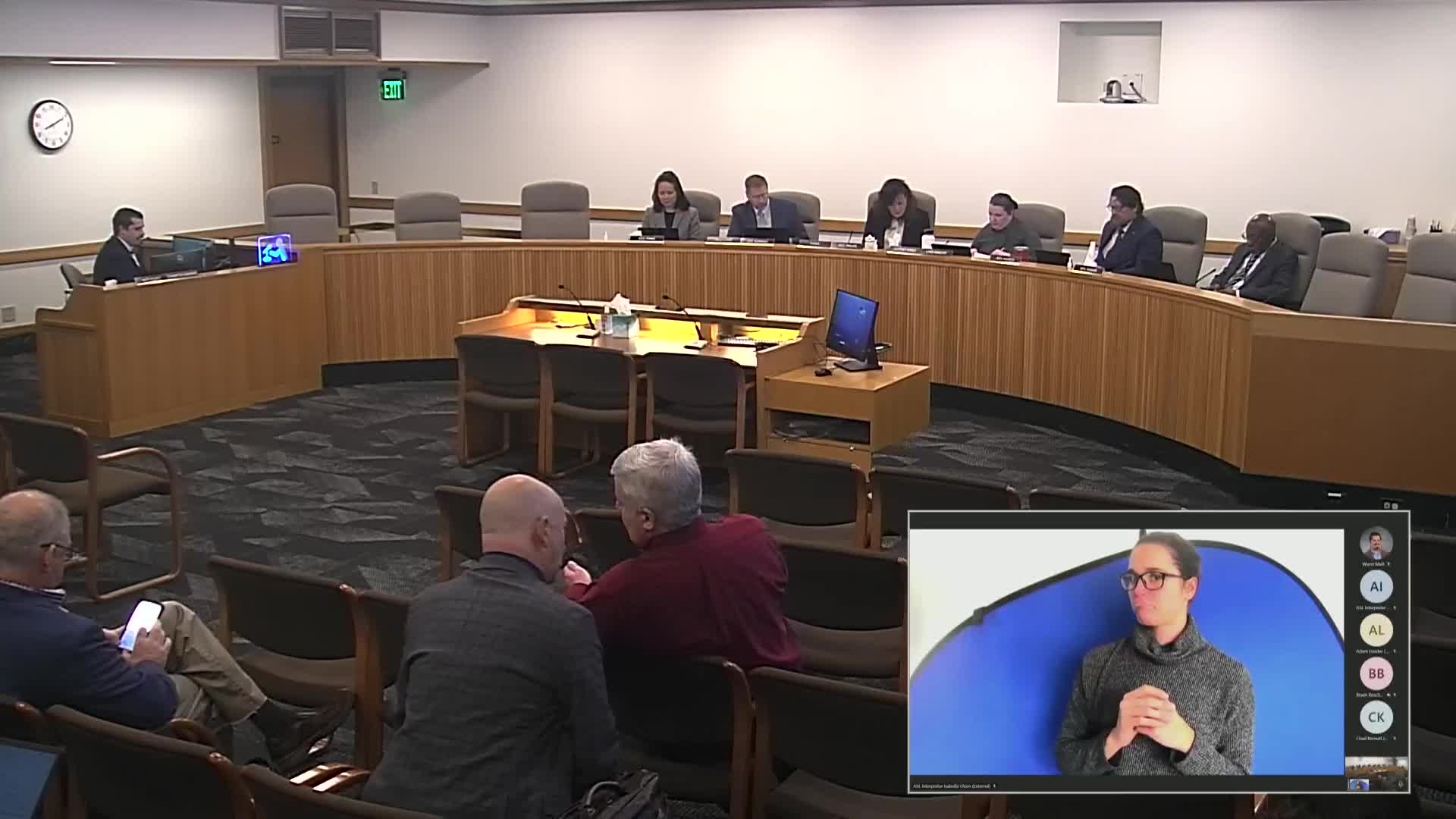
On Feb. 27 the Senate Committee on Labor and Business held an informational meeting on SB 916, which would extend unemployment insurance to striking workers under defined conditions and contains competing dash-1 and dash-2 amendment options that differ on the initial waiting period.
The Senate Committee on Labor and Business held an informational meeting Feb. 27 on Senate Bill 916, a measure to permit striking workers to receive unemployment insurance (UI) under specified conditions. The bill is sponsored by Senator Taylor, Senator Campos, Senator Manning, Representative Graber and Representative Bowman.
Allen Dale, Senior Deputy Legislative Counsel and the drafter of SB 916, told the committee the bill’s dash-1 amendment removes the statutory disqualification that currently prevents striking workers from receiving UI and adds definitions (including “labor dispute,” “lockout” and “strike”) drawn from existing employment-department rules. The dash-2 amendment adopts the same policy change but imposes an initial ineligibility: striking workers would be ineligible for the first week of unemployment due to the strike and become eligible in the second week, producing two weeks without UI before benefits begin. Dale said the effective date would be Jan. 1, 2026 if no other effective date is specified.
Dale also described changes to how back pay interacts with UI: under current law back pay generally cannot be credited against UI benefits, and the bill creates a mechanism to allow collection by the Employment Department if back pay produces an overpayment of benefits. The dash-2 amendment specifies that collection for such overpayments cannot be waived.
Committee members pressed several operational questions: how school districts would handle makeup days negotiated in return-to-work agreements, how strike funds and union stipends would be treated in the UI calculation, and whether the bill would create an unfunded mandate for local governments. Legislative counsel and representatives from the Oregon Employment Department explained the legal analysis and the department’s expected administrative approach.
On the unfunded-mandate question, counsel said Oregon case law (citing Article 11, Section 15 of the Oregon Constitution and the Linn County v. Brown decision) and a parallel California case indicate courts have distinguished employer-paid benefits from governmental “services” for unfunded-mandate analysis; counsel said extending UI to striking workers would not, under that analysis, be an unfunded mandate on local governments. Counsel also noted prior legislative choices (HJR2 and HJR17 were discussed in committee testimony) that shaped the constitutional test.
Lindsay Leahy, director of the Employment Department’s Unemployment Insurance Division, told members the bill does not change statutory experience-rating formulas in the UI tax code. She said public employers are reimbursing employers and reimburse the UI trust fund dollar for dollar for benefits paid to their former employees; those reimbursing employers do not have an experience-rated tax premium. The Employment Department told the committee it cannot give a categorical guarantee that no employer’s tax rate could be affected, because real impacts depend on the size, length and industry of a strike and on complex forecasting rules.
Senior Deputy Legislative Counsel Jessica Santiago told the committee that strike funds generally are not considered wages and therefore typically would not be treated as employer-paid wages for UI benefit calculations, but she cautioned how the Employment Department would treat all payments collectively for overpayment calculations is an administrative question. Santiago and counsel said tax-reporting and taxability questions (for example, whether certain strike payments require 1099 reporting) and comparisons to New York and New Jersey UI practices will be the subject of follow-up research by legislative staff and the Department of Revenue. The committee asked Legislative Counsel to prepare follow-up memos on tax reporting of strike funds and on how New York and New Jersey treat public-employee strikes and unemployment.
Members also asked about the bill’s likely behavioral effects and whether the availability of UI during a strike would affect the propensity to strike; committee members noted there is limited modeling data to predict that effect. The committee scheduled a public hearing on both amendments for the next Tuesday and a work session one week later, and committee staff and counsel said they would work with education stakeholders on language clarifying how makeup days interact with back pay.