Get Full Government Meeting Transcripts, Videos, & Alerts Forever!
Get email alerts on the Medicaid Funding Hb 2010 topic
No spam. Unsubscribe anytime.
House extends hospital and insurer assessments to fund Oregon Health Plan, passes HB 2010A
Summary
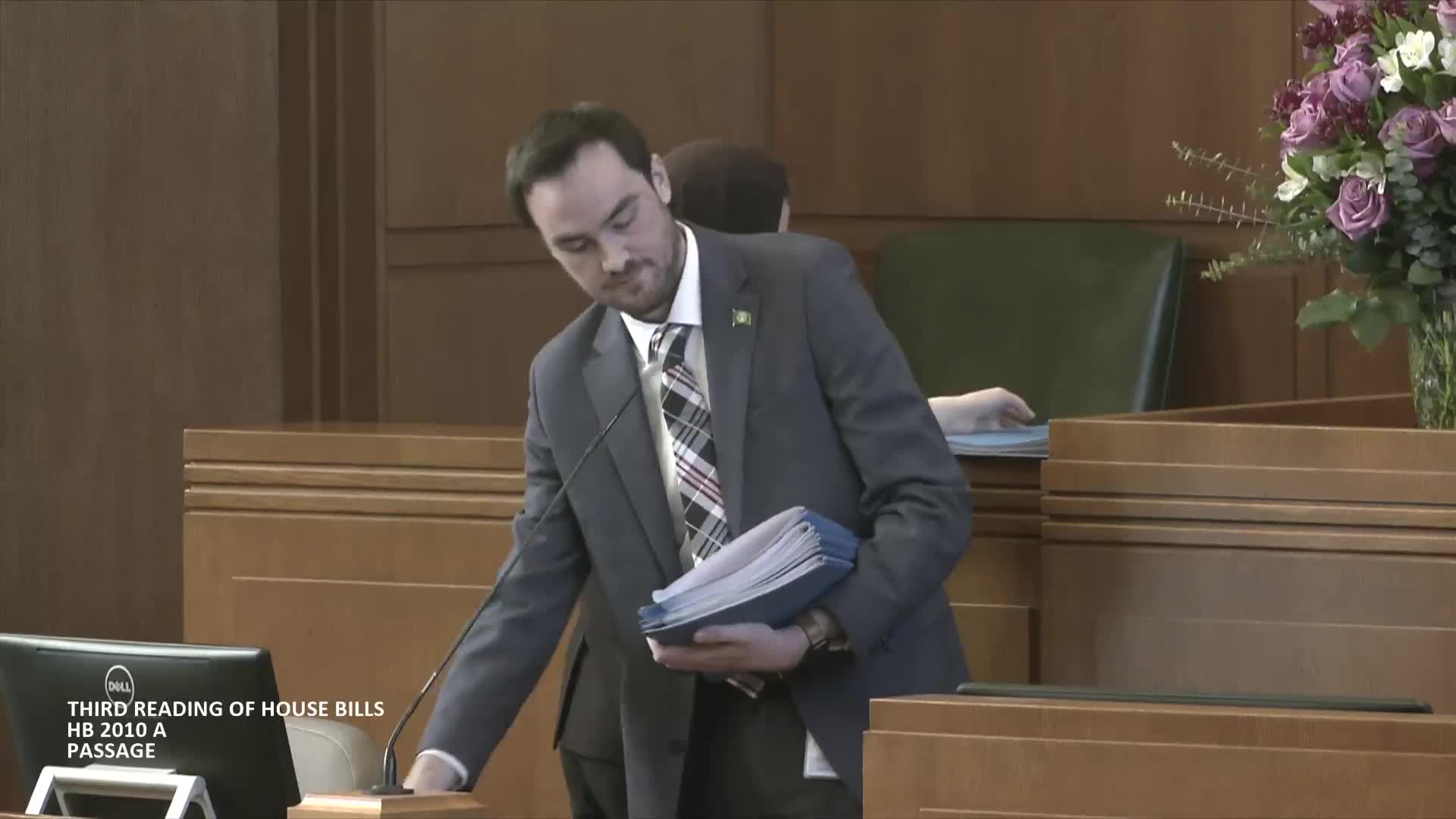
The Oregon House on March 3 passed House Bill 20 10A, extending hospital and insurer provider assessments and the state reinsurance program that help fund the Oregon Health Plan (OHP) and draw federal matching dollars.
The Oregon House on March 3 passed House Bill 20 10A, extending hospital and insurer provider assessments and the state reinsurance program that help fund the Oregon Health Plan (OHP) and draw federal matching dollars. The measure passed on third reading after extended debate and a procedural motion earlier in the session to read several bills by title only.
Supporters, led on the floor by Representative Pham, said the assessments are an established funding tool that helps pay the state share of Medicaid and bring substantial federal matching dollars into Oregon. Pham told colleagues about the scale of the program, saying roughly 1,400,000 Oregonians — about one in three — rely on OHP and that the hospital and insurer assessments allow the state to obtain federal matching funds to maintain coverage and support hospitals.
Why it matters: The bill extends assessments that backfill the state share of Medicaid and preserves programs that supporters said stabilize insurer markets and rural hospitals. House members described the assessments as producing billions in transfers and federal match: Pham cited roughly $2.5 billion in transfers from hospital net patient revenue for 2025–27 and said prior assessments generated about $1.7 billion (FY23–25) that drew over $4 billion in federal match. Supporters said the insurer assessment helps fund the Oregon Reinsurance Program, which the state uses to lower individual-market premiums and stabilize carrier participation.
Debate and constitutional challenge: The bill drew extended floor discussion about whether the assessments count as a tax requiring a three‑fifths majority under Article IV, section 5(2) of the Oregon Constitution. Members and observers referenced a two‑part test articulated by the Oregon Supreme Court and a written opinion from legislative counsel. Legislative counsel’s view (read into the record by Representative Pham) was that HB 20 10 satisfies the first prong (it brings money into the treasury) but not the second prong (because payers receive a specific economic benefit — for example, higher Medicaid reimbursements and other offsetting advantages — rather than only the general benefits of government); on that basis counsel concluded the measure does not require a three‑fifths affirmative vote. Other members disagreed in floor remarks and said the reinsurance component provides a direct consumer benefit and therefore the bill should meet the tax threshold; one representative said they would vote no on that basis.
Votes and outcome: After debate the clerk opened the roll and the House recorded votes. The clerk announced, “House Bill 20 10A, having received the constitutional majority, is declared passed.” The transcript did not record a complete named roll-call tally for the final question in the excerpt provided.
Details from proponents: Supporters described three assessment mechanisms extended by the bill: the hospital assessment (applied to net patient revenue and used in part to increase payments to hospitals and fund rural/quality/access pools), the insurer assessment (applied to commercial and individual market products, some of which fund the state reinsurance program), and the intergovernmental transfer (IGT) arrangement involving OHSU. Representative Valderrama emphasized maternity and pediatric impacts, noting Medicaid covers a high share of births and children in Oregon and that reauthorizing the assessments protects prenatal, maternity and care coordination services paid through OHP.
What the bill does not do: The House debate focused on funding mechanics and constitutional thresholds; the legislature did not vote in this session excerpt to change OHP eligibility or benefits. Members repeatedly framed the bill as an extension of existing assessment mechanisms rather than a program expansion.
Next steps: The bill as passed will move to the enrollment and transmittal process required before being sent to the governor. Timing for any further administrative rule changes or federal approvals referenced (for example, reinsurance program federal waivers or federal matching rules) was not specified in the floor discussion excerpt.