Get Full Government Meeting Transcripts, Videos, & Alerts Forever!
Get email alerts on the Veterans Benefits Assistance Regulation topic
No spam. Unsubscribe anytime.
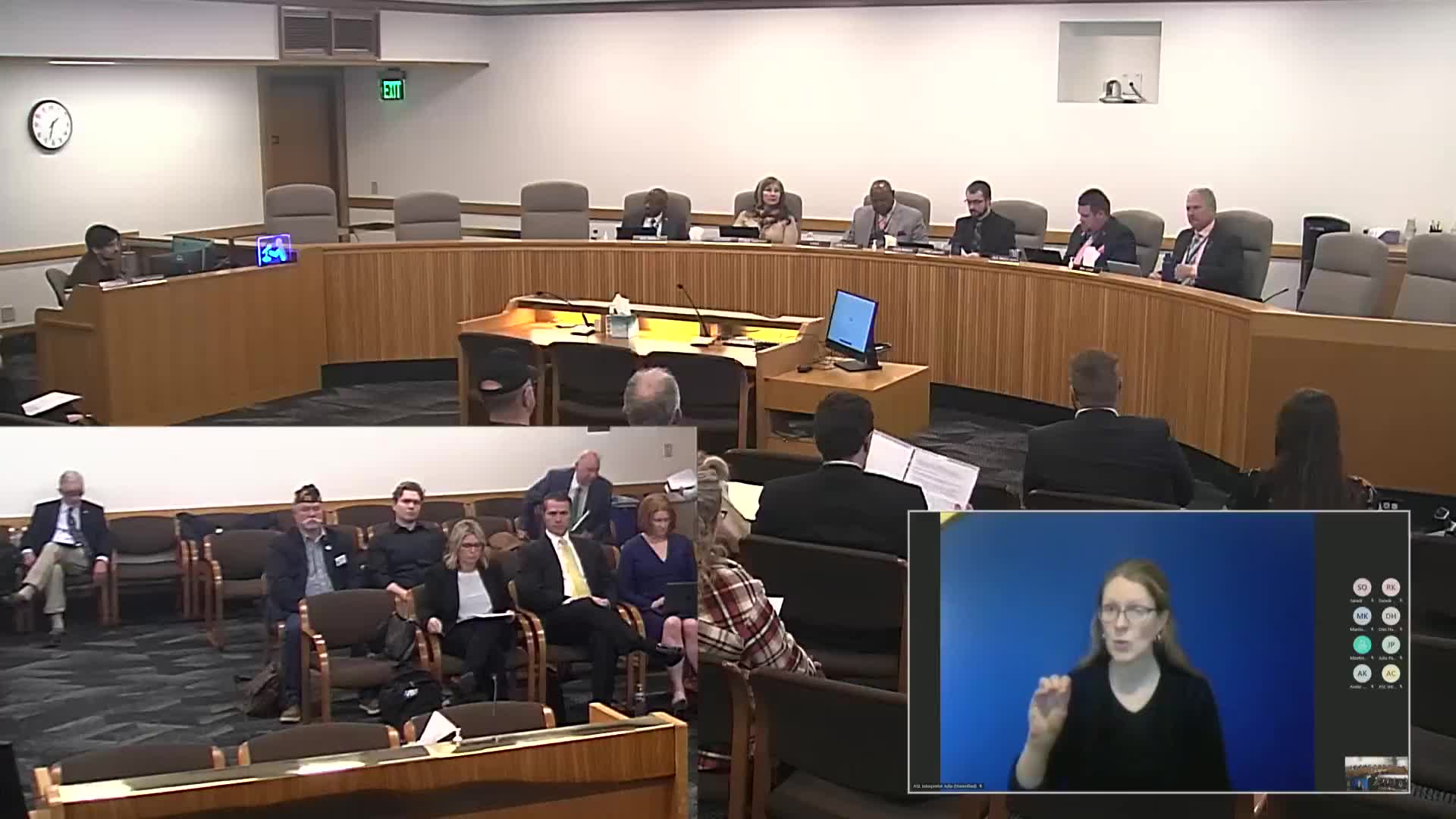
Committee hears testimony on bill to limit paid veterans-claims assistance; sponsors plan amendments
Summary
Senate Bill 150 would restrict paid preparation or advising for veterans benefits claims and require written fee agreements; private companies and some veterans said the bill as drafted curtails legitimate options and asked for guardrails rather than a ban. The committee will hold a work session to consider amendments.
Senate Bill 150, which the committee heard Feb. 27, would prohibit acceptance of compensation for preparing or advising on veterans benefits applications or appeals without specified written agreements and would bar guarantees that benefits will be received. The measure applies the prohibitions to services that a claimant could receive free from the Department of Veterans Affairs or an entity the VA has delegated authority to, and it makes violations unlawful. The bill would take effect 91 days after signing.
Committee members and legal counsel signaled support for protecting veterans from predatory actors but said the draft requires technical fixes and narrower scope so it does not remove legitimate options. Chair Manning said she had an amendment prepared and invited stakeholders to the table to refine language that would protect veterans while preserving access to lawful private assistance.
Several private firms and advocates opposed the bill as written. Benjamin Tipton, retired Army major and special projects officer at Veterans Guardian VA Claim Consulting, said his firm “fully opposes Senate Bill 150 in its current form and looks forward to working to modify it.” Tipton said private companies have helped claimants reach disability ratings they otherwise would not have attained and that many veterans “are making informed decisions” to use paid services.
Lisa Calkas, chief marketing officer and vice president of public affairs for Veteran Benefits Guide, also urged rejection of the bill as drafted, saying it “would severely and unfairly limit choices veterans have in seeking assistance” and that her company supports narrowly tailored guardrails such as disclosure requirements, fee caps and privacy protections.
Julie Parrish, chief of staff to State Senator Caden and a former state lawmaker who worked on veterans’ issues, told the committee that county and nonprofit veteran service officers (VSOs) do much of the first-line work but are stretched thin; complex claims often require specialized expertise and sometimes legal representation. Parrish said the state’s constitutional, lottery-funded veteran services program (Measure 96) helps but does not meet all needs for complex appeals.
Kimberly McCullough of the Oregon Judicial Department told the committee she was neutral on the policy but had technical drafting suggestions: rather than referencing an unnamed federal regulation for what constitutes an "unreasonable fee," McCullough recommended spelling out the federal criteria in statute to avoid importing unrelated regulatory requirements.
Ending: The committee closed the public hearing on SB 150 and scheduled a future work session to consider the chair’s amendment and technical revisions. Staff and stakeholders will meet to refine the bill language and address concerns about protecting veterans from predatory practices while preserving legitimate paid options and clarifying compliance with federal law.