Get Full Government Meeting Transcripts, Videos, & Alerts Forever!
Get email alerts on the Regional Health Equity topic
No spam. Unsubscribe anytime.
Supporters tell Senate committee expansion, stable funding needed for regional health equity coalitions
Summary
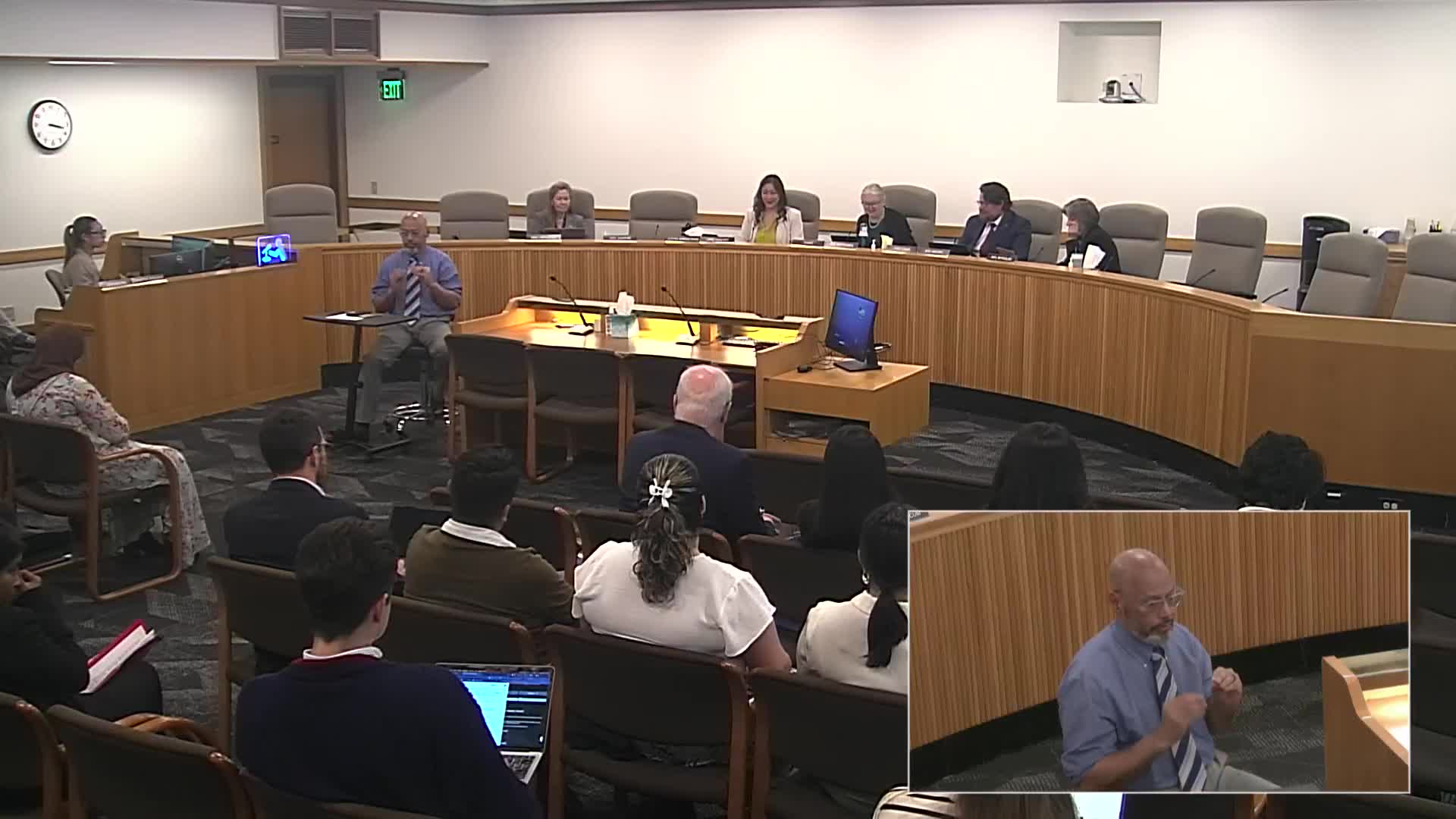
At a public hearing Feb. 27, community leaders and the Oregon Health Authority urged the Senate Committee on Health Care to support bills expanding and stabilizing funding for Regional Health Equity Coalitions (RHECs), citing gaps in rural coverage and the coalitions’ role in outreach and policy change.
Community leaders, regional coalition directors and Oregon Health Authority staff told the Senate Committee on Health Care on Feb. 27 that Regional Health Equity Coalitions are a critical statewide infrastructure for addressing health disparities — particularly in rural counties — and urged passage of Senate Bill 528 and Senate Bill 530.
Senate Bill 528 would fund expansion of RHECs to increase geographic coverage; staff said the bill originally proposed adding five coalitions but a dash-1 amendment reduces that expansion to three. Senate Bill 530 would adjust HEC grant funding, proposing an inflation adjustment; its dash-1 amendment removes an automatic Consumer Price Index adjustment and instead leaves inflation adjustments to the Legislative Assembly and the biennial budget process.
Why it matters: regional health equity coalitions (RHECs) are community-led, cross-sector groups that do outreach, remove barriers and drive policy and systems change in their regions. Witnesses said the coalitions’ presence in rural areas helps reach people “that are often feel disconnected from public health initiatives,” and that RHEC data and planning have helped local partners secure grants and target services.
What witnesses said
Mika Contreras, executive director of the Linn-Benton-Lincoln Health Equity Alliance, said RHECs “are community led groups that address local health needs through grassroots engagement, driving meaningful policy and systems change.” She told the committee that 10 of the 15 counties without an RHEC have expressed interest in forming one and argued the expansion will address marked rural disparities.
Esther Kim, director of the Oregon Health Equity Alliance (OHEI), traced the RHEC network’s growth since 2011 and described coalitions’ work on issues ranging from language access to reproductive and gender-affirming care. Jaden Ruff, director of the South Coast Health Equity Coalition, described using a storefront and community events in Curry and Coos counties to reach residents who otherwise must travel long distances for services.
Alfonso Ramirez, interim division director for equity and inclusion at the Oregon Health Authority, said the RHEC program has reached more than 67,000 community members, trained over 250 organizations, and that 15 counties remain unrepresented. Danielle Droppers, RHEC program manager at OHA, explained that coalitions typically do outreach by attending community events, hosting trainings and convening local partners rather than maintaining a single “storefront.”
Health system and local partners voiced support. Josh Balick of AllCare Health said the program helps sustain community trust and bridges gaps that health systems cannot always fill on their own. Multiple local coalition leaders gave concrete examples of work achieved with state support, including language access improvements, emergency response during wildfires, and local needs assessments used to secure grants.
Clarifying details from the hearing
- SB 528 originally proposed adding five coalitions (increase to 15 total); a dash-1 amendment changes the number added to three.
- SB 530’s dash-1 amendment removes an automatic CPI-based grant adjustment; the Legislative Assembly would decide inflation adjustments in the budget process.
- OHA described RHECs’ statewide accomplishments, including facilitating language access and emergency response and producing community needs assessments used to secure local grants.
Ending
Committee members will consider written comments submitted within 48 hours of the hearing. Sponsors and agency staff said the bills align with the governor’s recommended budget and aim to expand and stabilize a community-led network for addressing health inequities across Oregon.