Get Full Government Meeting Transcripts, Videos, & Alerts Forever!
Get email alerts on the Cybersecurity Workforce And Local Support topic
No spam. Unsubscribe anytime.
Oregon Cybersecurity Center of Excellence reports rapid growth, grants and training pipeline to lawmakers
Summary
The Oregon Cybersecurity Center of Excellence told legislators it has brought in nearly $2 million in external funds, runs teaching security operations centers and requests expanded state funding to scale local-government support and workforce programs.
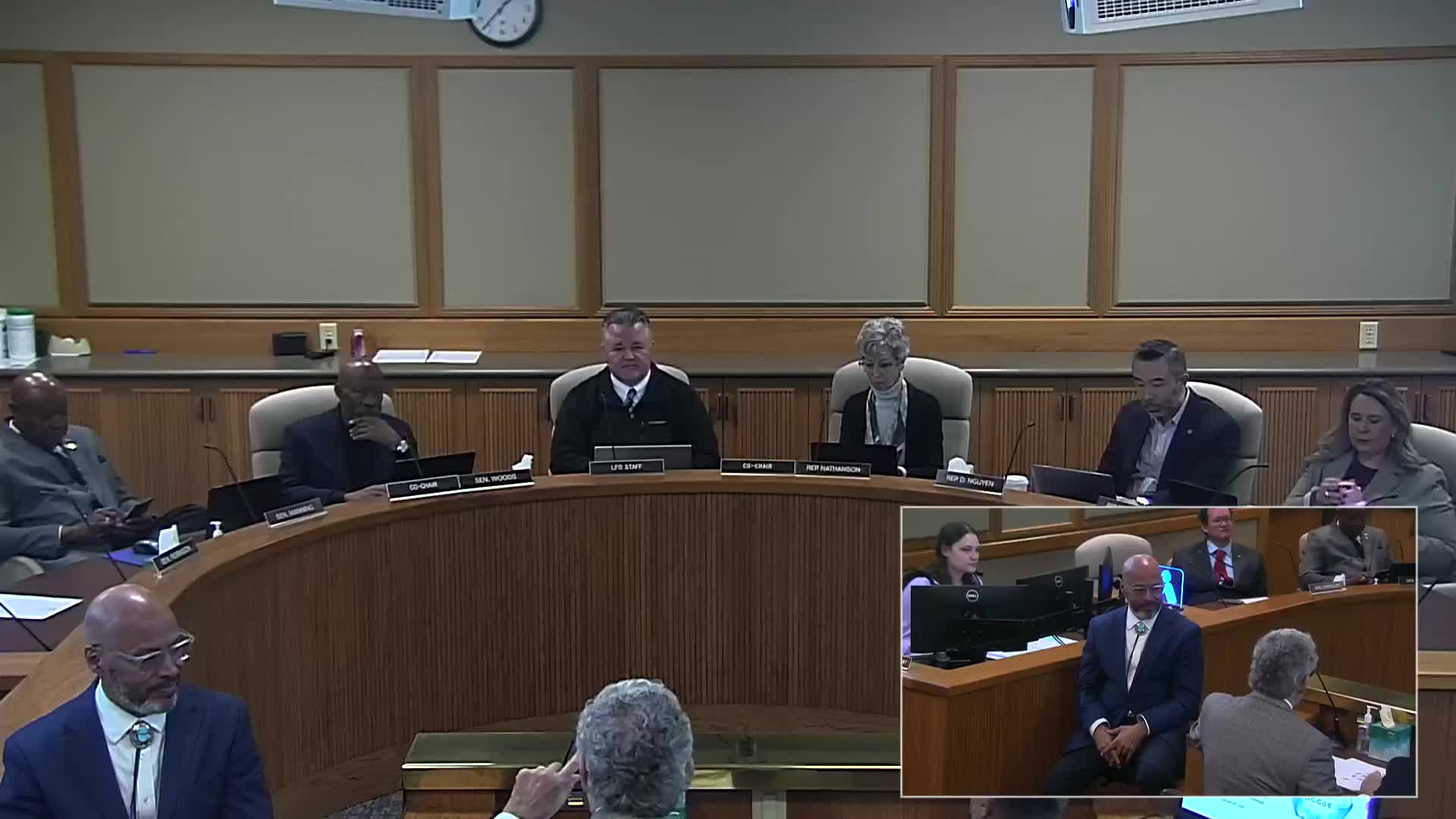
The Joint Legislative Committee on Information Management and Technology heard an update Feb. 28 from the Oregon Cybersecurity Center of Excellence (OCCOE) on education, workforce development and local-government cybersecurity services. Biro Yashileda, founding director of OCCOE, and Rakesh Bapa, associate director, described rapid program growth, grants and partnerships across universities and community colleges.
Yashileda said OCCOE’s mandate covers workforce development, education outreach and operational services such as teaching security operations centers (SOC) that provide live data experience for students and practical assistance for local governments. "We are the information clearing house for what can you find in Oregon for cybersecurity education, training, and awareness," Yashileda said. He told the committee OCCOE has helped stand up a teaching SOC in Corvallis and plans to expand to additional sites, including a planned site closer to Portland.
OCCOE reported it has attracted almost $2,000,000 in external funding in addition to state allocations, and it cited a suite of grants: a major grant to improve cybersecurity resilience for Oregon tribal governments, a $500,000 grant for high school student programs managed by the University of Oregon branch, and a congressional earmark that provided roughly $600,000 across the first two years. The center also said it administered scholarship vouchers for community college certification exams, noting 1,476 student vouchers were issued for CompTIA exams.
Current state funding allocated to OCCOE for the biennium is $4,900,000, of which $250,000 is designated for a grants program, Yashileda said. OCCOE leaders told lawmakers their operating budget (after the grants set-aside) leaves roughly $4.65 million for workforce development and operations and that they are seeking higher funding—initially requesting $15,000,000 and noting a near-term target of roughly $5.6 million excluding uncertain federal matching funds—to scale a cyber range and expand services statewide.
Local-government officials who participated by video—Brent Hurst, IT director for Lebanon; Bates Russell, information services director for Tualatin; and Randy Sills, director of technology for Malheur County ESD—testified that OCCOE’s training and ORTSOC services give small governments hands-on help they otherwise could not afford. Hurst said mentors in OCCOE training “have really engaged with us” and helped local agencies apply cybersecurity practices to day-to-day operations.
Committee members praised the center’s rapid setup and urged continued data on program reach and incident trends; Representative Nathanson asked OCCOE to provide comparative data showing attack rates over time and breakdowns by entity type (state agencies, school districts, special districts, small cities). OCCOE leaders said they would produce updated impact assessments and noted some federal grant matching funds remain uncertain.
The center said future priorities include expanding teaching SOC sites, building a cyber range for hands-on training, hiring security analysts to support incident assessment and reporting, and integrating with Oregon Institute of Technology (OIT) and other partners to broaden capacity. OCCOE requested periodic updates and said it will continue pursuing external grants to scale services.