Get Full Government Meeting Transcripts, Videos, & Alerts Forever!
Get email alerts on the Corporate Tax Apportionment topic
No spam. Unsubscribe anytime.
Committee backs tax change aimed at keeping trading desks and financial jobs in Utah
Summary
Lawmakers voted to recommend a substitute to Senate Bill 219, a change that would align financial institutions with the state's single-sales-factor apportionment rules to help retain trading desks and other in-state financial jobs.
House members voted Feb. 28 to recommend the first substitute to Senate Bill 219, which changes how financial institutions are apportioned for the corporate franchise/income tax so that trading desks and similar operations are treated like other industries under the single-sales-factor approach.
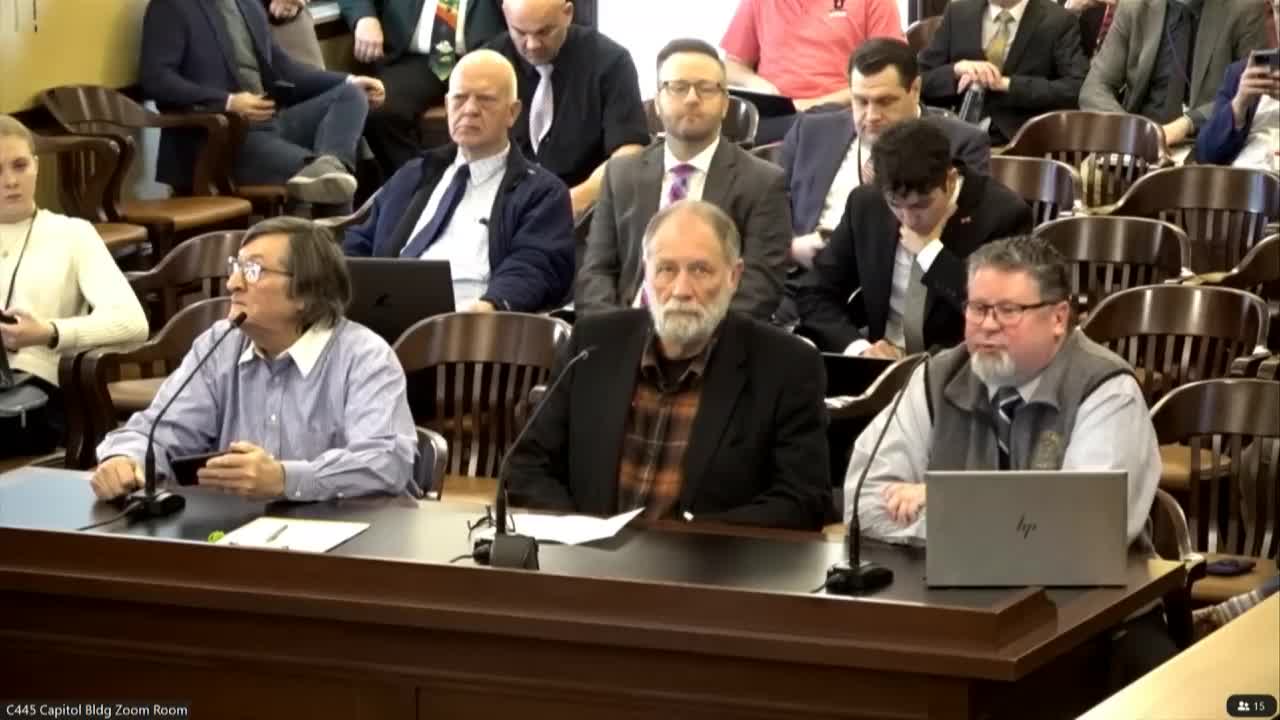
Senator McKell and industry witnesses told the committee Utah faces outflows of investment-desk activity because current administrative rules levy tax where employee or property factors penalize businesses with in-state personnel. Steve Young, an attorney for the Utah Bankers Association, told the committee the change aligns financial institutions with the apportionment rules used across most industries and may preserve jobs and tax revenue: ‘‘If we don't cut $16,000,000 in taxes, we're going to lose the revenue anyway,’’ he said, arguing that leaving the current rule in place risks losing the taxable activity entirely.
Representative Coeford moved the favorable recommendation; the committee adopted the substitute by voice vote. Witnesses from the Utah Taxpayers Association expressed support in the hearing.
Sponsor and witnesses said the change is intended to retain physical jobs and the associated withholding, sales and property taxes that employees generate in Utah. No recorded opposition appeared in the hearing transcript.