Get Full Government Meeting Transcripts, Videos, & Alerts Forever!
Get email alerts on the Budget topic
No spam. Unsubscribe anytime.
Bloomsburg Area SD previews 2025–26 budget with $211,007 preliminary shortfall; special education, transportation and cyber charter cited as main drivers
Summary
District staff presented a preliminary 2025–26 general fund budget showing a $211,007.49 shortfall, driven largely by special-education placements, transportation contract costs and cyber-charter tuition; staff outlined revenue assumptions, flexibility levers and next steps.
Kyle (staff member) presented the Bloomsburg Area School District’s preliminary general-fund budget for 2025–26, saying, “This starts us with a preliminary budget deficit of $211,007.49.”
Nut graf: The presentation lays out revenue and expense assumptions that produce a modest shortfall at this stage. District staff emphasized the budget remains preliminary: revenue estimates, state funding amounts, and enrollment-driven costs could change before the proposed and final budget votes in May and June.
The presentation summarized projected revenue increases and expense growth. District staff estimated overall revenue up roughly 4.3 percent versus the current year and noted local property taxes remain the largest revenue source. Staff said they built a placeholder 3 percent real-estate millage increase into the revenue line while noting the district’s Act 1 index is 4 percent and assessed values will be finalized in May. State basic education funding was budgeted up about $722,000 while special-education funding was budgeted down about $88,000 compared with the prior year’s estimate. Federal Title I/II funding was projected to rise by about $15,000 based on recent three‑year averages.
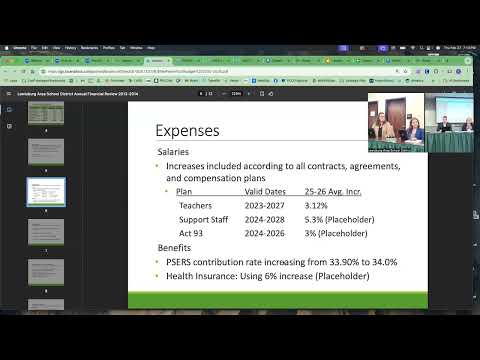
On the expense side, the district is budgeting a total increase of about $2.04 million (about 4.7 percent). Salaries and benefits make up almost 70 percent of expenditures; staff said overall salary costs are budgeted up about 4.7 percent (roughly $815,000), with the teacher contract contributing a roughly 3.12 percent increase for certificated staff. The district is using a pension contribution rate of 34 percent for 2025–26; benefits changes at that rate are expected to have a relatively small budgetary effect. Health‑insurance costs were assumed at a 6 percent increase as a placeholder pending final insurer rates.
Staff identified several categorical expense increases that drive much of the budget pressure: special-education outside placements (about $400,000), transportation (about $230,000), cyber‑charter tuition (about $300,000) and technology equipment (about $150,000). Presenters said some of those increases reflect catching up from prior-year budgets that were low rather than wholly new spending.
Board members asked for more detail on transportation and on transportation contract timing; staff said the district’s first full year under a contract with the current vendor contributed unpredictability in budgeting and that unusual runs or long trips can increase costs. Jones, the district’s director of transportation (named during the meeting), was identified as the staff member who tracks operations and runs. Board members asked staff to return with line‑item detail showing how contract runs, extra runs for athletics and special education routing affected costs.
Staff outlined several flexible levers that can close the gap if needed: adjusting the real‑estate millage within the Act 1 limit, an $884,000 expense-side flexibility figure that includes currently requested new positions (a certified behavior analyst and one additional classroom teacher, estimated at roughly $117,000 for salary and benefits each), and the option to reduce the proposed capital‑projects transfer (currently shown as a $500,000 transfer). The district’s general fund balance was discussed; staff and board referenced a fund-balance figure in the neighborhood of $6 million (several speakers said they would circulate the exact up‑to‑date number after the meeting).
Next steps: staff will continue refining assumptions, present another budget update in April, bring a proposed‑final budget for board approval in May, and seek final budget adoption in June. Staff stressed the numbers remain preliminary and subject to state funding finalization and enrollment changes.
Ending: The board did not take a budget vote at this meeting; staff said they will return with more detailed line items and updated projections before the May proposed‑final vote. The district also noted several capital projects under consideration (middle‑school roofing phase 2 and other projects) that would affect the capital transfer if moved forward.