Get Full Government Meeting Transcripts, Videos, & Alerts Forever!
Get email alerts on the Correctional Health topic
No spam. Unsubscribe anytime.
Committee backs one-time Medicaid-funded EMR purchase and other changes to correctional health system
Summary
Representative Eliason presented House Bill 39, Substitute 3, to the Senate Health and Human Services Committee on Feb. 28; the committee favorably recommended the substitute 5–0.
Representative Eliason presented House Bill 39, Correctional Health Amendments, to the Senate Health and Human Services Committee on Feb. 28. The committee favorably recommended substitute 3 by voice vote; the motion passed 5–0.
Eliason said the bill grew out of interim committee visits to the new state correctional facility and from an effort to implement the justice-reinvestment (1115) Medicaid waiver that allows the state to bill Medicaid for services up to 90 days prior to release. He said a functional electronic medical record (EMR) is necessary to bill Medicaid and to perform the discharge planning envisioned by the waiver, and the substitute authorizes up to $10,000,000 from a restricted Medicaid account for a one-time EMR purchase.
"We learned about the recently created correctional health system that the legislature created when we moved health care from the Utah Department of Corrections under the Department of Health and Human Services," Eliason told the committee, and he said the EMR upgrade would support billing and patient-care needs.
Dr. Stacy Bank, executive medical director for the Department of Health and Human Services, said the current EMR "has room for improvement for both billing" and patient care and thanked the sponsor for the collaboration. The bill also requires DHHS to contract for telehealth psychiatric services, mandates opioid-use-disorder screening and a plan for substance-use disorder care, and permits pay differentials to improve recruitment for staff working in prisons versus other correctional health facilities.
Eliason said the bill requires coordination with local mental health authorities after release and directs screening for civil-commitment eligibility where appropriate as part of discharge planning to try to reduce repeat incarceration among a population he said includes some people with six or more prior returns to custody.
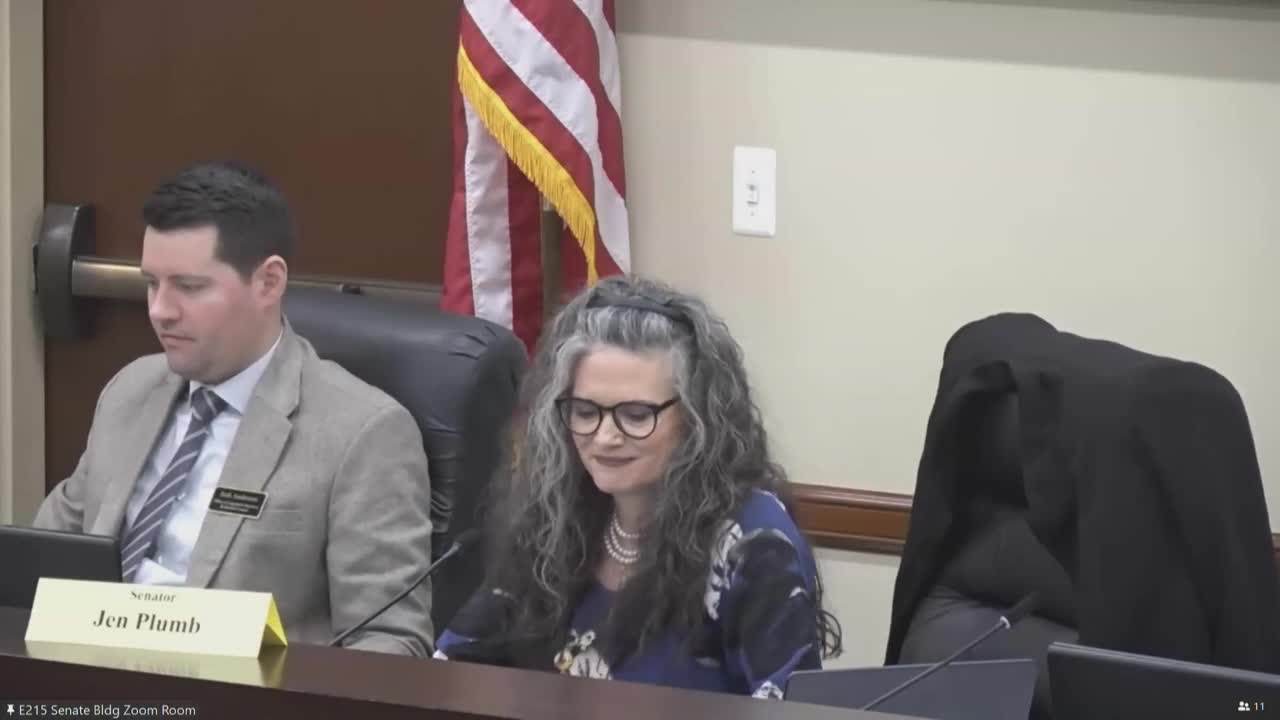
Senator Escamilla asked technical drafting questions about where definitions were moved in the substitute; legislative counsel (Seth Anderson) explained the struck definitions were relocated to a definitions section intended to apply to the entire part rather than a single section.
The sponsor summarized that he had removed items from earlier drafts to lower the fiscal note and said the EMR purchase from a restricted Medicaid fund would yield a substantial return on investment by enabling Medicaid billing and supporting reintegration efforts. Senator Escamilla moved the favorable recommendation; the motion carried 5–0.
Nut graf: HB 39 proposes administrative and clinical changes intended to operationalize a Medicaid billing pathway, improve psychiatric access via telehealth, enhance reentry planning and reduce recidivism; it includes a specified one-time funding authorization for an EMR to support those goals.
The committee's action advances the substitute to the full Senate; members noted the bill's link to the 1115 justice-reinvestment waiver and emphasized staffing and funding challenges during implementation.