Get Full Government Meeting Transcripts, Videos, & Alerts Forever!
Get email alerts on the Psychedelic Therapy topic
No spam. Unsubscribe anytime.
Committee advances narrower pilot for psychedelic-assisted therapy despite mixed public testimony
Summary
Senate Bill 248, which narrows last year's pilot for psychedelic-assisted therapies to a small set of providers and includes provisions to align state scheduling with FDA changes, was favorably recommended 5–0 after extended testimony from clinicians, researchers, veterans advocates and advocacy groups.
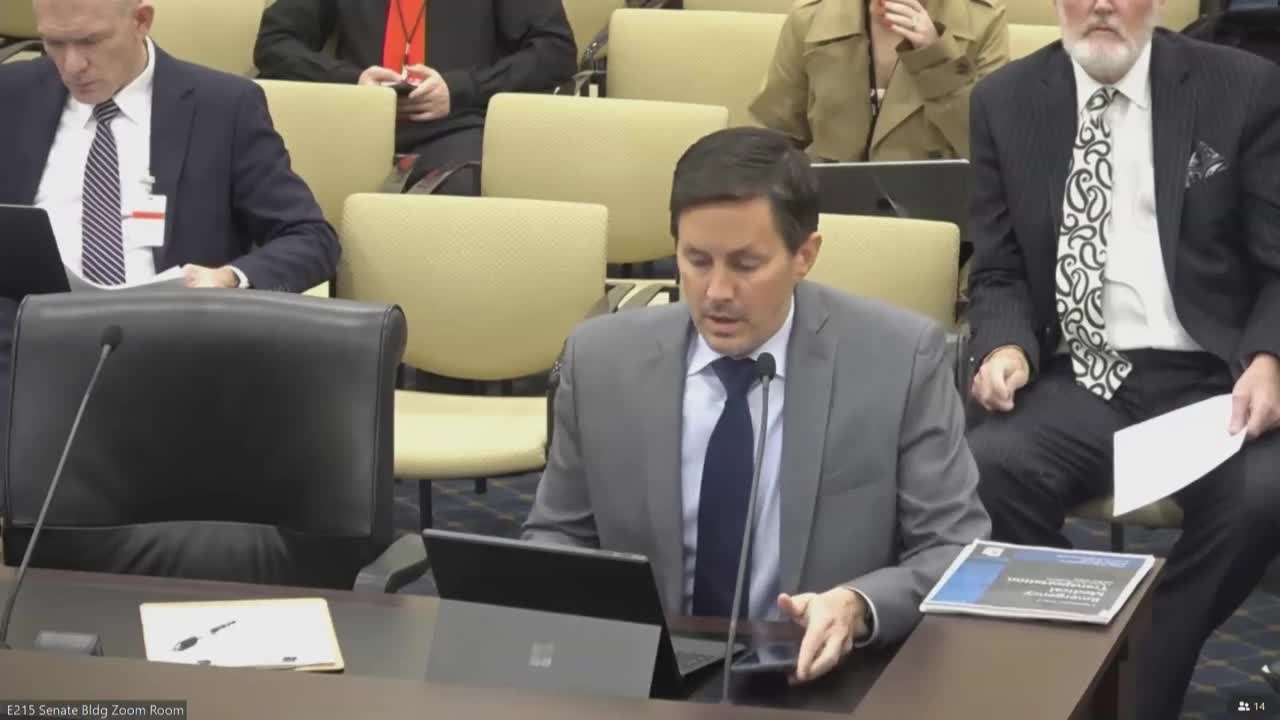
Senate Bill 248, as amended by substitute 1 and presented by Senator Cullimore, would narrow a previously enacted pilot program for psychedelic-assisted therapy by restricting participation to a limited set of qualified providers and by allowing the state to reschedule substances in alignment with FDA actions. The Senate Health and Human Services Committee unanimously advanced the substitute on Feb. 28.
Senator Cullimore said the original statute from the prior year authorized a narrowly scoped pilot but "nothing has really taken off the ground" because of difficulties sourcing controlled substances for clinical use. He said the substitute tightens eligibility to a palliative cancer-treatment center with established expertise and a licensed psychiatrist experienced in administering drugs under clinical trials, and adds language allowing the state to reschedule if the FDA reschedules.
Testimony from the public and medical groups spanned a range of views. David Guile of Utah Eagle Forum said the state task force that examined MDMA and psilocybin "urged waiting for FDA approval before full legalization" and described the task force's call for strict oversight. Dr. Terry Sellers, a board-certified addiction medicine physician, said the drugs "could have one day a use in clinical practice" but argued that "that day was not today" because neither MDMA nor psilocybin had completed phase 3 FDA trials; Sellers also described seeing patients in psychosis he associated with use of these substances.
Dr. Ellen Brady, who described experience with drug development and with patients who had treatment-resistant depression, said she saw potential clinical use but asked whether the sites named in the substitute would be participating as FDA clinical-trial sites; the sponsor responded that the substitute would allow a pathway that is less costly to patients than formal FDA-supervised trials. The Utah Medical Association provided a letter (via Michelle Macomber) citing concerns that the bill, as written, "lacks the necessary safeguards for responsible and legally viable implementation" and emphasizing the essential role of psychotherapy in the research evidence.
Supporters included Dr. Kylie Shumway of the Utah Patients Coalition, who said she served on the state's mental illness/psychotherapy drug task force and described the substitute as a narrowed, workable approach to provide access for patients who have not benefited from standard treatments. Opponents including Walter Plumb of Drug Safe Utah argued the substitute was not narrowly limited in practice, citing statutory definitions that could include a broad set of clinicians and warning that it could send a risky message to young people.
Senator Grover moved to advance the substitute; the motion carried 5–0.
Nut graf: The substitute removes broader institutional participation in favor of a tightly defined clinical pathway and adds a mechanism for state scheduling to track FDA changes. Supporters argue the narrower approach could operationalize an existing pilot and improve access for select patients; critics and several medical commenters urged waiting for more FDA evidence or tightening legal safeguards.
Committee members questioned implementation and liability issues, including whether the substitute would expose providers to legal risk without FDA rescheduling and whether therapy—rather than drug delivery alone—would be adequately required. The sponsor repeatedly described the change as intentionally narrower than the prior statute and emphasized limiting program scope to providers comfortable with the liabilities involved.
The committee's 5–0 vote forwards the substitute to the full Senate.