Get Full Government Meeting Transcripts, Videos, & Alerts Forever!
Get email alerts on the Genetic Data Privacy topic
No spam. Unsubscribe anytime.
House approves limits on foreign access to genetic sequencing data after contentious debate
Summary
Lawmakers advanced a bill that restricts where Utah genetic sequencing data may be processed and stored, adopting a third substitute and sending the measure from committee by a 7–6 vote after testimony from security advocates and local biotech leaders.
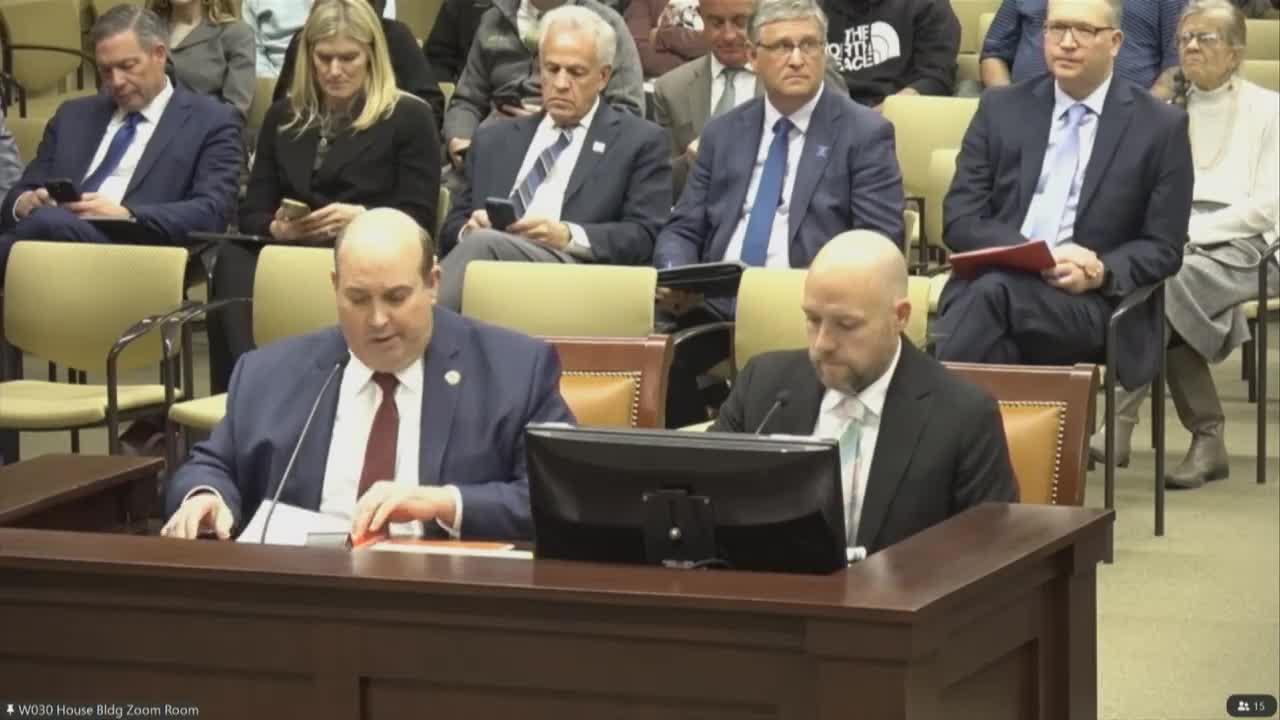
SALT LAKE CITY — The House Health and Human Services Committee on Friday voted 7–6 to advance House Bill 5‑48 (third substitute), legislation that would tighten where genetic sequencing data from Utah can be processed and stored and set an implementation date of May 1, 2026.
Supporters said the bill aims to reduce the risk that sensitive genetic data could be routed to entities tied to foreign adversaries; opponents from Utah’s research and biotech community warned the measure could be costly, technically ambiguous and could disrupt medical care and local industry collaborations.
The bill’s sponsor, Representative Brooks, described the measure as a step to “protect the data of our U.S. citizens” and said the later implementation date is intended to give state stakeholders time to resolve technical details. Michael Lucci, founder of State Armour, told the committee that certain foreign companies singled out in federal actions — citing Beijing Genomics (BGI) — pose national-security risks because of ties to the Chinese military, and that states are moving to limit foreign access to genomic data.
Local industry and research speakers urged caution. Kelvin Cullimore, CEO of BioUtah, said the one‑year delay on implementation was helpful but asked for more time to resolve operational issues. Jonathan Genzen, professor at the University of Utah Department of Pathology and chief medical officer at ARUP Laboratories, said the bill’s requirements could be technically and financially difficult for Utah biotech companies and research institutions because global supply chains make it hard to trace the origin of all sequencing components and software. Bradley Cairns of Huntsman Cancer Institute raised similar concerns about patient care and research disruption.
Ben Mabey, chief technology officer at Recursion, a public biotech company with a large Utah presence, said the bill as written could deter startups and multinational collaborations because it would restrict use of analysis tools and data centers outside the United States and increase costs.
Supporters pointed to federal actions and to the BioSecure Act in Congress as context for state-level measures. Public commenters with national security backgrounds, including Jackie Dill and Anthony Ruggiero, recounted reporting and federal warnings about China’s biotechnology expansion and urged states to act.
Committee debate focused on technical scope — whether the bill applies to whole sequencing instruments or to component parts — and on the bill’s definition of “foreign adversary.” The sponsor said the bill does not regulate screws or resistors in machines but instead targets where data are sent and stored. The committee adopted the third substitute by voice vote and then voted on the measure; a roll call recorded six stated “no” votes and named those opposed.
The committee’s 7–6 vote advances the bill to the next House floor step. The sponsor and several stakeholders said they intend to keep working on clarifications before the bill’s implementation date.