Get Full Government Meeting Transcripts, Videos, & Alerts Forever!
Get email alerts on the Local Finance Sales Tax topic
No spam. Unsubscribe anytime.
Committee rejects bill limiting county use of optional sales tax for public safety
Summary
The Senate committee voted down House Bill 162 (6th substitute), a proposal to restrict how counties in classes 3–6 may use an optional 30-basis-point local sales tax, after extended public comment from rural county officials who said the change would strain budgets and school safety funding.
The Senate Transportation, Public Utilities, Energy and Technology Standing Committee voted 1–6 on a motion to favorably recommend House Bill 162 (6th substitute), which would limit how certain counties may use an optional 0.30 percentage-point local sales and use tax originally authorized last year.
Representative Shipp, the bill sponsor, told the committee HB 162 would put “guardrails” around an option some counties have used for public safety and capital projects, and would require counties in classes 3 through 6 to phase out use of the sales tax for ongoing operations, salaries and maintenance over a three‑year runway. He said the purpose was to preserve sales tax for one‑time capital purposes such as jail construction rather than recurring expenses.
The committee heard a string of public comments from county officials and law-enforcement representatives who opposed the change. Barbara Tidwell, a Cache County Council member, said the county enacted the sales and use tax option to fund school resource officers tied to an unfunded state mandate and that removing the authority would push counties to raise property taxes. “Removing this tax would force us to increase property taxes on our citizens, placing an undue burden on property owners,” Tidwell said.
Dave Erickson, also a Cache County Council member, told the committee the tool gave small counties a way to address costs passed down by the Legislature and to stabilize local budgets. Sandy Goodlander, chair of the Cache County Council, said the county implemented the tax “in good faith” under the law as it existed and said many small counties rely on sales tax revenue to offer competitive wages to retain deputies and provide school safety.
Sheriff Smith, speaking for the Utah Sheriffs Association and identifying himself as the immediate past president and Utah County Sheriff, said sheriffs are using the revenue for “legitimate public safety needs” and that the three‑year off‑ramp in the current substitute would still leave counties who enacted the tax in a difficult position.
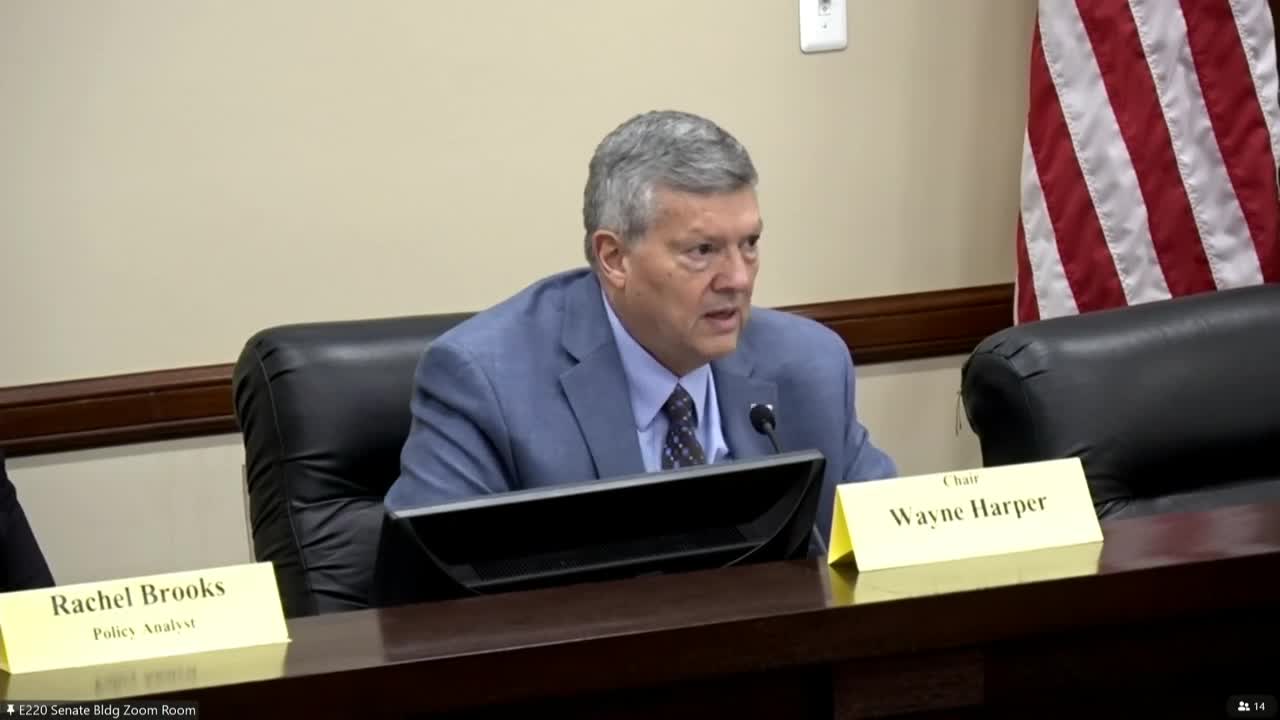
Senator Winterton moved to favorably recommend the sixth substitute and asked the sponsor to work with stakeholders over the weekend; the motion failed on the roll call. The committee chair announced the motion failed 1 to 6.
The bill’s discussion focused on: (1) whether sales tax is an appropriate ongoing revenue source for salaries and operations; (2) consequences for small, largely rural counties that adopted the tax to meet new mandates; and (3) the compromise history that produced a three‑year phase‑out in the sixth substitute.
With the committee vote negative, HB 162 will not be reported out with a favorable recommendation from this committee at this time. The sponsor said he would continue to work with stakeholders on amendments.