Get Full Government Meeting Transcripts, Videos, & Alerts Forever!
Get email alerts on the Education Academics topic
No spam. Unsubscribe anytime.
MNPS reports record graduation rate and rising test scores, board says
Summary
Metro Nashville Public Schools told the Budget & Finance Committee in a February special meeting that graduation rates and proficiency measures rose across 2022–24, driven by investments in curriculum, staff pay and ESSER-funded programs.
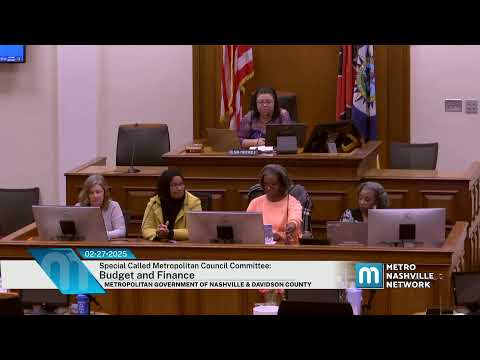
Metro Nashville Public Schools reported that the district reached a record 85.7% four‑year graduation rate and improved proficiency and growth on state tests, School Board Chair Freda Player told the Metro Council Budget & Finance Committee at a February special‑call meeting.
The improvements, Player said, reflect multi‑year investments in curriculum materials, teacher pay and ESSER programs that expanded tutoring, professional development and social‑emotional supports. "We have had the highest level of graduation rates at 85.7 percent," Player said.
The nut of the board's presentation: MNPS said its 2022–24 recovery from pandemic learning losses outpaced state averages and that the district was one of five large urban districts nationally to rank in the top 10 for both reading and math recovery for two consecutive years. Player credited teachers, administrators, support staff, families and "investment by the mayor and this body" for the results.
Board members provided specific data points during the presentation: the district reported an enrollment of about 80,500 students (the board described this as the 40‑day census count), TCAP and end‑of‑course gains in multiple subjects, and repeated recognition as a Level 5 district for three consecutive years. The board also said 17 of 21 grade‑subject combinations exceeded state performance in one year TCAP comparisons.
Speakers framed the gains as the product of targeted spending and curriculum work. Player said the district moved from classroom sets of books to providing take‑home books for every student and used ESSER funds to buy high‑quality curriculum materials, expand coaching for teachers and increase planning and professional development time. "When you provide those resources to the children, you see the results, immediately," Player said.
The board also highlighted recovery and growth measures: MNPS reported growth measures that exceeded state averages by the equivalent of roughly two‑thirds of a grade level from 2022 to 2024, and cited national comparisons that placed the district in the top 10 for academic recovery in both reading and math.
The presentation connected those results to programs the district intends to sustain: classroom associates (a permanent substitute/support position), expanded school nursing, targeted tutoring and summer learning programs described as part of the district's "scholars portfolio" (promising, accelerating and enriching scholars programs).
The district said it receives roughly $130,000,000 in federal grants annually, naming IDEA (Individuals with Disabilities Education Act) and Title I as its largest federal revenue sources; school nutrition funding was cited at $42,000,000. The board said it supplements federal nutrition and other program funds from operating dollars.
Ending: Board members asked committee members to follow up with questions as the MNPS budget moves through the council and mayoral review; MNPS staff said the district will present more detailed budget documents as the local budget process continues.