Get Full Government Meeting Transcripts, Videos, & Alerts Forever!
Get email alerts on the Strategic Planning topic
No spam. Unsubscribe anytime.
EDA member proposes one‑page 'policy deployment' plan to set 2–5 year priorities; board to consider in small groups next month
Summary
An EDA member presented a 'policy deployment' approach — a one‑page strategic plan with monthly tracking and green/yellow/red status — to help the Grayson County EDA choose and monitor 2–5 year priorities such as affordable childcare and housing; members agreed to circulate materials and discuss in small groups at the next meeting.
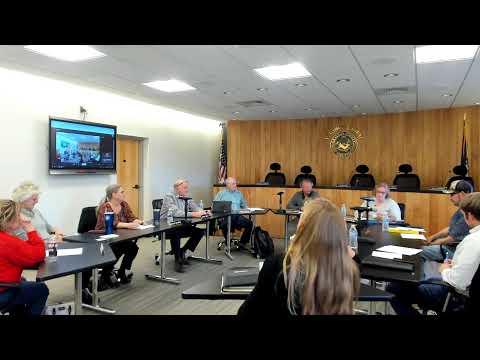
An EDA member presented a proposed policy‑deployment process designed to focus the Grayson County Economic Development Authority on a small number of measurable 2–5 year objectives, and to track progress on a single‑page template at each meeting.
Why it matters: Proponents said the approach would make the EDA more proactive, increase accountability to taxpayers, and provide monthly visual tracking to identify projects that need support.
Proposal details - One‑page template and tracking: The presenter described a one‑page plan that lists breakthrough objectives, associated projects, numerical targets and team members, plus a monthly traffic‑light (green/yellow/red) status for each project. The presenter recommended 2–3 major objectives at first (example objectives discussed included affordable childcare and additional affordable housing) and monthly tracking so the board can intervene early when projects slip.
- Example projects and metrics: The presenter gave sample projects for a childcare objective (research similar programs, identify partners, create a pilot) and for housing (identify candidate properties, evaluate and select top candidates, start implementation). He showed mock monthly progress charts and said the first year should be focused on establishing process and measurable targets.
Board response and concerns Board members expressed interest but also raised concerns about time commitment, staffing and authority. Specific concerns included the amount of member time required to support proactive projects, EDA funding limits, and the EDA’s limited authority relative to the board of supervisors. Members suggested partnering with state or nonprofit organizations for resourcing and emphasized that adoption would require member buy‑in.
Next steps The presenter said he would email the presentation and backup materials to members. The board agreed to place the item on the next meeting agenda and to consider small‑group work (pros and cons) before reaching consensus.
Quotation "If we want to accomplish the long term mission, you have to be, I think, more proactive," the presenter said while outlining the plan. "We want to come up with the key objectives over the first 2 to 5 years. Three years is fairly typical."
Ending The EDA agreed to circulate the materials and to discuss the proposal in small groups at the next meeting; no vote to adopt the framework occurred at this meeting.