Get Full Government Meeting Transcripts, Videos, & Alerts Forever!
Get email alerts on the Educational Rights topic
No spam. Unsubscribe anytime.
Panel urges foster youth to confirm educational-rights holders, outlines AB 216 credit option
Summary
Panelists with lived experience described how educational-rights holders can support foster youth, explained AB 216 as an option to reduce credit requirements for students who missed school due to foster care or court involvement, and urged youth to consult social workers or attorneys if they need to change their educational-rights holder.
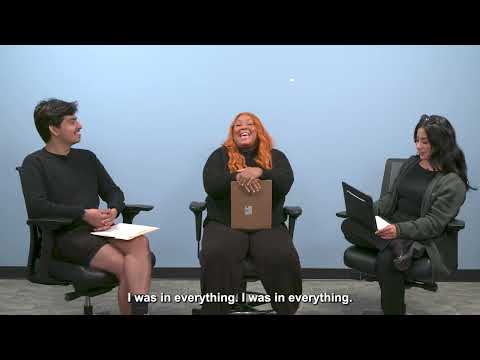
During a recorded panel discussion, Sherry Bradford, an educational-rights advocate and panel host, and two panelists with lived experience reviewed what an educational-rights holder is, how the role affects foster youth’s access to school services, and how AB 216 can provide an alternative path to a diploma for students who missed credits because of court, placement or probation-related absences.
Panelists said the education-rights holder is the person who advocates for a student’s schooling when a parent cannot, and that foster youth often do not know who holds that role. "If the court has not taken educational rights from your parents, then they hold these rights even if you're not living with them," Bradford said, explaining the basic legal framework the panel provided at the start of the session.
The discussion centered on why an advocate matters. Elizabeth, who identified herself as an educational-rights holder and panelist, described moving between schools, losing access to arts programs, and receiving minimal academic support after a school transfer: "I didn't even know I had an educational rights holder when I was in the system," she said, describing how the lack of advocacy contributed to taking continuation classes and extra after-school hours to finish credits.
Chris, a panelist who spoke about policy options for students with disrupted schooling, described AB 216 as an alternative that recognizes missed instructional time and allows some students to meet diploma requirements with fewer credits. "AB 216 is supposed to help us," he said, explaining the law is intended to accommodate students who miss days for court, social-work meetings or placement changes.
Panelists emphasized three recurring points from personal experience and advice given to viewers: 1) an education-rights holder should actively monitor transcripts and request equivalent coursework when a student changes schools, 2) youth can seek a new education-rights holder if the current one is not advocating for needed services such as IEP evaluations, tutoring or correct class placement, and 3) AB 216 is an option — not a universal solution — and some students may instead choose to stay in school longer or pursue other graduation tracks.
The panel also described typical barriers: frequent school transfers that result in placement into lower-level classes rather than direct course equivalents, court appearances that cause missed instructional time, transportation challenges, and the administrative workload on social workers that can leave youth to advocate for themselves. Elizabeth recounted being placed in a lower-funded local school after transfer, which she said reduced access to creative programs and required her to take additional continuation classes later.
Panelists repeatedly advised viewers to raise questions with caseworkers and counsel. As Bradford said during the discussion, "If you don't know who your educational rights holder is or you're concerned about it and they're not able to support you with your education, then talk to your social worker and your attorney." They also noted that group-home staff cannot serve as a youth’s education-rights holder and urged young people to seek an advocate who will pursue transcript transfers, appropriate course placements and IEP/504 accommodations when needed.
The session closed with panelists encouraging youth to review available graduation options, including AB 216, trade or technical education, and staying additional semesters to complete desired coursework, and reiterating that having a stable, engaged education-rights holder can reduce the need for credit-reduction options.
Panelists said more detailed resources and links were provided after the recording for youth seeking forms or guidance on changing an education-rights holder.